GERMAN GYPSUM INDUSTRY ASSOCIATION (BUNDESVERBAND DER GIPSINDUSTRIE E.V., BVG)

Gypsum-based drywall systems promoted for building reuse projects in Germany

Germany’s gypsum industry is highlighting the potential of gypsum-based drywall construction systems for the conversion and reuse of existing buildings amid continued housing shortages and growing demand for sustainable construction solutions.

According to the German Gypsum Industry Association (Bundesverband der Gipsindustrie e.V., BVG), the adaptive reuse of vacant office buildings, former commercial properties, attic spaces, and other underutilized structures is increasingly being considered as an alternative to demolition and new construction. The association notes that such projects can help reduce CO2 emissions by preserving the embodied energy already contained in existing buildings while avoiding additional land consumption.

The industry group emphasizes that modern gypsum-based lightweight and drywall systems are particularly suitable for refurbishment and conversion projects due to their flexibility, fast installation, and low moisture input during construction. The systems also support demanding fire protection and acoustic performance requirements commonly associated with residential conversion projects.

In addition, gypsum drywall systems can contribute to more efficient space utilization through slim wall constructions while allowing flexible interior layouts and easier integration of building services. The association also points to the recyclability of gypsum materials and their role in supporting circular construction practices.

Office-to-residential conversions are currently attracting particular attention in Germany as changing workplace trends and increased remote working continue to leave office space vacant in many urban areas. According to the association, gypsum-based drywall systems can help accelerate the delivery of new living space while supporting modern renovation and sustainable building strategies.
images

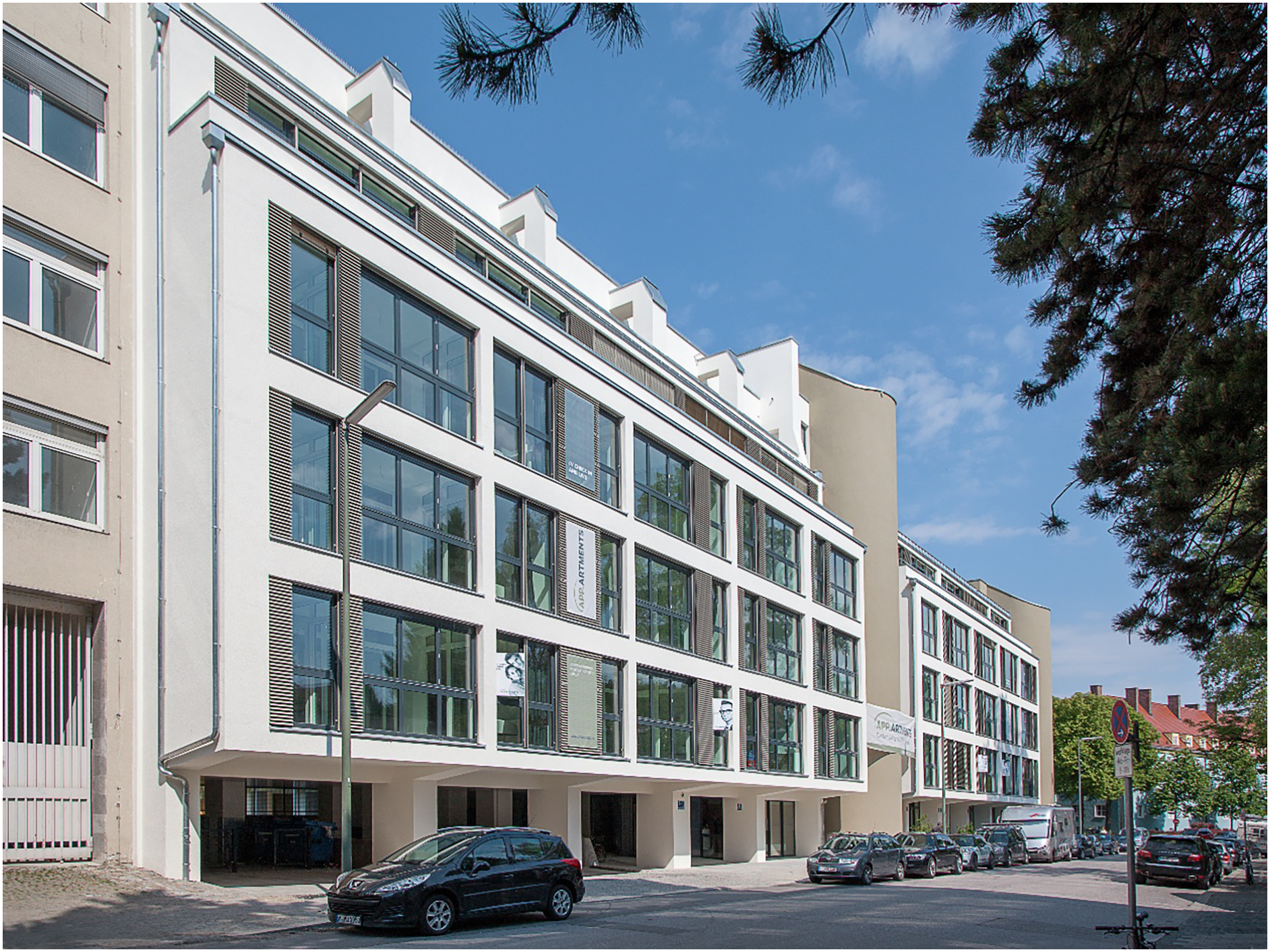
Figure 1 A former insurance administration building was converted into 167 apartments (Photo credit: Knauf/Bernd Ducke)
images

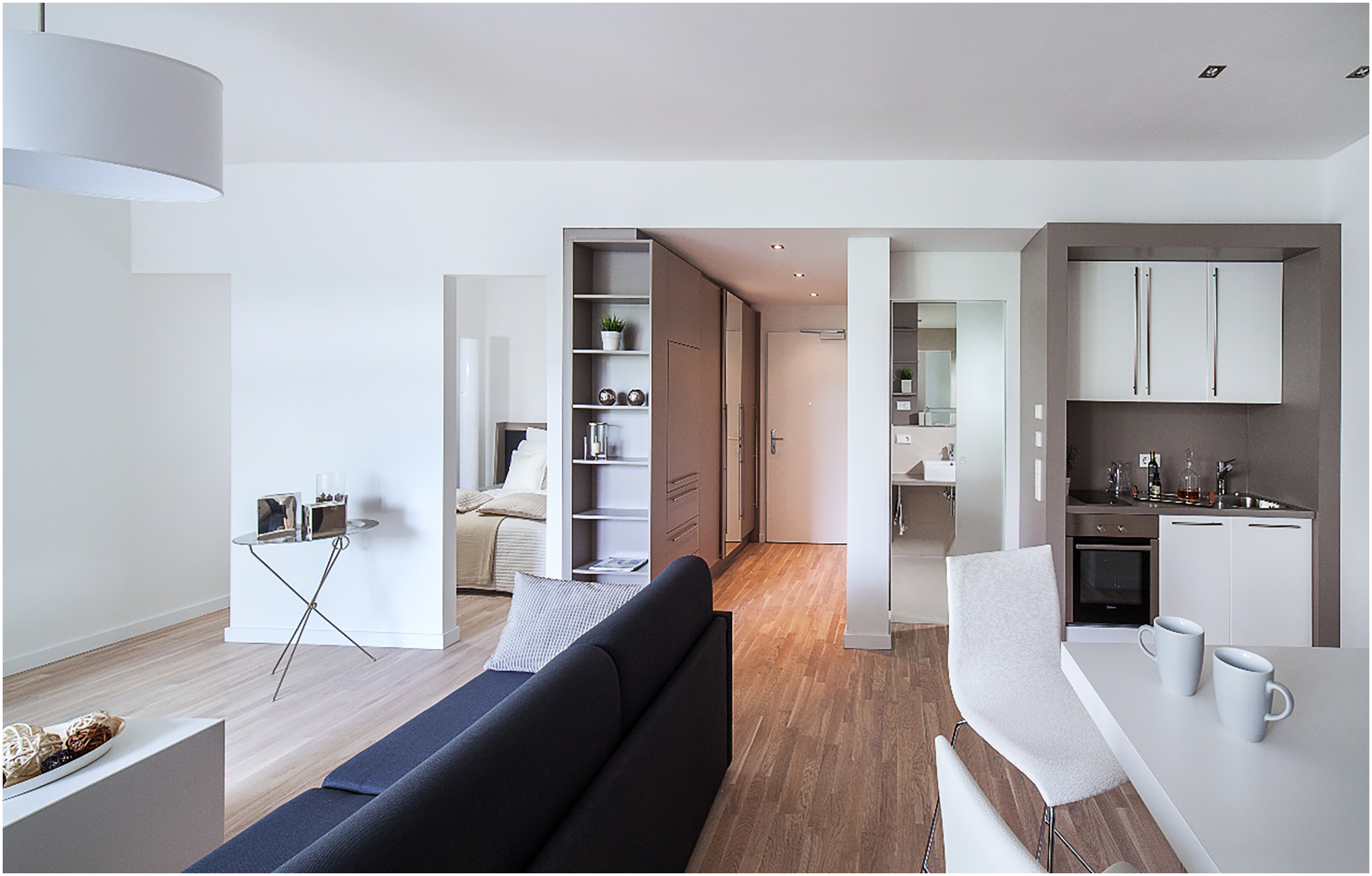
Figure 2 Modern gypsum-based drywall systems provide fast installation together with high acoustic and fire protection performance (Photo credit: Knauf/Bernd Ducke)
images

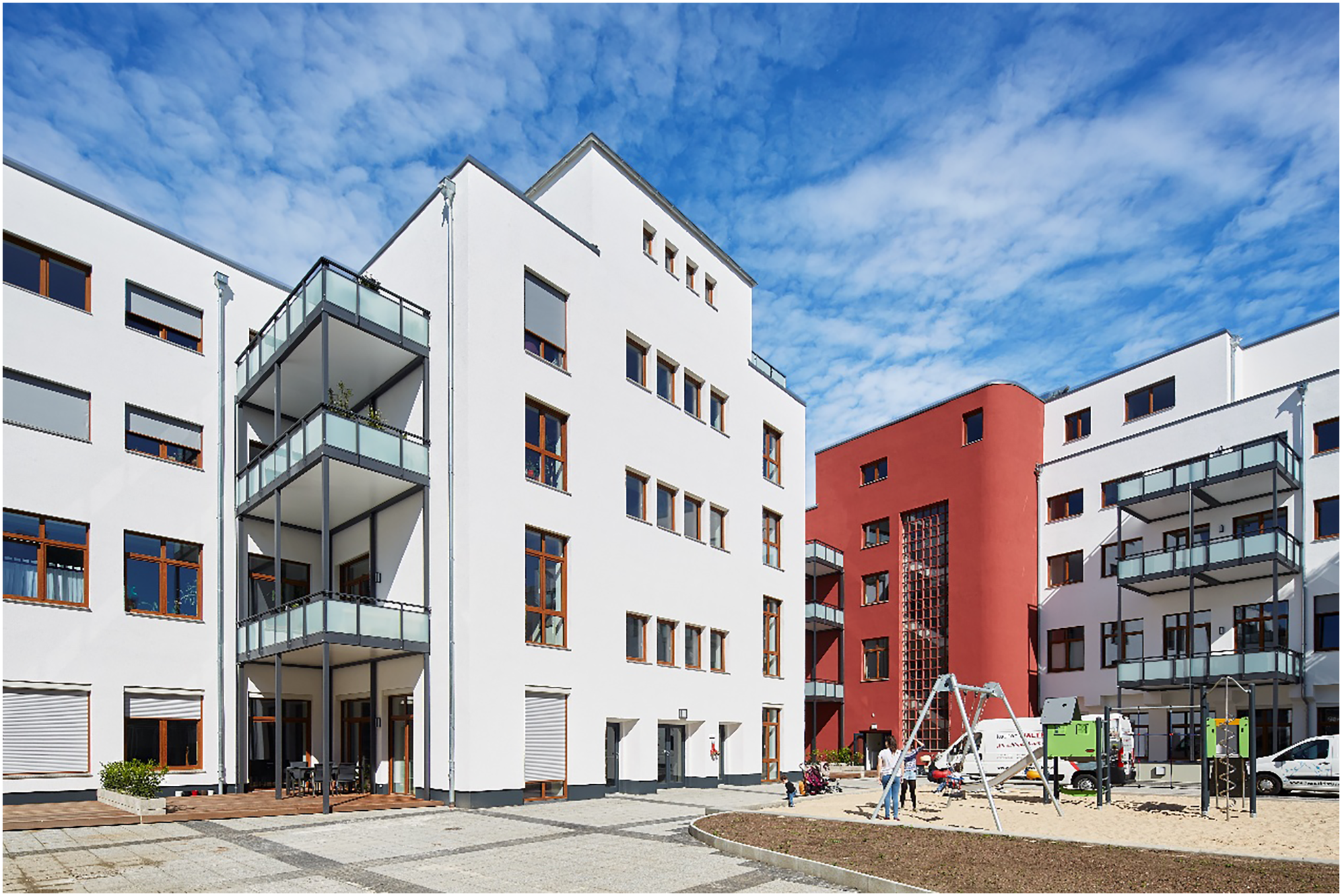
Figure 3 A former production facility for bicycles, mopeds, and typewriters, which had already been converted into office space in the 1990s, was redeveloped into 88 apartments and two commercial units (Photo credit: Knauf/Sigi Lustenberger)

About the German Gypsum Industry Association (BVG)

The German Gypsum Industry Association (Bundesverband der Gipsindustrie e.V., BVG) represents Germany’s gypsum mining and gypsum manufacturing industry. The association actively promotes sustainable gypsum-based construction solutions, modern drywall systems, and technical innovation in the building sector through industry collaboration, research support, and standardization activities.

www.gips.de

images Copyright © 2026 The Author. Published by Tech Science Press.
This work is licensed under a Creative Commons Attribution 4.0 International License, which permits unrestricted use, distribution, and reproduction in any medium, provided the original work is properly cited.

Related articles:

Issue 05/2026 PAEBBL

GOLDBECK, Holcim and Paebbl complete carbon-storing concrete floor project in Germany

GOLDBECK, Holcim and carbon mineralisation company Paebbl have completed what the companies describe as Germany’s first commercial-scale industrial floor slab produced using carbon-storing ready-mix concrete. The 420 m² floor was installed at an e-commerce logistics facility in ...

more
Issue 05/2026 SPENNER GROUP IN GERMANY

Spenner group secures production in Erwitte in Germany

Photo: Spenner cement plant in Erwitte from the Spenner lake. The Spenner Group is securing its cement production in Erwitte in Germany. The company plans to be carbon-neutral by 2045 and invests in a large wind turbine for its electric energy needs. As an important step for the site development ...

more
Issue 03/2026 HEIDELBERG

Heidelberg materials closes Paderborn works in Germany

Photo: Kiln at Paderborn cement works (Credits: Heidelberg Materials) Heidelberg Materials has decided to close its cement plant in Paderborn. The main reason for closing Paderborn has been given as the significant decline in cement sales, driven by weak construction demand in Germany and the current...

more
Issue 02/2026 Technische Universität München

TUM/ACI 2026 CONFERENCE

TUM/ACI 2026 IN MUNICH, GERMANY, 6–10 JULY 2026 Venue: Hilton Munich Airport, Terminalstraße Mitte 20, 85356 Munich/Germany Registration: Registration is open at: https://aciconf.de/registration/.

more
Issue 02/2026 DYCKERHOFF

Dyckerhoff installs a CCS test unit in Geseke in Germany

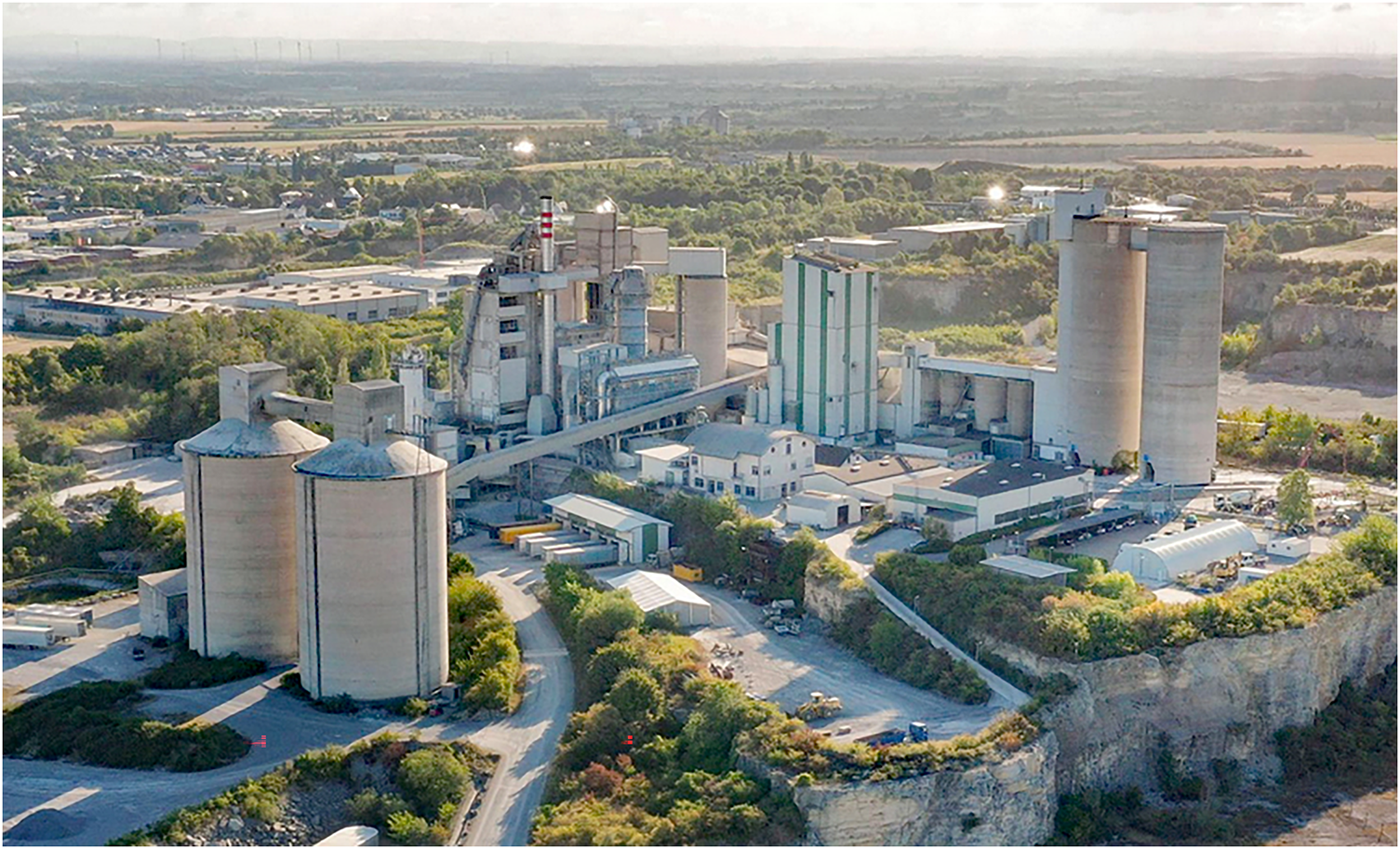
Geseke cement plant in Germany (Credit Dyckerhoff)Dyckerhoff receives funding for their DYGE-CarbonOUT test unit at the Geseke cement plant (photo) in North Rhine-Westfalia in Germany. The test facility is provided by Capsol Technologies ASA for the capture of CO2 from the exhaust gas stream. The ...

more
Issue 01/2026 AUMUND Group

Electrical clay calcination by the AUMUND Group is a prospective alternative technology

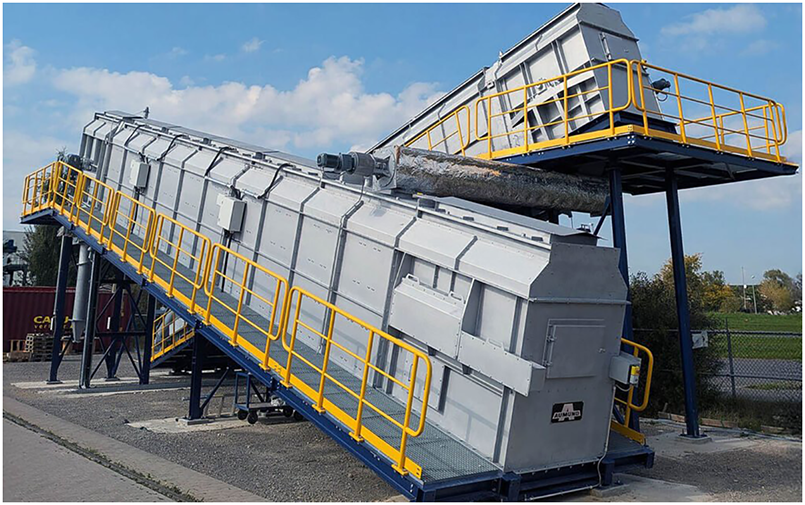
Photo of eLCC Pilot unit in Rheinberg (Credit: AUMUND Group)The AUMUND Group hosted an exclusive Open House event in Rheinberg in Germany, to mark the launch of the electrified Linear Calcination Conveyor (eLCC) and a new push-chain bucket elevator. The eLCC technology addresses the critical...

more
Issue 01/2026 Technische Universität Münchem

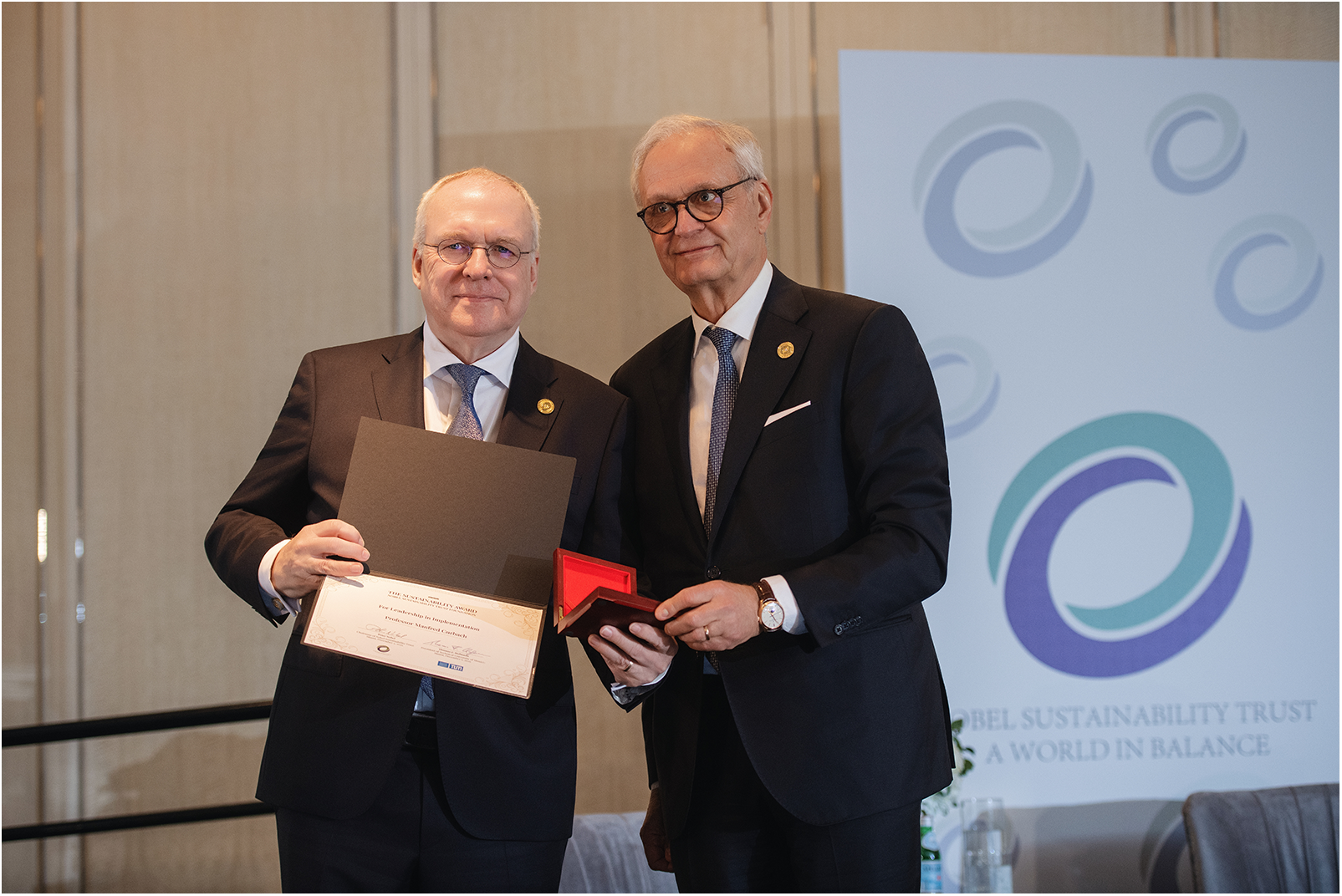
Prof. Manfred Curbach receives Nobel Sustainability Award 2025

Concrete possesses a high CO2 footprint which originates from both cement and steel reinforcement. Prof. Manfred Curbach from TU Dresden/Germany proposed replacing steel with carbon fibers, meshes and rods, thus significantly reducing CO2 emission. His technology has already been applied on over 300...

more
Issue 07/2025 ALBERT KNOBLINGER GMBH & CO. KG

Green Challenge in the Lime Industry: Knoblinger sets standards for 100% biogenic fuels

The lime industry is under pressure to decarbonize like hardly any other sector. Fossil fuels drive emissions and costs upwards – and call for bold alternatives. At Albert Knoblinger GmbH & Co. KG we have taken on this challenge and, together with Köhler Kalk in Germany, implemented a pioneering plant that is making history: For the first time in Germany, lime is being produced using 100% biogenic fuel.

more
×