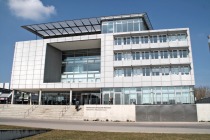
Prof. Manfred Curbach receives Nobel Sustainability Award 2025
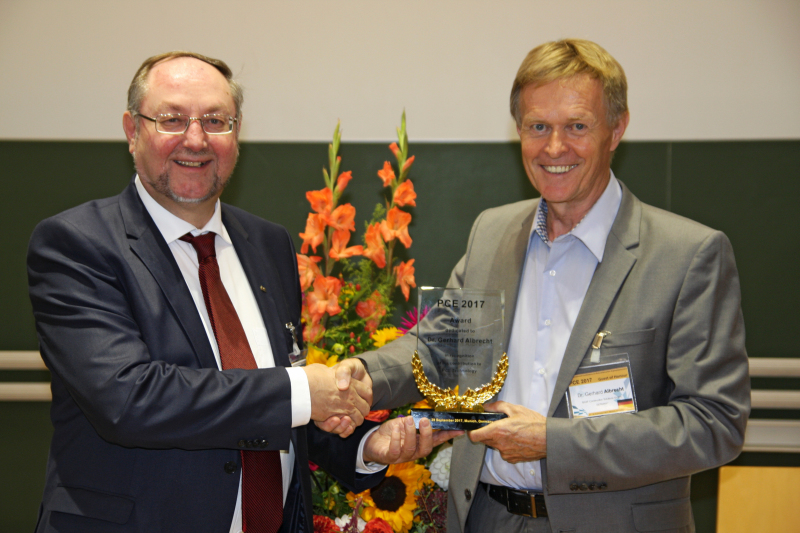
On 05 December 2025, Prof. Manfred Curbach of Technische Universität Dresden, Germany received the Nobel Sustainability Award for his development and implementation of carbon-reinforced concrete. The award was personally presented by Peter Nobel, Chairman of the Nobel Sustainability Trust (NST), during a ceremonial event in Miami.
The Nobel Sustainability Trust (NST) was founded in 2007 by descendants of Ludvig Nobel, the older brother of Alfred Nobel, to complement the Nobel Prizes in the natural sciences. The award emphasizes the importance of sustainability for future generations and is presented annually in the categories “Leadership in Implementation,” “Outstanding Research and Development,” and “Outstanding Contributions to Sustainability.” Unlike the Nobel Prizes for the natural sciences, these awards are not given by the Nobel Committee but by the Nobel family itself.
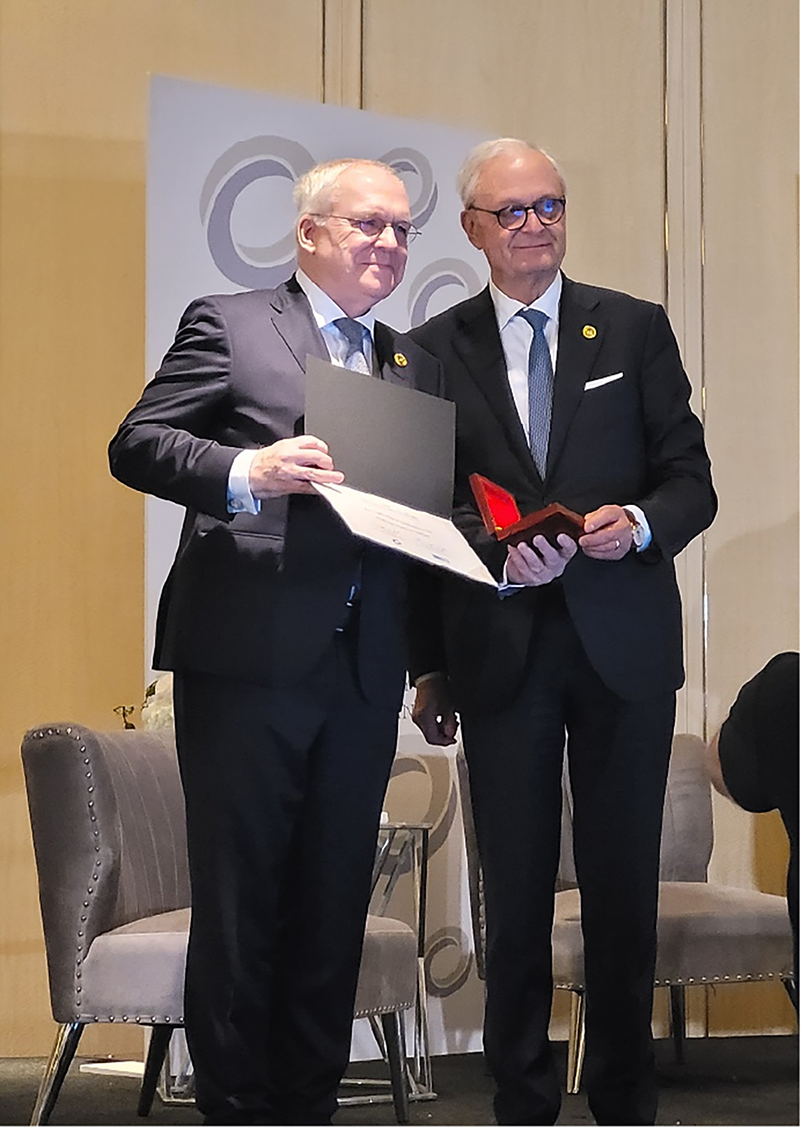
Fig. 1: Prof. Manfred Curbach, TU Dresden (left), receives the NOBEL Sustainability Award 2025 from Peter Nobel (right)
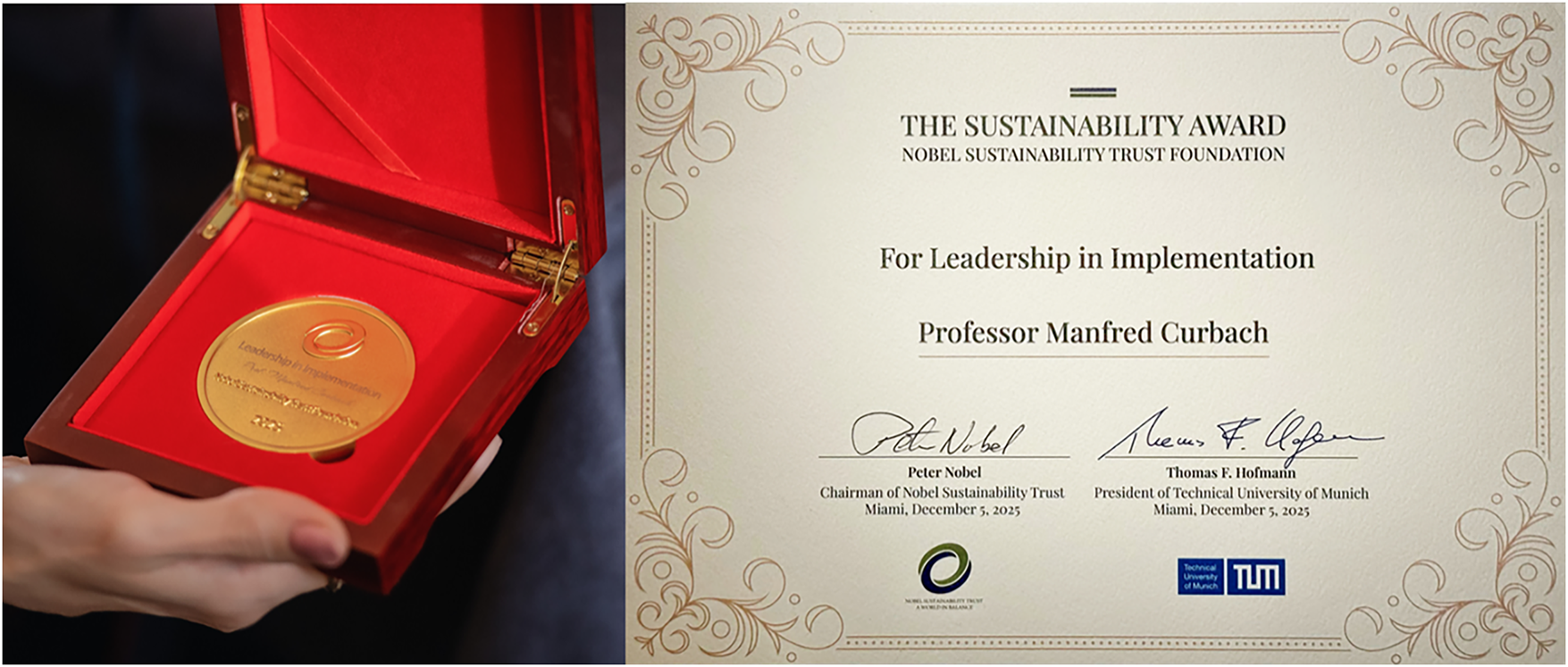
Fig. 2: Medal and certificate of the award for Prof. Manfred Curbach
Prof. Curbach received the award for his groundbreaking development of concrete reinforcement with carbon fibers, meshes and rods instead of steel. In his acceptance speech, he described the long path toward achieving large-scale feasibility (“implementation”). His original concept, developed in the 1990s, was based on the use of glass fibers, though this came with several drawbacks. When carbon fibers became significantly more affordable in the early 2000s, he reworked his concept to use this type of reinforcement and introduced carbon-reinforced concrete.
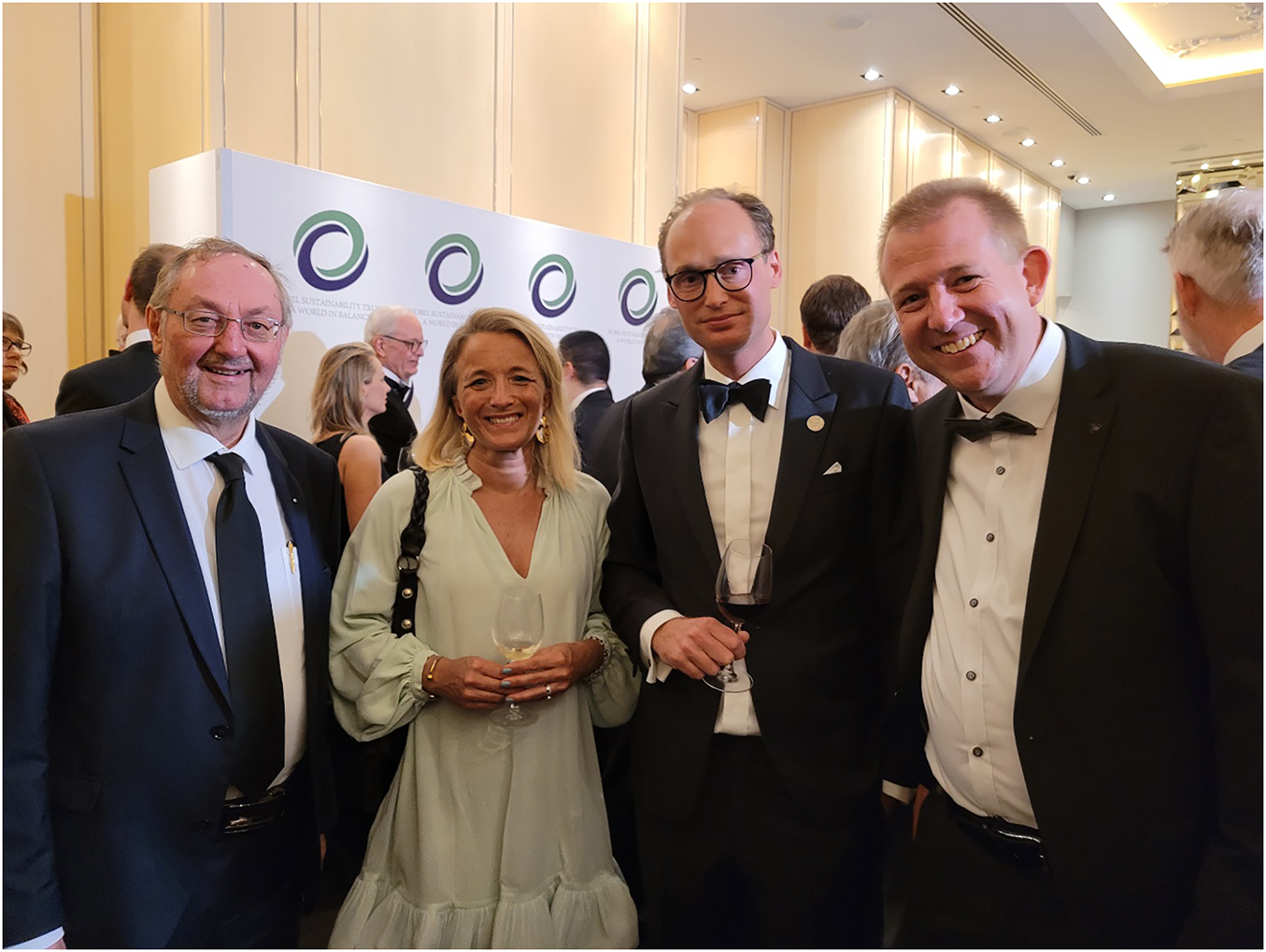
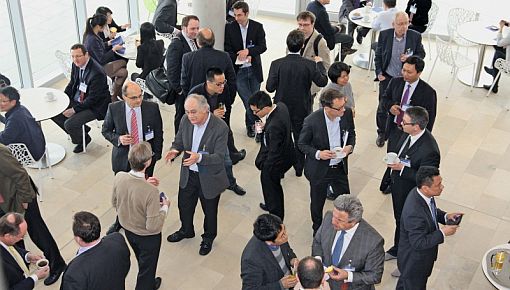
Fig. 3: Dialogue with members of the Nobel family on the topic of sustainability (from right to left): Prof. J. Geist, TU Munich; Johan Nobel and his wife; Prof. Johann Plank, TU Munich
The fundamental advantage of this innovation is that the several centimeters of concrete cover required to protect steel reinforcement from corrosion are no longer necessary. As a result, significant amounts of cement and concrete can be saved in construction, massively reducing the CO2 footprint. This also allows for thinner concrete components and lighter structures overall. In addition, the need for the alkaline passivation of steel is eliminated, enabling the use of binders with greatly reduced clinker content—and thus lower pH values and CO2 emissions. Together, these factors offer enormous potential for reducing CO2 emissions in the construction sector. Experts estimate the global savings potential to be up to 1 billion tons of CO2.
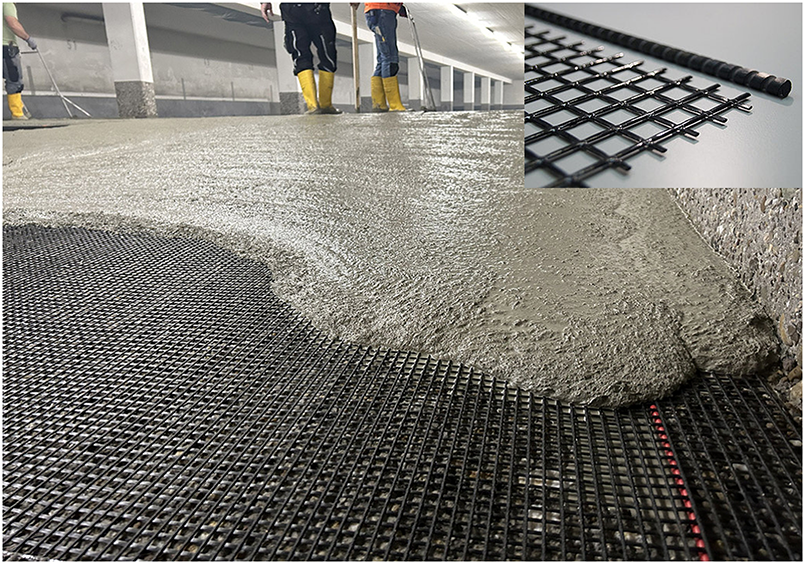
Fig. 4: Carbon fibers as a replacement for steel reinforcement—the basis of the carbon concrete developed by Prof. Curbach; Source: 1 Koch Carbon Consulting GmbH and 2 C3-Carbon Concrete Composite/Sandra Kranich
Prof. Curbach’s carbon-reinforced concrete has now been used in more than 300 structures across 16 countries, demonstrating its technical viability, as highlighted by Peter Nobel, Chairman of the NST, in his address.

Fig. 5: Carbon concrete—an example of sustainable construction; Source: Prof. Curbach
In addition to Prof. Curbach, the following were also honored:
– Prof. Paul Hebert of the Center for Biodiversity Genomics at the University of Guelph, Canada, for his invention of the DNA barcode for identifying all animal species, and
– The Global Observatory of Health and Sustainable Cities (GOHCS) for developing evidence-based indicators of urban sustainability.
The ceremony opened with remarks from Edward Russo, representing President Donald Trump and serving as Chair of the White House Environmental Task Force. He conveyed greetings from the President and emphasized the importance of sustainability for a successful economy. The event concluded with panel discussions on “Economic Aspects of Sustainability” and “The Next Generation of AI,” including a presentation by Alex Fu, the developer of ChatGPT5.