
HACETTEPE UNIVERSITY

Supernatant nanographite solution for ­advance treatment of C class fly ash cement systems – Part 1
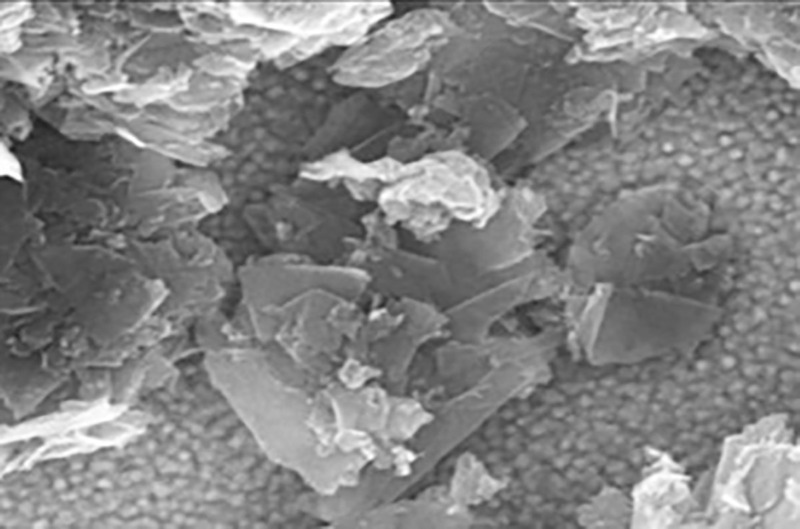
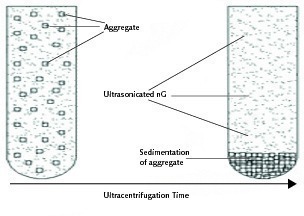
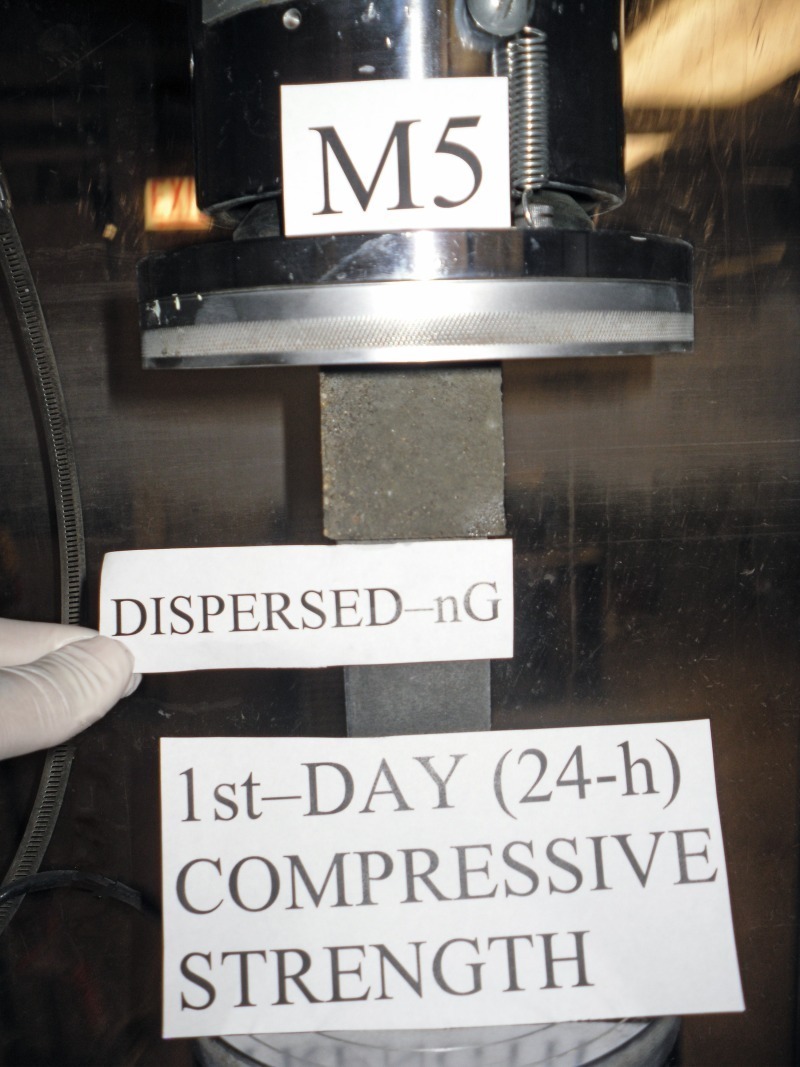
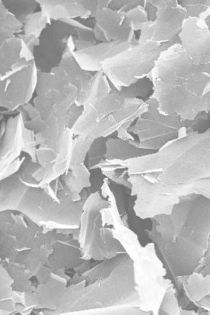
This paper examines the effects of extremely dispersed nG by ultrasonication on the CFA-C system. CFA-C systems blended with nG and ultrasonicated nG are developed and some problems in the CFA-C system, such as delaying of setting time and reduction of strength gain at early ages, are overcome. Experimented properties of CFA-Cs and pure Portland cements are the absorbance spectra of ultrasonicated nG, contents of CH, setting times, fluidities, and compressive strengths according to present standard methods. Part 1 discusses introduction, materials and methods, whereas Part 2 will focus on the results and conclusions.

1 Introduction

Researches suggest replacing the CFA for ordinary Portland cement in mortars, pastes and concretes due to pozzolanic activity of CFA and sustainability of pure Portland cement. The conventional CFA-C system is also developed by scientists, researchers and cement manufacturers. This conventional CFA-C system exhibits such negative side effects as slow setting time and low strength gain at early ages although CFA has a pozzolanic and hydraulic effect on cement. In order to increase CFA use in cement, more than ever, there is a need to improve these aforementioned negative side...


Related articles:

Issue 5/2015 HACETTEPE UNIVERSITY

Supernatant nanographite solution for advance­ treatment of C class fly ash cement systems – Part 2

This paper examines the effects of extremely dispersed nG by ultrasonication on the CFA-C system. The subject of Part 1 were the chapters...

more
Issue 12/2014 HACETTEPE UNIVERSITY

Advances in physical properties of C class fly ash cement systems blended nanographite – Part 1

Research results suggest that the use of nanographite in the CFA-C system and the pure cement system accelerate the setting time and increase the strength gains, hence overweighing any negative effects. The water absorption, apparent volume, apparent density, CH-content, setting time, fluidity and strength gain are favourable when compared to pure cement and nanographite-blended cement. Part 1 discusses materials and methods, whereas Part 2 will focus on the results and conclusions.

more
Issue 1-2/2015 HACETTEPE UNIVERSITY

Advances in physical properties of C class fly ash cement systems blended nanographite – Part 2

Research results suggest that the use of nanographite in the CFA-C system and the pure cement system accelerate the setting time and increase the strength gains, hence overweighing any negative effects. The water absorption, apparent volume, apparent density, CH-content, setting-time, fluidity and strength gain are favourable when compared to pure cement and nanographite-blended cement. Part 2 focuses on the results and conclusions.

more
Issue 2/2021 LUOYANG INSTITUTE OF SCIENCE AND TECHNOLOGY  WUHAN UNIVERSITY OF TECHNOLOGY  HUBEI UNIVERSITY OF TECHNOLOGY

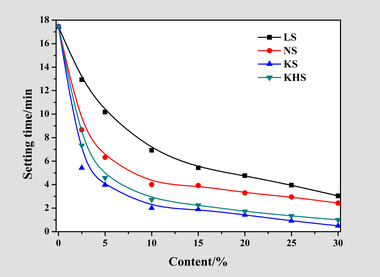
Research into the effect of accelerators on the properties of α-hemihydrate gypsum slurry

Gypsum-based materials count as green building materials and have therefore been widely used in the decoration of structures. Due to the rise of rapid prototyping technology the inorganic non-metallic...

more
Issue 6/2016 UNIVERSITY OF SIEGEN

Investigation of the influence of ­crystal ­morphology on the strength development of ­various a-hemihydrates by use of an in-situ ­ultrasonic technique and complementary methods

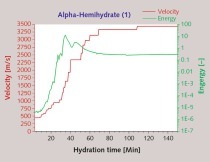
An efficient method to measure definite properties is the in-situ ultra-sonic wave measurement to characterize the hydration process of inorganic...

more
×