New water mist cannons for odor and dust control
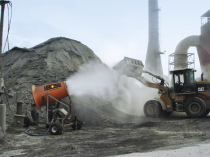
In many cases, so-called spray guns are used for odor and dust control in plants. There are always requirements for the spraying system that do not necessarily fit together. For example, the throwing distance should be as long as possible, but the water and power consumption should be low. The noise level is also always a topic of discussion.
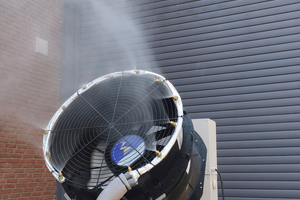
Here, B+W GmbH from Bottrop has now brought a new development to market maturity that brings these contentious points together. Since the fan is the largest power consumer in a system, particular emphasis was placed on cost-effectiveness in the new development. The new multifunctional fan with bionic blade can be used flexibly and in an environmentally friendly manner. The intelligent fan system has very low noise emissions and offers significantly higher efficiency, which translates into considerable savings in electricity costs.
Due to the 100% speed controllable volume flow, variable throwing distances of the water drops can be realized. By means of the two spray rings, which can be operated individually or together, three different quantities of water are available for spraying.
B+W is currently building two different spray guns:
ZAP20: Throwing distance 2 - 20 m
ZAP30: Throwing distance 5 - 35 m
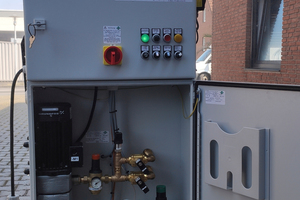
The water consumption can vary between 60 l/h and 2500 l/h, depending on the nozzle equipment on the spray crowns. The rotation angle of the spray nozzles is now freely adjustable from 5° to 270°. A radio control for on/off as well as start/stop for the rotary drive and a heater for frost protection are standard equipment. All functions of the system are monitored and issued as fault messages.
A new feature is flow monitoring, which indicates clogged nozzles and/or leaks in the system. With the use of a water meter, water consumption can be determined. This is particularly important for saving wastewater charges, as the sprayed water goes into the material and not into the sewer.
In addition to mobile spraying technology, stationary systems are also part of the portfolio.
With the newly developed spray guns, B+W Ges. für Innovative Produkte mbH shows that it has remained true to its motto since the company was founded. Innovative products always come first, next to the customer. For over 20 years, B+W has been developing, building and assembling products for the recycling and bulk materials industry worldwide.