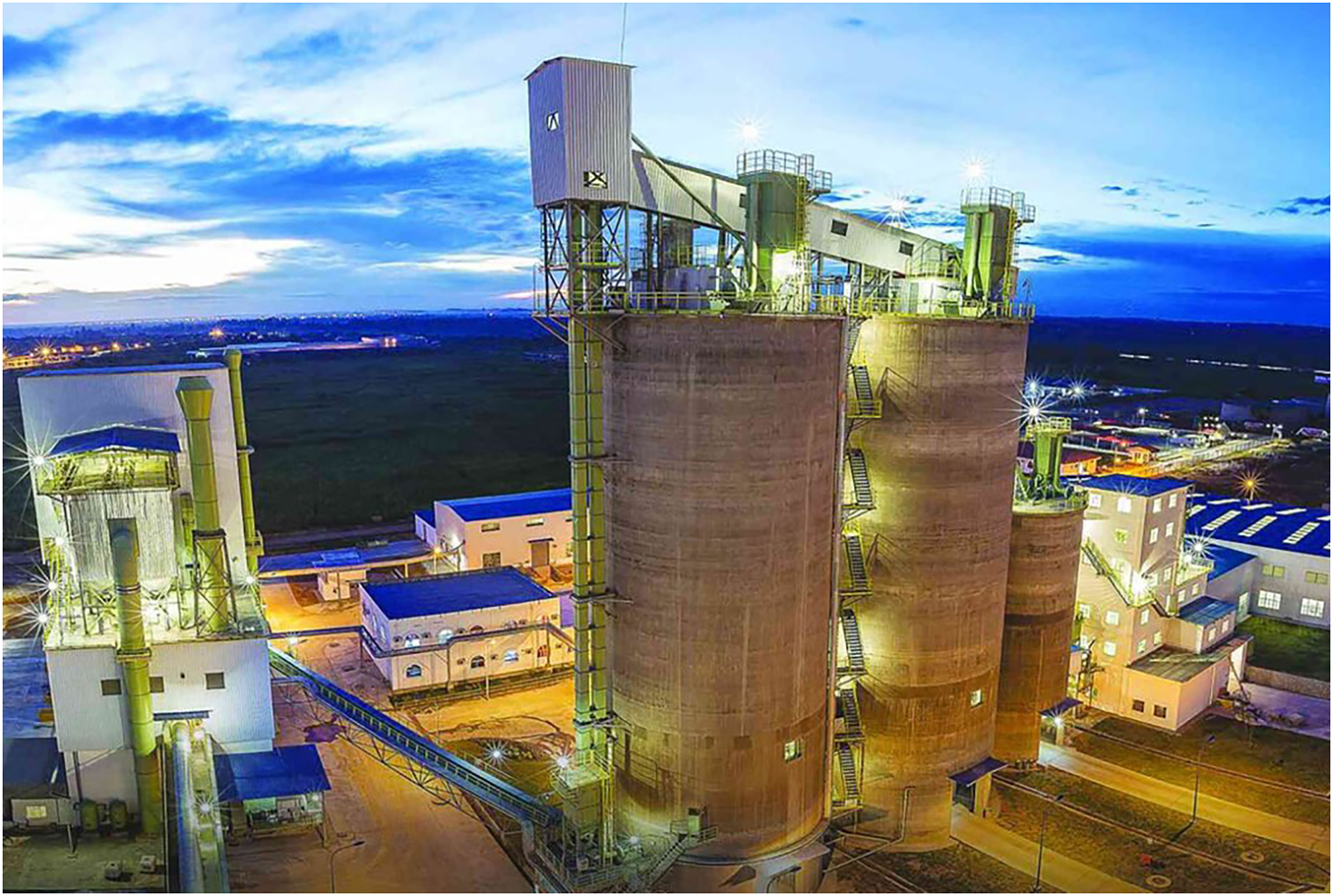
TUM/ACI 2026 Conference, Munich, July 6–10
In July, the Technical University of Munich and the American Concrete Institute (ACI) hosted a week-long conference featuring leading international experts on the topics of concrete admixtures, cement/binders, and sustainable construction. The nearly 300 participants from 35 countries were treated to 120 technical presentations and 24 keynote speeches on the latest developments. The event was held at the Hilton Munich Airport Hotel.

Photo: 300 participants from 35 countries attended the conference at the Munich Airport Hilton Hotel
In the first session, “Superplasticizers and Other Chemical Admixtures,” Prof. Johann Plank, conference organizer and Professor Emeritus of Excellence at the Technical University of Munich, and Prof. Wang Ziming from the Beijing University of Technology first presented novel hybrid and gemini-PCE superplasticizers with superior performance in concrete. A. Nakashima (Takemoto, Japan) offered a solution to the undesirable thixotropy of some clinker-reduced concretes using 1-octen-ol-modified PCE superplasticizers. BASF, Sika, Master Builders Solutions, and Saint-Gobain reported on further new developments. The focus was on admixtures for novel CO2-reduced binders.
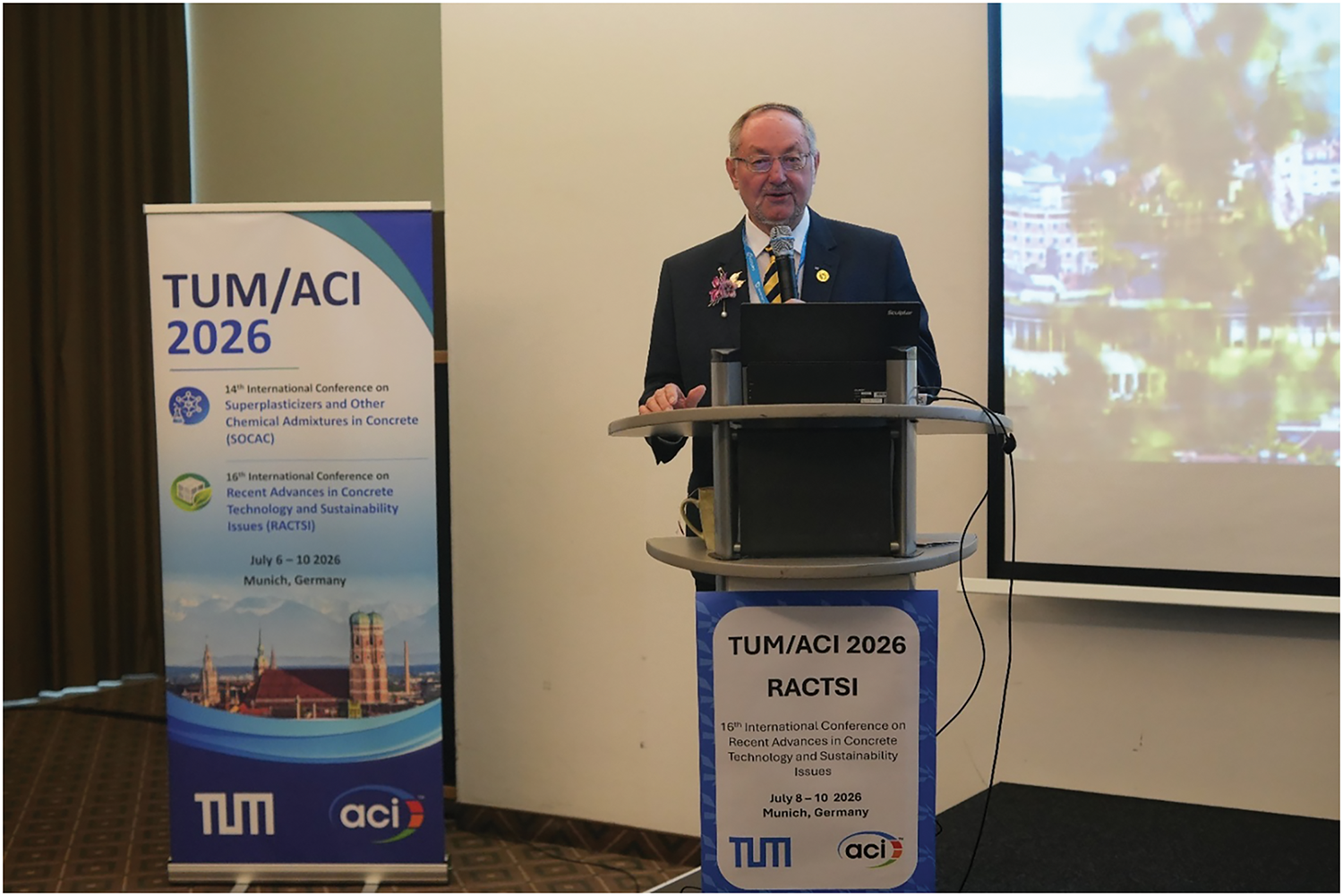
Photo: Prof. Johann Plank of the Technical University of Munich, organizer of the conference, at the opening ceremony
In his introductory lecture, Prof. Plank pointed out that the wide variety of clinker substitutes under discussion poses a major challenge for admixtures. Unlike cement, most substitutes initially exhibit a negative surface charge in the cement pore solution and therefore cannot interact with conventional anionic superplasticizers such as PCEs. This becomes possible only through the gradual uptake of calcium ions on their surfaces, resulting in an initially lower dispersion effect and higher superplasticizer dosages.
A highlight of this part of the conference was the presentation of the TUM/ACI 2026 Conference Award to Prof. Changwen Miao of Southeast University in Nanjing. He was honored for his outstanding contributions as a leading pioneer in the introduction of PCE superplasticizers in China, he played a decisive role in shaping developments there, and founded Jiangsu Bote, which is now the largest concrete admixture company in China.
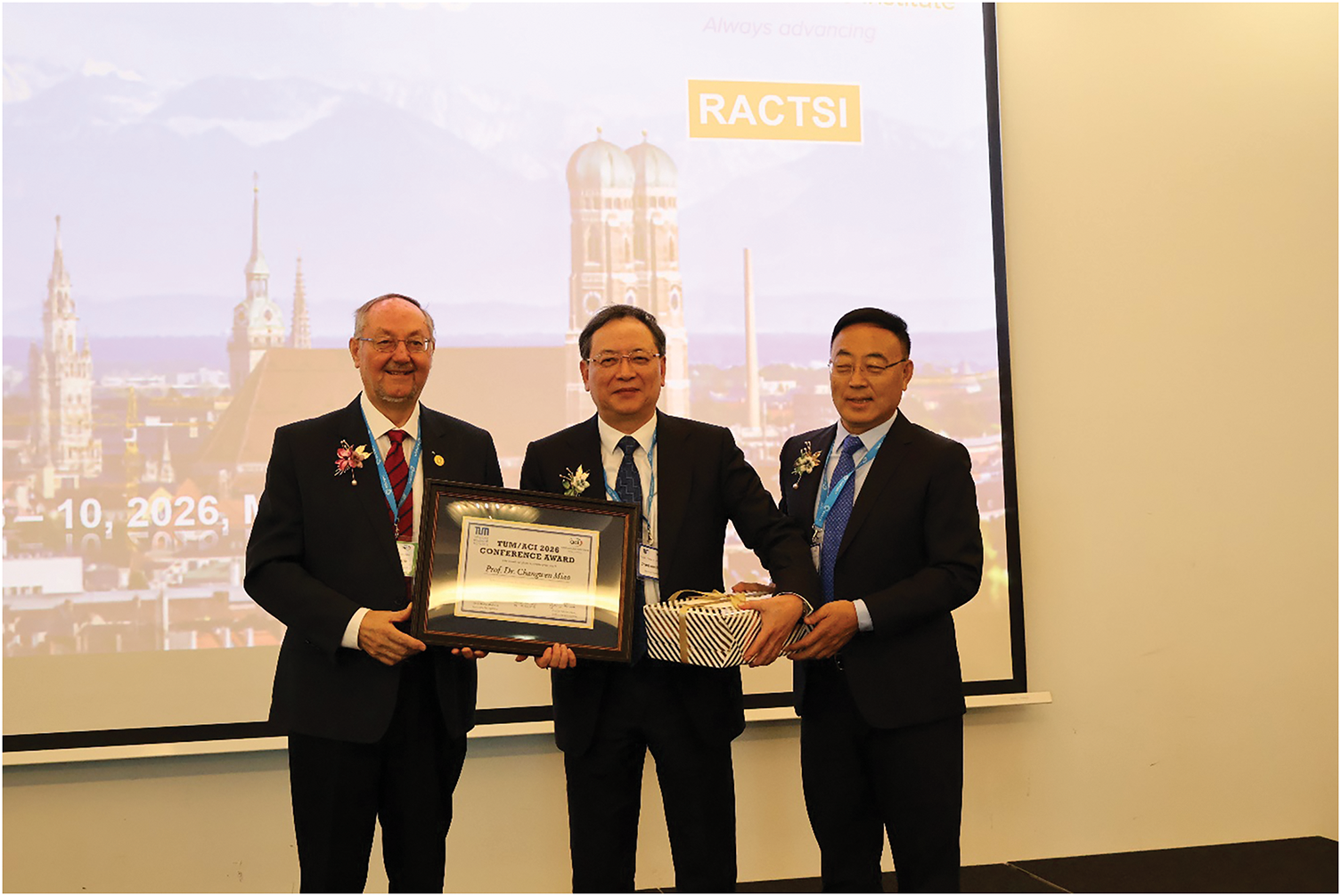
Photo: Prof. Changwen Miao, the pioneer of PCE technology in China, received the TUM/ACI 2026 Conference Award for his lifetime achievements
The second part of the conference, “Recent Advances in Concrete Technology and Sustainability Issues,” focused primarily on low-carbon cements and sustainable building materials. The main focus was on substitutes for carbon-intensive clinker. To accomplish this goal, the following scalable concepts were mentioned: Th. Neumann (Schwenk/Ulm) presented the mechanochemical activation of clays, while the production of amorphous reactive glasses was introduced by Prof. A. Palomo, University of Madrid, and—particularly in China—the use of industrial waste materials (coal gangue, lithium minerals, phosphogypsum, red mud, and iron and nickel slag) were highlighted as attractive alternatives by several speakers. Presentations on carbon capture also took up a significant portion of the program. E. Wolf reported that the CO2 absorption process developed by Capsol, which uses a K2CO3 solution, can remove approximately 90–95% of the CO2 from a flue gas stream containing 16–19% CO2, with lower energy consumption than conventional amine technology. Dr. Zain Bairq from Hunan University in China addressed this point by presenting novel catalysts with plasmonic nanodots, which can lower the decomposition temperature of the amine-CO2 complex by approximately 40 °C. An important aspect of Carbon Capture & Storage (CCS) is the integrity of the cemented boreholes through which CO2 is injected. Long-term studies at Oklahoma State University, presented by Prof. T. Catalin, showed that cement that has cured over many years is significantly more CO2-stable than fresh cement. He therefore recommended using older boreholes (so-called “legacy wells”) for the injection.
The highlight of this part of the conference was the presentation by Prof. Manfred Curbach of the Technical University of Dresden on “Carbon Concrete,” a material he developed that enables massive CO2 savings. He had been honored with the NOBEL Sustainability Award in 2025 for this work and described in detail its development and widespread international implementation. The audience acknowledged his presentation with a long round of applause.
Of particular note were as well the presentations by Prof. H.-M. Ludwig (Bauhaus University Weimar) on evaluating the durability of cements with various clinker substitutes, as well as by N. Mikanovic (Heidelberg Materials) on admixtures for early strength in clinker-reduced cements. Roberta Alfani (Ecocem, France) presented an impressive example of this in the form of ACT binders with a high content of granulated blast furnace slag.
Five scientists received the TUM/ACI 2026 Conference Award for their lifetime achievements and outstanding contributions to cement and concrete technology: Prof. Ravindra Gettu from the IIT in Madras, India; Prof. Jan Olek from Purdue University in the U.S.; Prof. Nemkumar Banthia from the University of British Columbia in Canada; Prof. Jason Weiss from Oregon State University; and Dr. Martin Schneider, CEO of the Association of German Cement Manufacturers (VDZ) in Düsseldorf. In his acceptance speech, Dr. Schneider offered the beautiful observation that “cement binds together not only aggregates, but also people,” for which he received a round of applause.
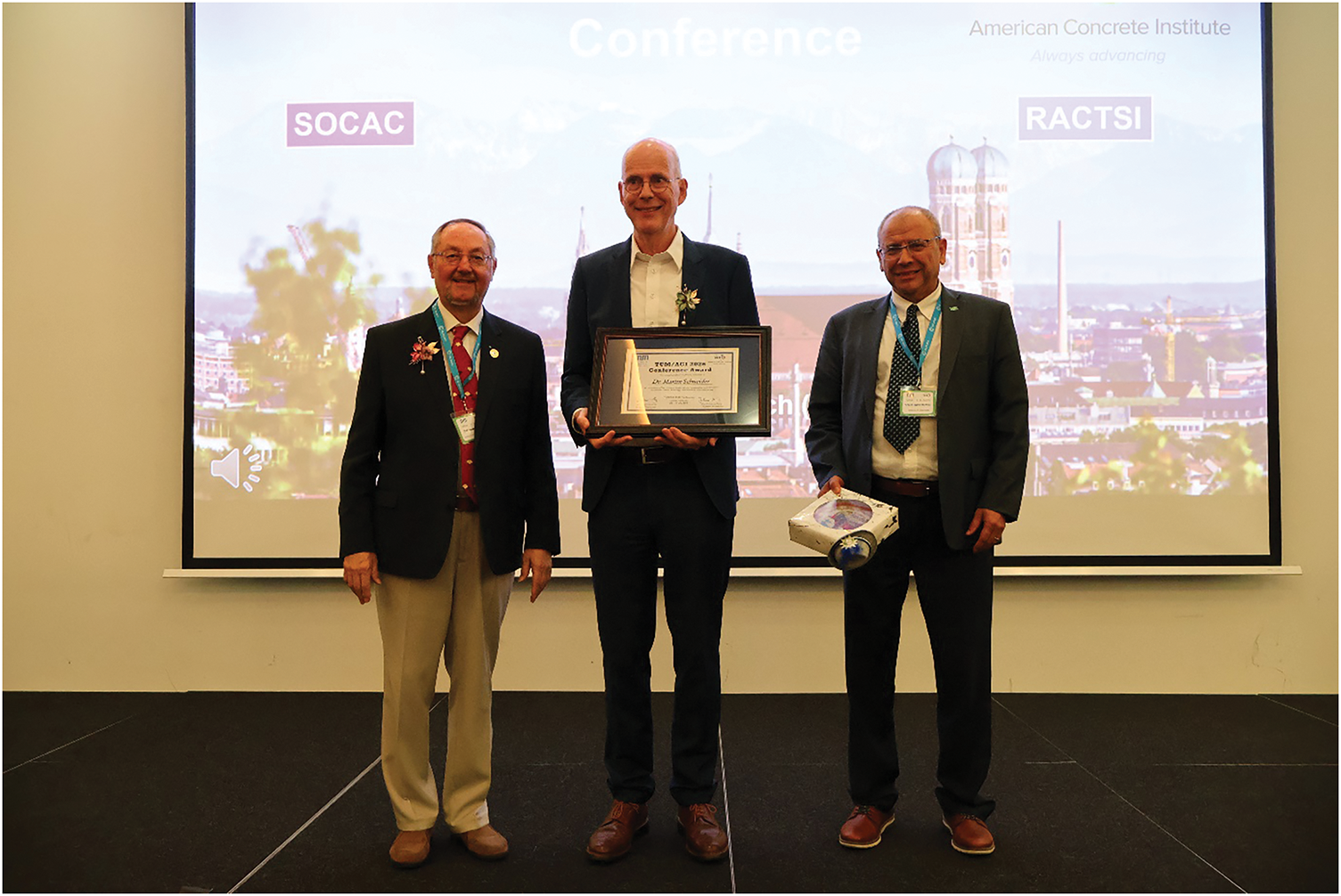
Photo: Dr. Martin Schneider (center in the photo), CEO of the VDZ, presented the German cement industry’s roadmap for reducing CO2 emissions; he was honored with the TUM/ACI 2026 Conference Award for his contributions
The conference was accompanied by an extensive exhibition featuring companies such as Mapei, Master Builders Solutions, BASF, KZJ and Arit (both from China), Ecocem, Heidelberg Materials, Oxiranchem (China), Everox, i3 motion, Rigaku, Testing, Schleibinger, UltraTest, and Silkroad (Republic of Korea). The event offered ample opportunity for networking and a spectacular conference banquet dinner, where a Bavarian folk dance group performed traditional customs such as Schuhplatteln, Goaslschnalzen, and Holzhacken, sparking great enthusiasm among the attendees.
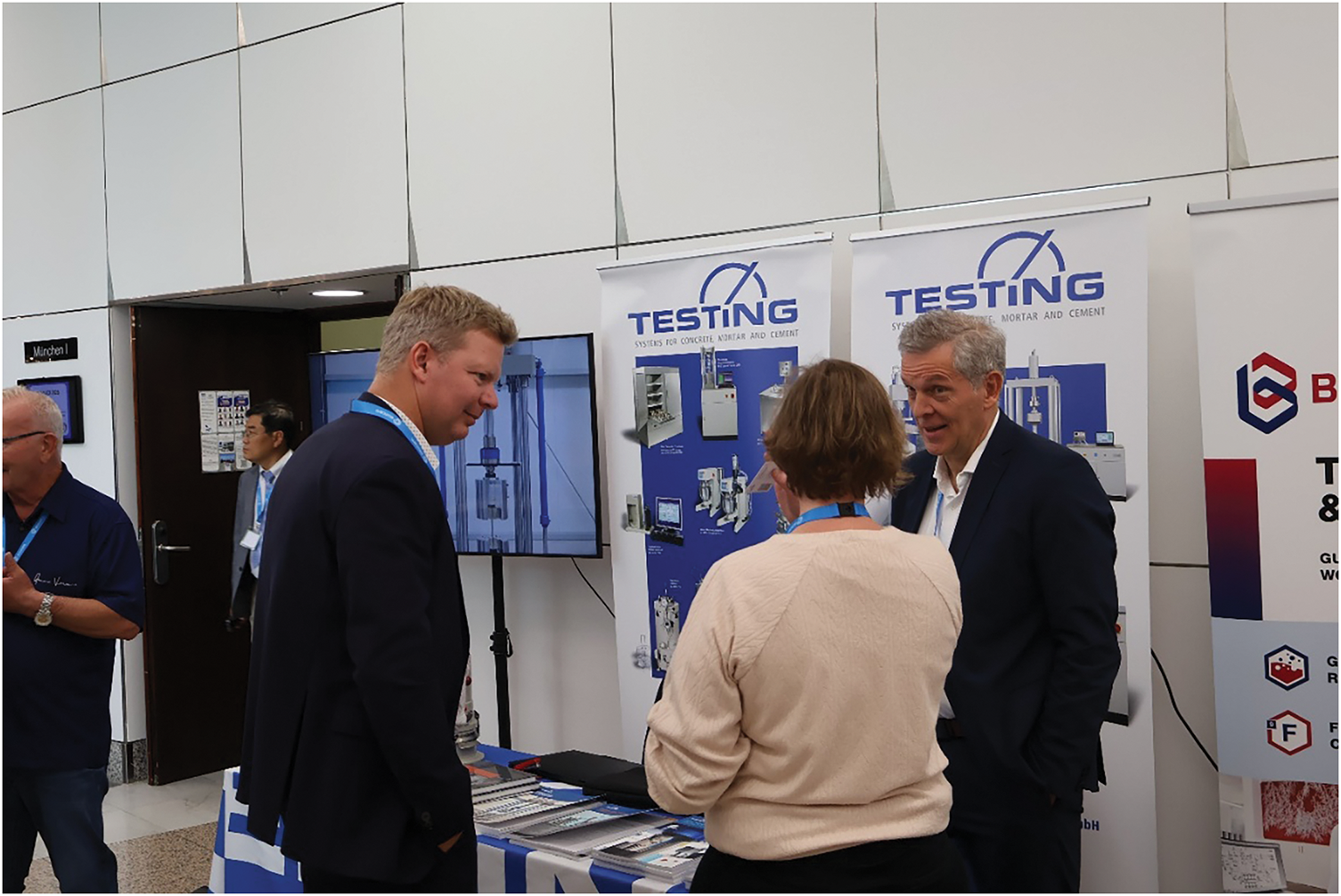
Photo: Numerous companies showcased their products during the conference
The next conference in this series will take place in Canada, in 2029.
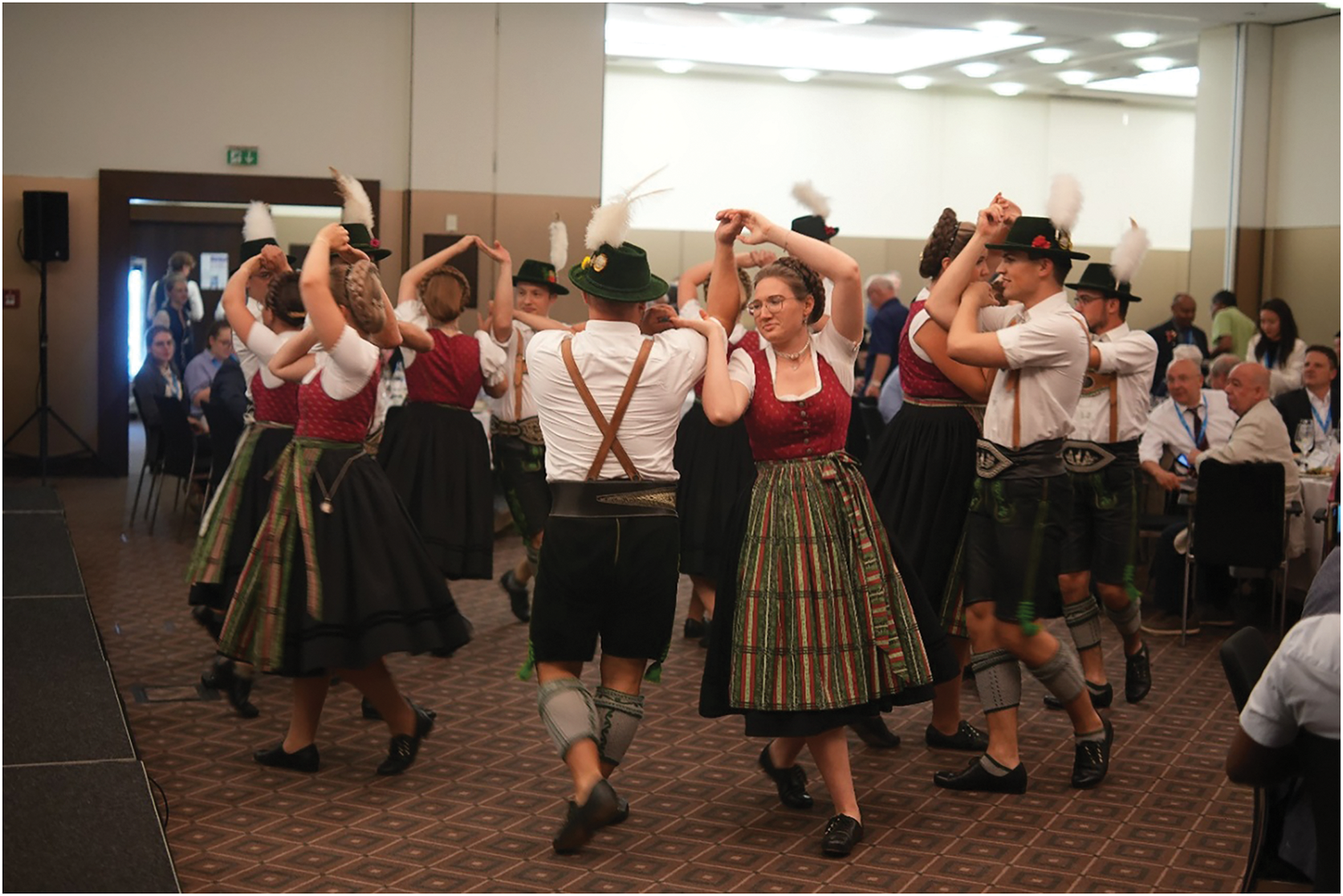
Photo: At the conference banquet, a Bavarian folk dance group delighted the attendees with their traditional dances and performances