The core of the Cement Process

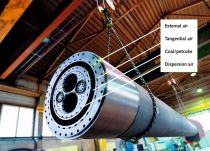
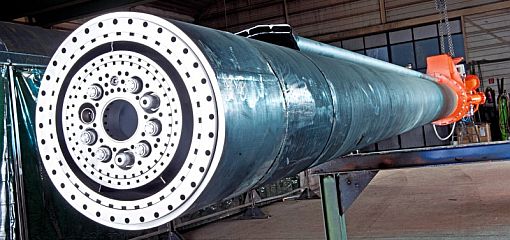
The process of clinker manufacture has evolved massively over the last decades. Back in 1843 when William Aspdin invented the technical process of clinker manufacture in a rotary kiln, the production was primarily driven by the burner. With all the developments coming in the subsequent years, especially the precalciner and the external combustion chambers, the main burner (as it has been called since then) only takes over about 45% of the thermal input. Still the main burner largely defines the quality of the product and remains to be an important piece of equipment in the clinker manufacturing process. Many smart engineers are constantly working to further improve the burner technology to accommodate new requirements regarding emissions reduction and ability to burn alternative fuels. Implementing technologies from other industrial applications has proven to be difficult, because in the cement industry the burner is an integral part of the kiln process and operates with only a small portion of primary air through the burner itself. Conventional low-NOx-technologies of other industries don’t apply. Satellite tubes for higher feed rates of alternative fuels demonstrate this characteristic of integral burner-and kiln-system even more. So what can be the future developments for the burner technology? Will we be able to convert the “burning” into direct electric heating? Will it be possible to operate rotary kilns with plasma burners and come to CO2-free kiln exit gases? The engineers of the cement industry will surely find ways to further improve the “core of the clinkering  process”!


Yours sincerely


Matthias Mersmann
Related articles:

Issue 08/2012

Modern high momentum FLEXIFLAME™ ­rotary kiln burner

The main technological principles of this rotary kiln burner from Messrs GRECO are based on calculations and studies undertaken by Prof. Clemente...

more
Issue 2/2021 MAERZ OFENBAU AG

Modernising the annular shaft kiln with wood-fired side burners

An annular shaft kiln at the Unicalce Lecco/Italy site was upgraded with six side burners. Prior to the retrofit, biomass feeding to the combustion chambers was limited due to high combustion...

more
Issue 5/2014 A TEC GRECO

Burner developments for co-processing alternative fuels

Today’s burner suppliers are offering different technologies for their main burner to produce the final clinker quality in the kiln. Recently some of...

more
Issue 5/2014 Special AFR

Proven experience with alternative fuels in the cement kiln process

In times of increasing energy costs, it is of vital interest for any company to save energy. To cut the energy costs for clinker production, the German cement industry started substitution of primary fuels with Alternative Fuels (AF) such as used oil or tyres after the first oil crisis of 1973. Today, alternative fuels and raw materials (AFR) include a wide range of types of hazardous and non-hazardous waste...

more
Issue 3/2022 WUHAN UNIVERSITY OF TECHNOLOGY | ANSHAN JIDONG CEMENT CO. LTD

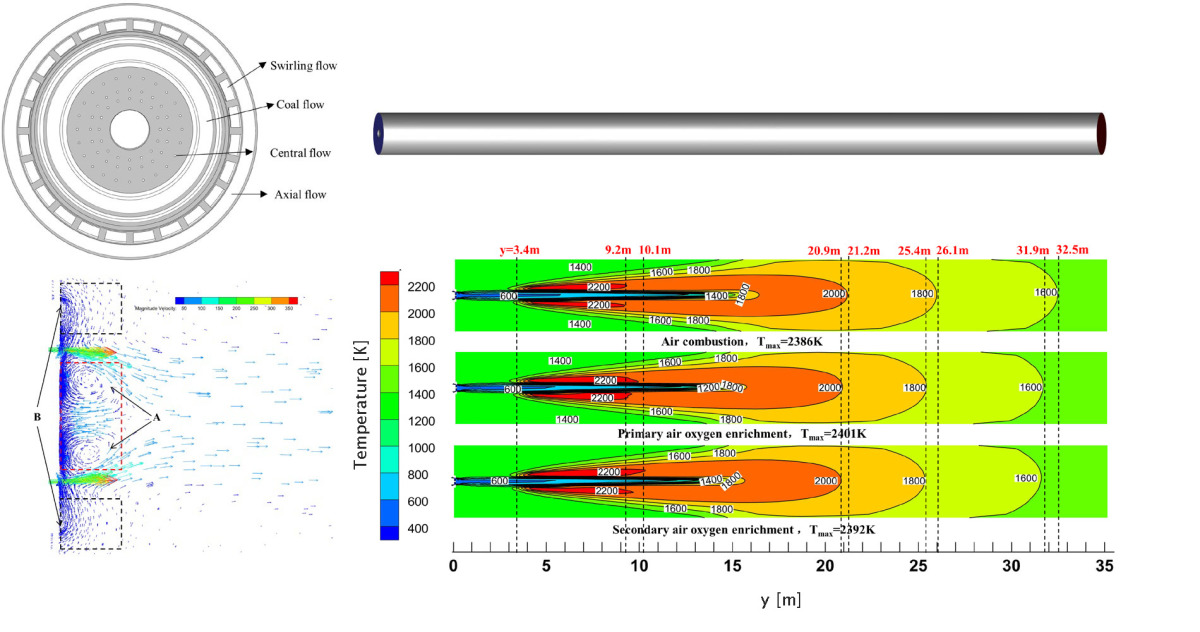
Numerical simulation of oxygen-enriched combustion in a rotary kiln in the primary air and the secondary air respectively

Aiming at a real-size rotary kiln, numerical simulations were carried out for air combustion, primary air oxygen enrichment, and secondary air oxygen enrichment conditions, respectively, in order to...

more