New ARCOS spectrometer surpasses performance limitations
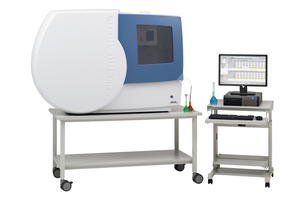
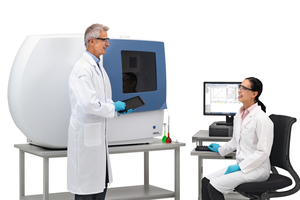
Spectro Analytical Instruments from Kleve, Germany has developed a new ARCOS high-resolution ICP-OES spectrometer, which is the first and only spectrometer featuring the fast and convenient selection of axial plasma or radial plasma observation in a single instrument – without any optical compromise. Designed for use in the most demanding elemental analysis applications in industry, science, and academia, the new ARCOS easily surpasses the performance limitations of conventional ICP-OES instruments, dramatically improving sensitivity, stability, and precision, while lowering operating costs with the introduction of innovative components, unique capabilities, and optimum flexibility.
The new device establishes a new ICP-OES performance class for complex analytical tasks – resolving a wide array of inherent problems in traditional spectrometer design – and caps 30 years of Spectro´s experience in developing advanced solutions for the elemental analysis of metals, chemicals, petrochemicals and other materials.
Features:
Axial or radial plasma observation: Spectro´s unique new MultiView capability delivers performance improvements in accuracy and stability and allows for the fast and convenient selection of axial plasma or radial plasma observation with no optical compromise.
ORCA optical system: The CCD optic system with a Paschen-Runge mount assembly delivers a matchless resolution of 8.5 picometer in the wavelength range from 130 to 340 nm.
Innovative power generator: A unique new solid-state generator design that provides the highest plasma power available for extreme or quickly changing plasma loads.
Elimination of the need for purge gases: Spectro´s UV-PLUS sealed optical chamber ends the need for the purging of argon or nitrogen gases – along with the related supplies, maintenance costs, and downtime.
No external cooling system: air-cooled interface technology and the completely air-cooled generator eliminates the need for an external cooling system – along with the associated, and often substantial, equipment, power, and maintenance costs.
The new ARCOS generation is available immediately from Spectro Analytical Instruments.
//www.spectro.com" target="_blank" >www.spectro.com:www.spectro.com