Impact of clinker coolers on downstream equipment
 OneStone Consulting
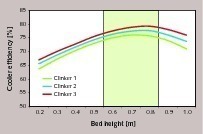 OneStone Consulting
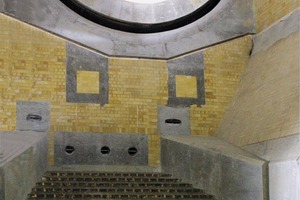 IKN
IKN
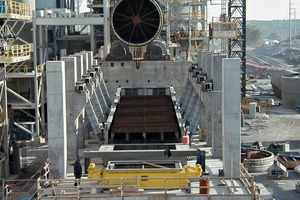 IKN
IKN
 FLSmidth
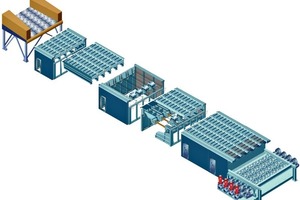 Claudius Peters
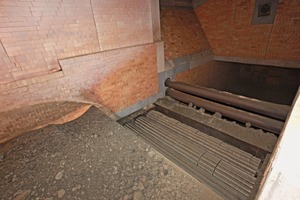 ThyssenKrupp Industrial Solutions
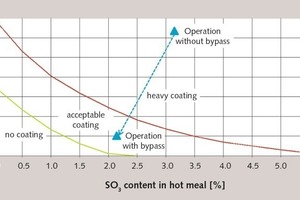 A TEC
A TEC
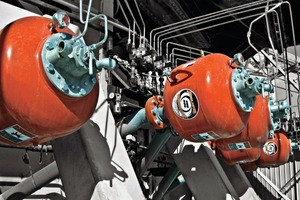 Martin Engineering
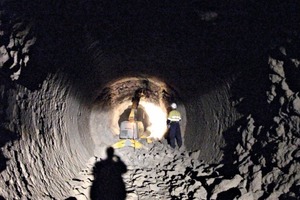 Brokk
Brokk
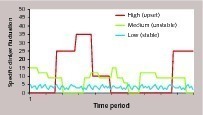 OneStone Consulting
![12 Dimensioning of clinker conveyors [4]](/uploads/images/2015/w203_h121_x101_y60_101546681_6a5eb632a5.jpg) OneStone Consulting
OneStone Consulting
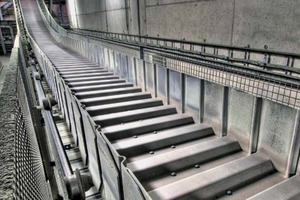 Aumund
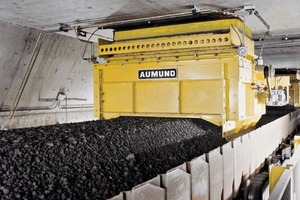 Aumund
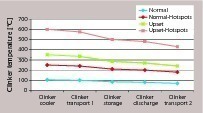 OneStone Consulting
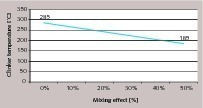 OneStone Consulting
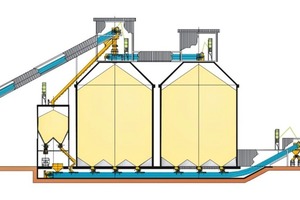 Beumer
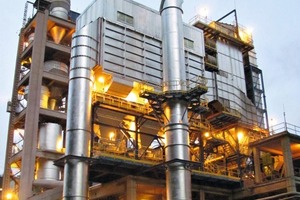 Scheuch
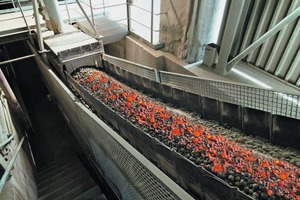 Aumund
Clinker coolers in today’s cement pyroprocessing lines are considered to be very reliable even under kiln upset conditions. But what is the interaction of the cooler with the upstream pyroprocessing under extreme conditions and how is the downstream equipment affected? In the following article the process will be analyzed and questions answered.
1 Introduction
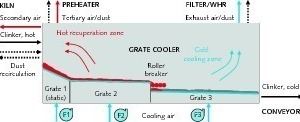
Modern clinker coolers require 1.7 to 2.0 Nm³/kgcli. of fresh air to cool clinker with temperatures of more than 1400 °C from the rotary kiln to outlet temperatures below 100 °C. Such clinker coolers recuperate most of the thermal energy in the clinker to provide secondary air for the burning process and tertiary air for pre-calcination achieving thermal efficiencies of about 75 % and more. Clinker coolers are also required to buffer kiln fluctuations and have no or only a minor effect on the upstream pyroprocessing system which comprises pre-heater, pre-calciner, kiln and fuel...