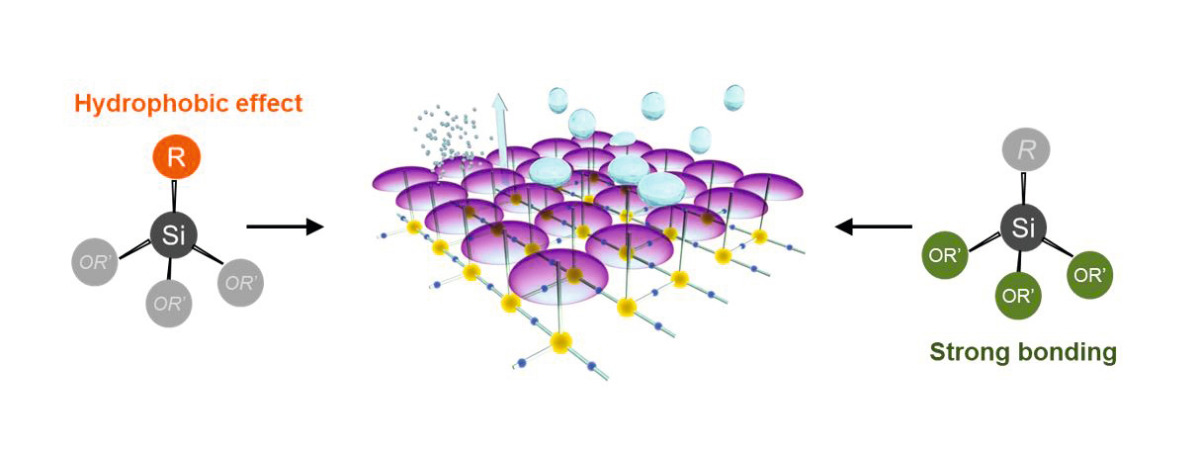
Hydrophobizing of gypsum by silanes (Part 1)
![1 Relative reaction rate vrel for hydrolysis and condensation reaction of silanes as a function of pH [15, 20]](/uploads/images/2013/w300_h200_x400_y306_101535921_9c0bda7409.jpg)


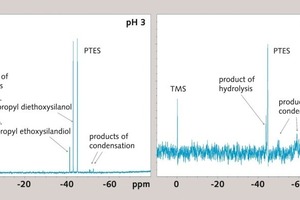

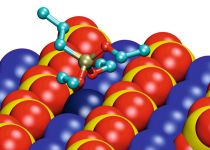
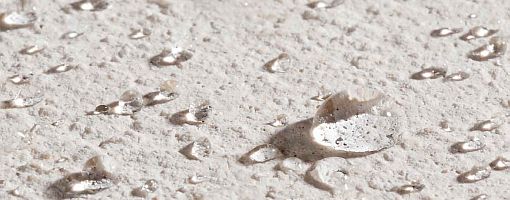
The main disadvantage of gypsum products in the building industry is the poor water resistance. While it is known that the water resistance can be increased by adding special silanes, only very little is known about the working mechanism of such silanes. The mechanism of the hydrophobizing effect of propyltriethoxysilane as a representative for a short chain alkylalkoxysilane in an alkaline gypsum matrix is studied in detail.
1 Introduction
Gypsum products are used in a wide range of applications, primarily in the building material sector. The most important are gypsum and gypsum-lime plasters, plaster boards, gypsum fiber boards, standard wall boards or plaster floors. Despite a low solubility of 2.75 g gypsum/L water gypsum products have a high water sensitivity. This limits the use to indoor applications. Gypsum can absorb water reversibly via the pore system, whereas swelling caused by water mass transport can result in significant reduction of strength and surface damage. The increase of the water resistance of...