THYSSENKRUPP INDUSTRIAL SOLUTIONS AG

High time for high temperatures

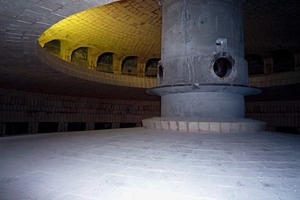
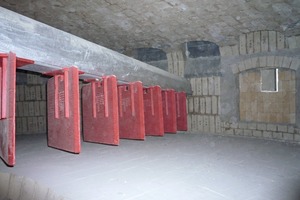
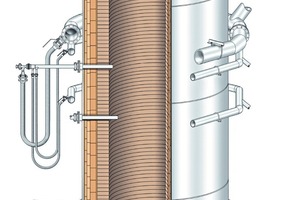
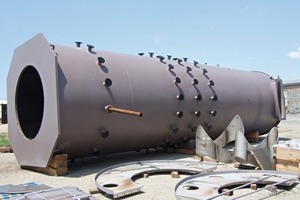
ThyssenKrupp Industrial Solutions AG (TKIS) has become a major player in the field of pyroprocessing minerals. Limestone, gypsum, dolomite, magnesite (natural as filter cake or flotation concentrate) and bauxite are those precious raw materials for which TKIS designs and engineers kilns and furnaces.

1 Introduction

In today’s market not only energy efficiency, sustainability and innovation are mutual objectives, but also reliable aggregates to perform for decades. With rising energy costs and the desire to maintain a clean environment for future generations, TKIS from Beckum, Germany strives to provide the best equipment, which applies the latest developments in technology for the best use of mineral resources. Thus, everybody always has to be ready to find new approaches. No matter how exotic und unusual the material – with its range of products any company can always find a way to process...

Related articles:

Issue 8/2021 MAERZ OFENBAU AG

New PFR lime kiln process with blast furnace gas and oxygen

Production of high reactive lime is now possible with inexpensive blast furnace gas. A new and innovative Parallel Flow Regenerative lime kiln process using 100% blast furnace gas achieves the same...

more
Issue 9/2015 OTTO VON GUERICKE UNIVERSITY MAGDEBURG

Simulation of limestone calcination in ­normal shaft kilns – mathematical model

The process of calcination in normal shaft kilns can be described and simulated by means of a mathematical model in which the operating conditions,...

more
Issue 10/2015 OTTO VON GUERICKE UNIVERSITY MAGDEBURG

Simulation of limestone calcination in ­normal shaft kilns – Part 2: Influence of process parameters

For normal shaft kilns it is described how the axial profiles of the surface and core temperature of the stones, their decomposition and the gas...

more
Issue 02/2024

Proposal for a new kiln process for burning of lump lime

The proposal described below for a lime kiln is based on an idea which is more than 20 years old. The old idea was again taken up, but under the stringent requirement of a “continuous process”.

more