OTTO VON GUERICKE UNIVERSITY MAGDEBURG

Simulation of limestone calcination in ­normal shaft kilns – mathematical model

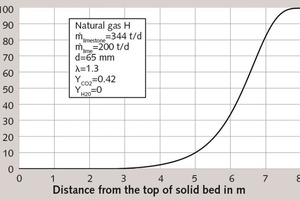
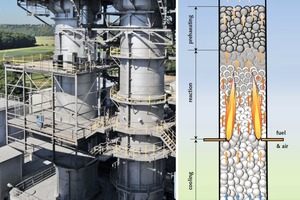
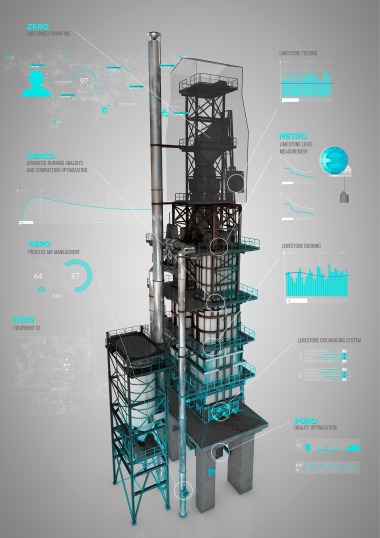
The process of calcination in normal shaft kilns can be described and simulated by means of a mathematical model in which the operating conditions, material properties and kiln geometry serve as variables. The results can be used for purposes of process ­optimization, kiln design and personnel training.

1 Introduction

Lime burning, i.e., the calcination of limestone, is a very complex process, because it involves numerous significant parameters – including:

the operating conditions (throughput, fuel quantity, combustion air quantity, fuel type and composition, ambient temperature, air speed),

the kiln geometry (diameter, height of solid bed, length of cooling zone, thickness of wall layers) and

the characteristics of the stone (average size, particle size distribution, calcite component, magnesite component, thermal conductivity, reactivity, moisture content)

Due to the large number of parameters,...
Related articles:

Issue 04/2012

Simulation of lime calcination in PFR kilns – Influence of source and size of limestone

Besides the influence of energy consumption and throughput, the origin and the particle size of the limestone during calcination in the PFR shaft...

more
Issue 5/2016 EESAC SAS DUINGT/FRANCE

Understanding the process conditions in a parallel flow regenerative kiln

A lime manufacturer operates a 300 tons per day Parallel Flow Regenerative Kiln (PFRK), fired with natural gas. The kiln is fed with 40-80 mm limestone, but in order to maximize the use of the quarry reserve, the company wished to explore the possibility to feed the kiln with smaller and coarser particle size distribution. ...

more
Issue 4/2018 QUALICAL INTERNATIONAL SRL

Lime production experience 4.0

Italian plant engineering contractor QualiCal has designed and built a 150 t/d Synthesis regenerative vertical kiln (PFR – twin shaft burning unit) for Köhler Kalk. The kiln boasts rock-bottom...

more