Formation of intermediate phases during hydration of C3S
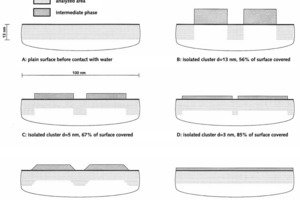
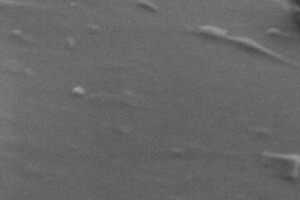
![2 Formation of a continuous envelope of reaction products on the surface of the C3S particles in the early phase of hydration [12]](/uploads/images/2013/w300_h200_x389_y828_101516306_354cd21e50.jpg)
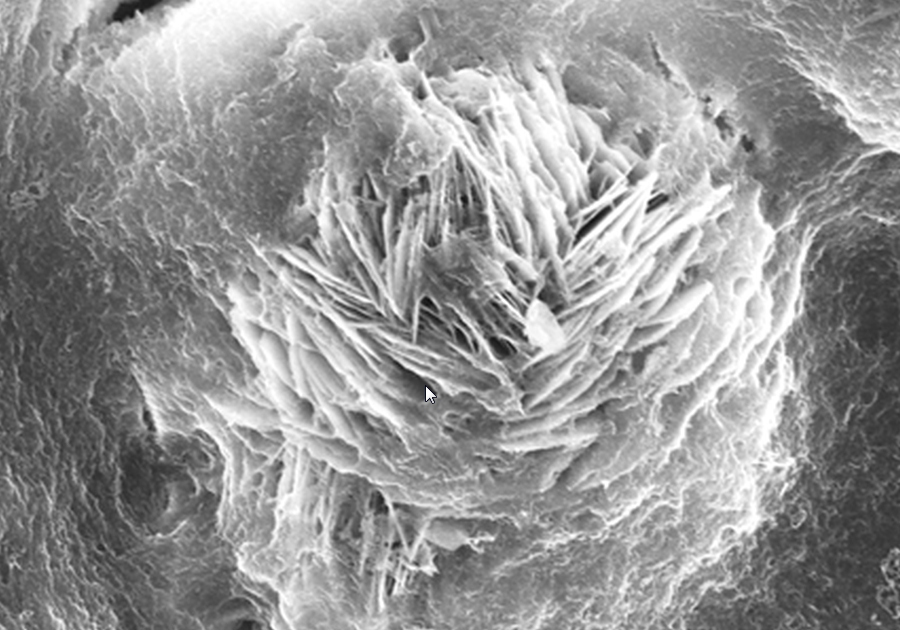
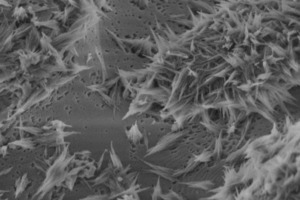
![3 Formation of isolated clusters of the intermediate phase (here designated as C-S-H) on the surface of the C3S particles immediately after contact with water [11]](/uploads/images/2013/w300_h200_x196_y326_101516318_524fb64b4f.jpg)
![4 Results of 29Si MAS NMR spectroscopy [13]: Top – single pulse spectrum of the non-hydrated nano C3S (vr=6 kHz, 60 s pulse repeat time, 1344 pulses); Center – single pulse spectrum of the nano C3S after a 5 minute hydration period (vr=6 kHz, 60 s pulse repeat time, 1360 pulses); Bottom – 29Si{1H} CP spectrum of the nano C3S after a 5 minute hydration period (vr=3 kHz, 10 s pulse repeat time, CP contact time=1 ms, 2304 pulses)](/uploads/images/2013/w300_h200_x157_y120_101516315_b804f62988.jpg)
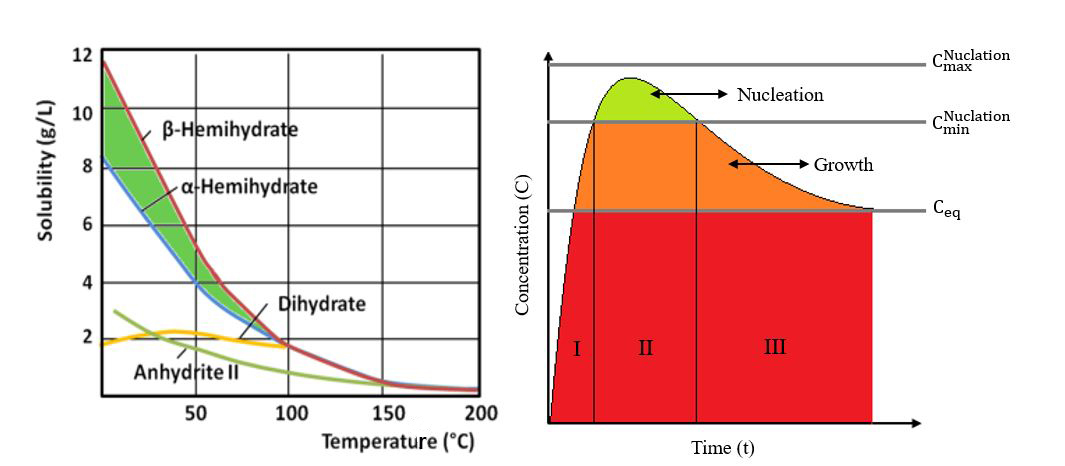
![9 Change in the Gibbs free energy during the hydration of C3S in a single step (left) or in two steps (right). For this calculation, thermophysical data [17, 18] and the following reaction equation were used: C3S + 3.917 H2O ➞ 1.7Ca(OH)2-SiO2-0.917H2O + 1.3 Ca(OH)2](/uploads/images/2013/w221_h135_x110_y67_101516303_3486673949.jpg)
The described model concepts can be employed as the basis for the development of binding agents possessing a significantly lower energy content and thus generating lower specific carbon dioxide emissions.
1 Introduction
The setting of cement is an important technological process. Nowadays, more than 2 billion t of cement are manufactured and processed all around the world. In addition to the technological parameters of the produced cements, such as water demand, setting times and compressive strength development, the industry places very great importance on the environmental impact of the cement manufacturing process. The main focus is placed on carbon dioxide emissions and the consumption of thermal and electrical energy. It can be assumed that cement production capacities will continue to...