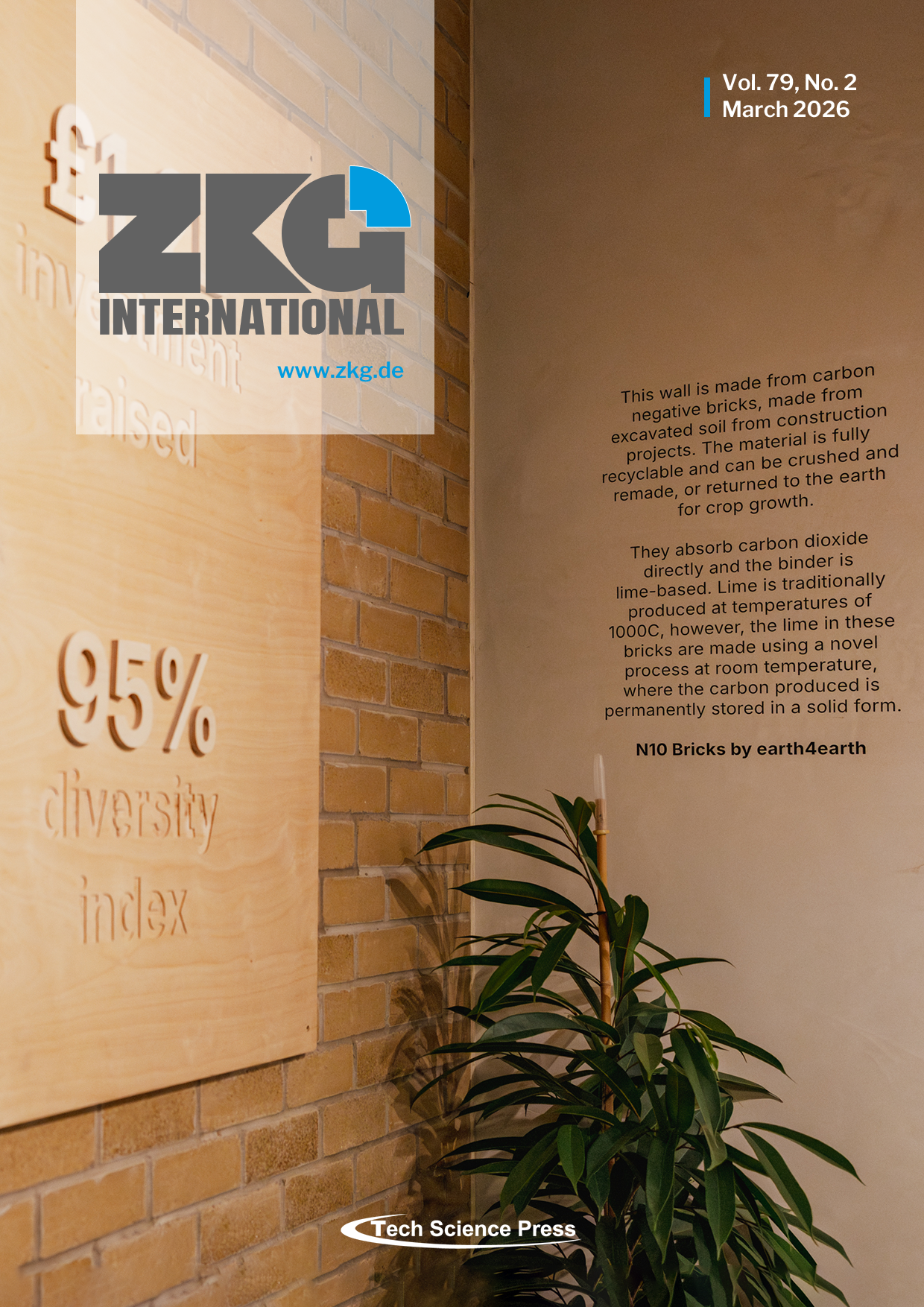
Turning buildings into carbon sinks: CO2-capturing binder makes earth bricks carbon-negative
earth4Earth (e4E) is a UK-based cleantech startup founded in June 2023 by Dr. Lei Zhang, structural engineer, Professor Theodore Hanein, chemical/process engineer, and Professor Yi Luo, an expert in raw earth construction. The startup has developed a range of lime-stabilized earth bricks that actively capture CO2 from the atmosphere. Drawing inspiration from ancient earthen architecture such as the Chinese Fujian Tulou and enhancing it with innovative decarbonized technology, e4E has transformed the brick manufacturing process from one of the most carbon-intensive (1.1 Gt CO2eq annual emissions of worldwide fired clay-brick production [1]) to one that is carbon negative with two Environmental Product Declarations (EPD) showing this. This paper reviews the e4E brick technology, its material properties, and early demonstrations, highlighting how a novel ambient-temperature lime production process allows net CO2 sequestration.
2 e4E zero-carbon lime binder and manufacturing process
Central to earth4Earth’s innovation is the e4E zero-carbon lime binder produced at room temperature. Traditional lime production requires calcining limestone at ~900°C to 1000°C, emitting CO2 both from fuel combustion and from the decomposition of the limestone itself. In contrast, e4E’s process, termed “DCUS” (Decarbonization, Capture, Utilization, and Storage), involves a novel room-temperature lime synthesis that avoids any red heat or process CO2 emissions altogether. The synthesis process involves an ion-exchange reaction between a calcium source (natural minerals such as limestone or gypsum) and NaOH which produces a “zero-carbon” lime binder, chemically and functionally similar to or better (in certain applications) hydrated lime but with its embodied carbon eliminated [2]. It has been estimated that the novel chemical process can reduce the carbon footprint by 0.31 t CO2 per t CaCO3 compared to the traditional production process, and that an annual reduction of 37.3 Mt CO2 can be achieved compared to the traditional production process [3].
Using this binder, earth4Earth bricks are manufactured by compaction at room temperature instead of kiln firing. Recycled soil, excavated during construction projects, is blended with sand to control the grain size distribution, stabilized with a binder, and pressed into brick molds. By avoiding the carbon-intensive kiln firing step required in conventional bricks production, over half of the typical emissions of fired bricks production are further cut out. e4E bricks are cured at mild conditions for early strength development and transportation, and mainly during the first few years of service life, the e4E zero-carbon lime binder contained in the brick reacts with atmospheric CO2. The mechanical and durability properties of the bricks are first employed by the initial compaction and curing process, and subsequently by the reaction of the e4E zero-carbon lime binder with clay minerals in the soil and with CO2.
The entire binder and brick production chains use renewable energy and emit virtually zero process CO2, so the bricks start with a much lower embodied carbon than ordinary fired clay bricks. Because they are simply made of raw earth, sand, occasionally minor amounts of recycled pozzolans, and the e4E zero-carbon lime binder chemically comparable to traditional air lime, e4E bricks can compete with modern/traditional bricks and be compatible with most heritage restoration projects, yet improved through innovative decarbonized production processes.
3 CO2 sequestration and permanent mineralization
Beyond their low embodied carbon, e4E bricks actively sequester CO2 during service life, enabling a net-negative carbon footprint over their lifecycle. The mechanism is the natural carbonation of lime: calcium hydroxide in the binder slowly reacts with CO2 from air to form calcium carbonate, permanently locking away the CO2 as a solid mineral—the same stable material that makes up limestone and seashells. Carbonation works through direct air capture on the brick surface and through the bricks’ pores, where CO2 enters by diffusion and crystallizes as calcium carbonate within the brick’s microstructure. Once CO2 is mineralized in the brick, it remains stored even if the brick is broken or ground down, since the carbon is now part of a solid carbonate matrix. In other words, the carbon capture is permanent over the full lifecycle, not merely temporary absorption/adsorption.
The rate of carbonation is fastest in early ages (when the brick is more porous) and tapers off as the available lime binder becomes carbonated. Environmental conditions, such as degree of surface exposure to air (optimized in outdoor and uncoated applications), humidity levels, and temperature, all affect CO2 diffusion into the brick and therefore carbonation rate [4]. Over its lifespan, however, each brick will eventually reach saturation, when all the reactive binder has carbonated.
earth4Earth offers bricks with different binder contents to tune the carbon capture capacity and market requirements. Independent verification by an Environmental Product Declaration (EPD) has confirmed that the e4E brick with 10% e4E zero-carbon lime binder (the “N10” type) absorbs more CO2 than it emits over its life, yielding a net-negative carbon footprint per unit. Approximately 0.178 kg of CO2 is absorbed by each N10 brick via natural carbonation, outweighing emissions from its production, transport, and installation. Higher binder-loading variants (20% and 30% e4E zero-carbon lime binder) can capture even more, turning buildings into carbon reservoirs.
At the end of life, e4E bricks’ sustainability benefits continue, as they are 100% recyclable. If they ever need to be disposed of, or in the instance of offcuts at a construction site, e4E bricks can be crushed and returned directly to the earth as soil amendment for agricultural purposes or reused as for new bricks.
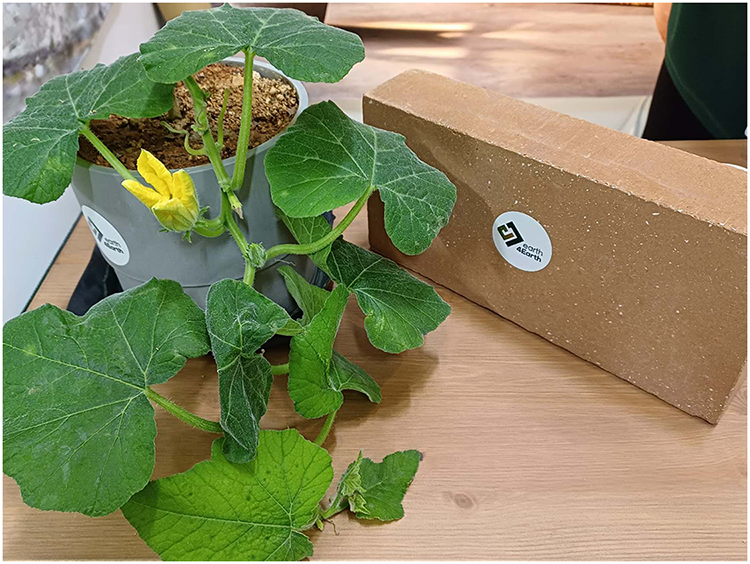
Figure 1 Plant growth from crushed earth4Earth bricks, demonstrating end-of-life recyclability and benign reintegration into the earth
4 Product range and key properties
earth4Earth has developed five types of UK standard lime-stabilized earth brick with varying types and amounts of binder to meet different structural requirements and carbon performance goals:
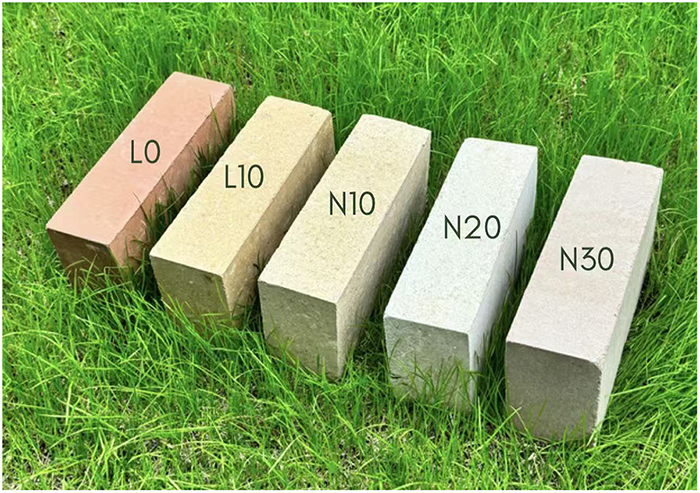
Figure 2 Range of earth4Earth bricks with standard UK size (215 mm × 102.5 mm × 65 mm). L0 Brick: no e4E lime and is a low-carbon brick and can be used in projects where traditional raw earth techniques such as adobe are envisaged. L10 Brick: Contains 10% conventional/commercial hydrated lime as binder. L10 has a significantly reduced carbon footprint compared to a traditional fired clay brick and sequesters CO2 during use. N10 Brick: Contains 10% of e4E zero-carbon lime binder. Because the binder is made without releasing CO2, the N10 brick is carbon-negative over its life cycle and it absorbs a total of ~0.18 kg CO2 from air per unit which exceeds any remaining emissions. This model has been third-party verified as carbon-negative via an EPD. Its mechanical compressive strength can reach compressive strengths up to 40 MPa (observed, not declared). N20 Brick: Contains 20% e4E zero-carbon lime binder. With double the binder, it achieves double the CO2 uptake capacity. These units can capture ~0.35 kg CO2 each over their service life. N20 bricks show increased carbon sequestration due to the higher binder content. N30 Brick: Contains 30% e4E zero-carbon lime binder. This high binder fraction maximizes carbon capture. Each N30 brick locks away ~0.5 kg of CO2 over its lifetime, turning a brick into a half-kilogram CO2 storage unit. N30 represents the premium carbon-negative product with the greatest climate impact per brick. This performance has been independently verified through a third-party Environmental Product Declaration (EPD)
Lime-stabilized e4E bricks are breathable, similar to earth bricks and rammed earth materials, contributing to healthy indoor humidity regulation, and they offer high thermal mass, which helps stabilize indoor temperatures. They also achieve the highest fire-resistance rating (Euroclass A1) and they are completely non-combustible. In terms of durability, the bricks are rated F2 for frost resistance, meaning they can withstand at least a hundred freeze-thaw cycles in exposed conditions without damage. Water resistance meets the requirements for exterior masonry and the low water absorption contributes to frost durability. The dry density of the bricks is similar to that of traditional clay bricks or concrete masonry units. N.B., colors may vary based on soil source.
In addition to the UK standard plain format, earth4Earth also offers “frogged” variants with an indented top surface, and brick slips. The carbon-sequestering functionality extends to these variants as well.
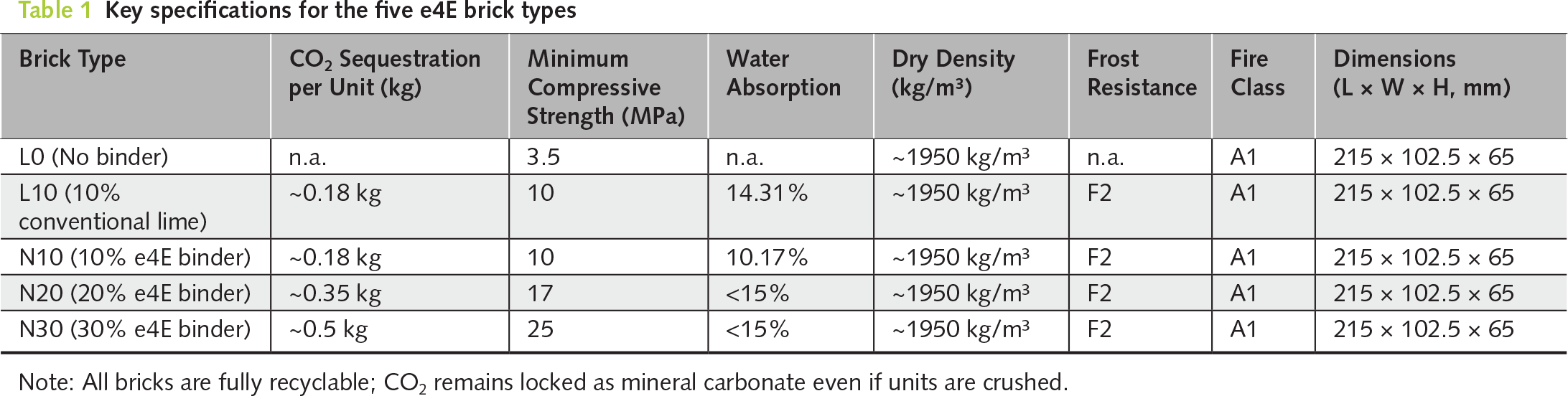
Table 1 summarizes key specifications for the five main e4E brick types. All values reflect typical or nominal performance; in practice, the bricks are produced to conform to relevant British and European standards (UKCA/CE marking) for masonry units. Compressive strength and absorption can vary with curing and mix specifics, but all products have been tested to ensure they meet or exceed the standard requirements for their intended use. Importantly, the carbon sequestration figures represent service-life CO2 uptake per unit (on the order of decades to a century of exposure). These figures highlight the unique climate benefit of the e4E bricks, especially the N-series, unlike ordinary bricks, which are carbon sources, these become net carbon sinks in the built environment.
5 Demonstration and applications
The real-world performance of earth4Earth’s carbon-capturing bricks has been demonstrated in pilot projects. A notable example is the “Wonderwall” installation, a 4 × 4 m freestanding wall that uses e4E bricks as cladding, built in Manchester in 2025 using 1200 N10 bricks.
From a construction practice standpoint, e4E bricks are designed to be used similarly to conventional bricks, requiring no special handling beyond standard masonry practice. They can be laid with typical cement or lime mortar. The bricks’ applications range widely: they are suitable for load-bearing walls in housing and low-rise commercial buildings, architectural facades, interior feature walls and partitions (thanks to their humidity-regulating properties), paving or landscaping elements, or retrofitting projects. Their natural earthen appearance provides an aesthetic appeal in decorative uses, while their technical performance meets modern building codes (they are undergoing certification by bodies like BBA for full compliance in construction). Because they have excellent fire resistance (A1) and no off-gassing, they can be safely used in interior public spaces and high-density developments where safety is paramount. The bricks have also been noted to improve indoor air quality by buffering moisture and without introducing synthetics or VOCs, aligning with healthy building principles.
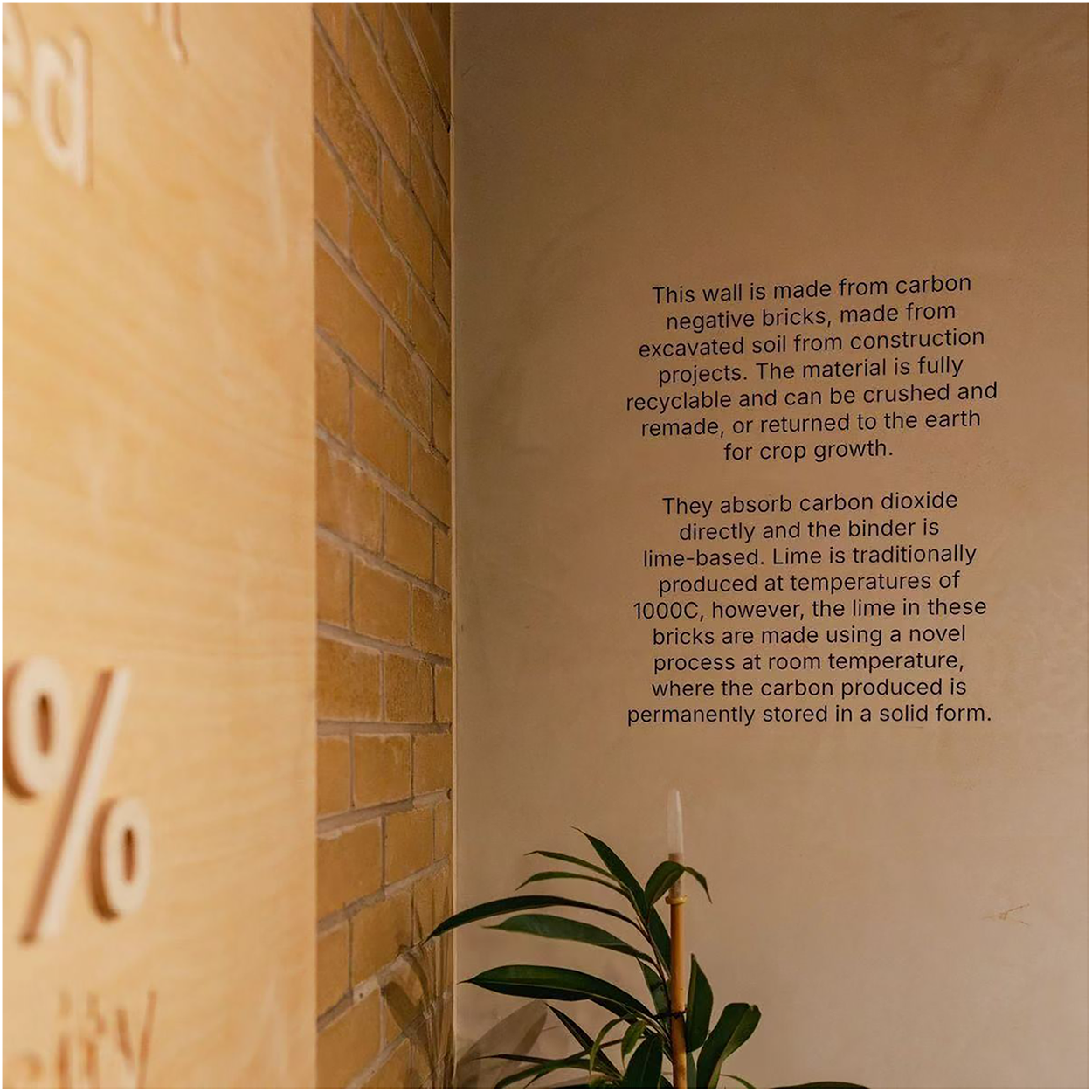
Figure 3 The “Wonderwall” pilot project in Manchester: a 4 × 4 m wall cladded with N10 bricks, working as a carbon-sink and able to absorb a total of 213 kg of CO2 over its life cycle. The wall is constructed in collaboration with the company Sustainable Ventures and serves as a public proof of concept of the technology. The 1200 bricks wall is estimated to sequester 213 kg of CO2 over its lifespan. The wall will continually draw CO2 from the ambient air and permanently store it as calcium carbonate within the masonry. This pilot project showcased the bricks’ structural viability and aesthetic (the earth-tone bricks have natural, variegated colors without any pigmentation) as well as their environmental potency, as the wall will act as an active carbon sink over its lifecycle. The project underscored that even a small structure built with e4E materials can offset emissions—in this case, equivalent to the CO2 emitted from making ~760 cups of coffee
This pilot installation demonstrates the practical feasibility, structural integrity, and carbon sequestration performance of e4E bricks under real-world conditions.
6 Industry reception and outlook
Since their debut, earth4Earth’s carbon-capturing bricks have garnered significant attention in the building materials sector. The company showcased the bricks at the London Build Expo 2025, the UK’s largest construction trade show, where a live demonstration allowed industry professionals to see the carbonation effect in action. The reception was highly positive, builders and architects showed strong interest in specifying these materials for sustainable projects, and the product was shortlisted for a London Construction Award (Excellence in Sustainability, Product) at the event.
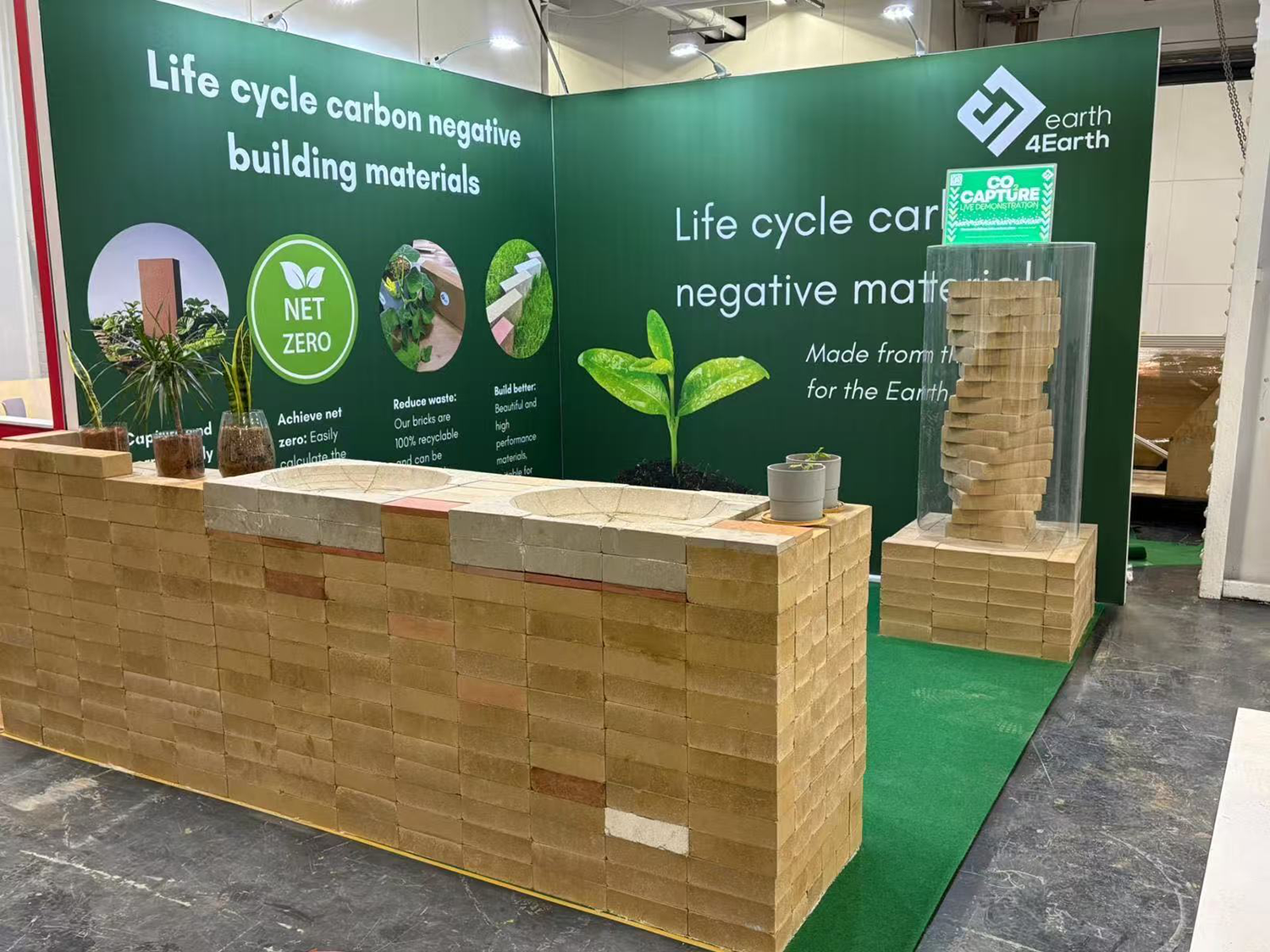
Figure 4 earth4Earth exhibition stand at London Build 2025 entirely built with e4E carbon-negative bricks
earth4Earth has positioned its technology as a complementary solution for low/zero-carbon construction alongside other innovations like carbon-neutral cements and bio-based materials. Being a drop-in replacement for standard bricks, the adoption barrier is low; this has led to pilot implementations in the UK and plans for scaling up production. The company has an R&D center in Sheffield, UK, and a first plant in Wuhan, China, with capacity expansions and a UK plant targeted for 2026. By expanding manufacturing closer to where projects are, they aim to use local soils and minimize transport, further shrinking the carbon footprint.
Looking ahead, earth4Earth is exploring additional products utilizing the same binder technology, for example, cement, in ferrous and non-ferrous metallurgy, carbon capture and storage larger blocks or precast panels, and adapting the mix for different soil types. The concept of turning excavated soil into high-value construction products that improve with time by absorbing CO2 is a paradigm shift for sustainable construction. Our lime-stabilized earth bricks demonstrate that it is possible to achieve better-than-zero lifecycle carbon balance in a mainstream building material without sacrificing performance. Each brick becomes a permanent carbon sink that contributes to the structure’s strength and durability rather than being an emission source.
In summary, earth4Earth’s innovation utilizes an interdisciplinary approach and marries the ancient practice of building (civil and structural engineering) with raw earth with modern chemical engineering and materials science to deliver bricks that are strong, durable, and actively beneficial to the environment. The full lifecycle approach, from low-carbon production (no kiln firing) to in-use direct air carbon capture, and finally complete recyclability, exemplifies a cradle-to-cradle solution in construction materials. The positive response from the construction community and early validations like the Wonderwall project suggest a promising future for scale-up. As building regulations and developers increasingly call for carbon-negative/neutral materials, lime-stabilized carbon capture bricks could become a staple of sustainable architecture, literally locking away carbon within the walls of our buildings forever. For more information, please see: www.earth4Earth.co.uk.