Lhoist SA
Flue gas fluctuation management for carbon capture in lime industry
As lime production ranks among the most carbon intensive industrial processes worldwide, decarbonizing this sector is a priority. With approximately two thirds of CO2 related to the decomposition of calcium carbonate (CaCO3) into calcium oxide (lime, CaO) and CO2 the lime industry is classified as a hard-to-abate sector, for which full decarbonation can only be achieved through carbon capture and storage (CCS). Indeed, process emissions are unavoidable even when switching to decarbonized energy sources. Carbon capture (CC) from lime industry flue gas (FG) presents unique operational challenges due to the flue gas characteristics: highly dynamic flow rates, large swings in CO2 concentration, and sporadic impurity peaks (e.g., NOx, SOx, organic compounds). Current carbon capture technologies are sensitive to fluctuations both in flow and CO2 concentration. For carbon capture technologies operating at elevated pressure, fluctuations in flue gas flow rate and composition can affect compressor stability and separation performance, leading to operational issues. Carbon capture technologies operating at near-atmospheric pressure are generally less sensitive to reductions in CO2 concentration, while the peaks in the CO2 concentration are still a cause of concern. This paper describes multiple approaches and highlights practical strategies for buffering flue gas fluctuations in carbon capture systems for the lime industry. Potential solutions to manage various types of fluctuations for each of the main post-combustion carbon capture technologies are presented. The potential buffering solutions can be applied either individually or in combination, depending on the specific process design requirements. Their applicability and performance will ultimately need to be verified through detailed engineering and/or by operating data. To bring the lime kiln flue gas to the carbon capture plant, a flue gas duct and a direct contact cooler will be used, regardless of the chosen technology. This configuration will help to stabilize the temperature variations and will also dampen flow fluctuations to some extent. However, additional buffering measures may still be needed. This requires careful assessment on a case-by-case basis.
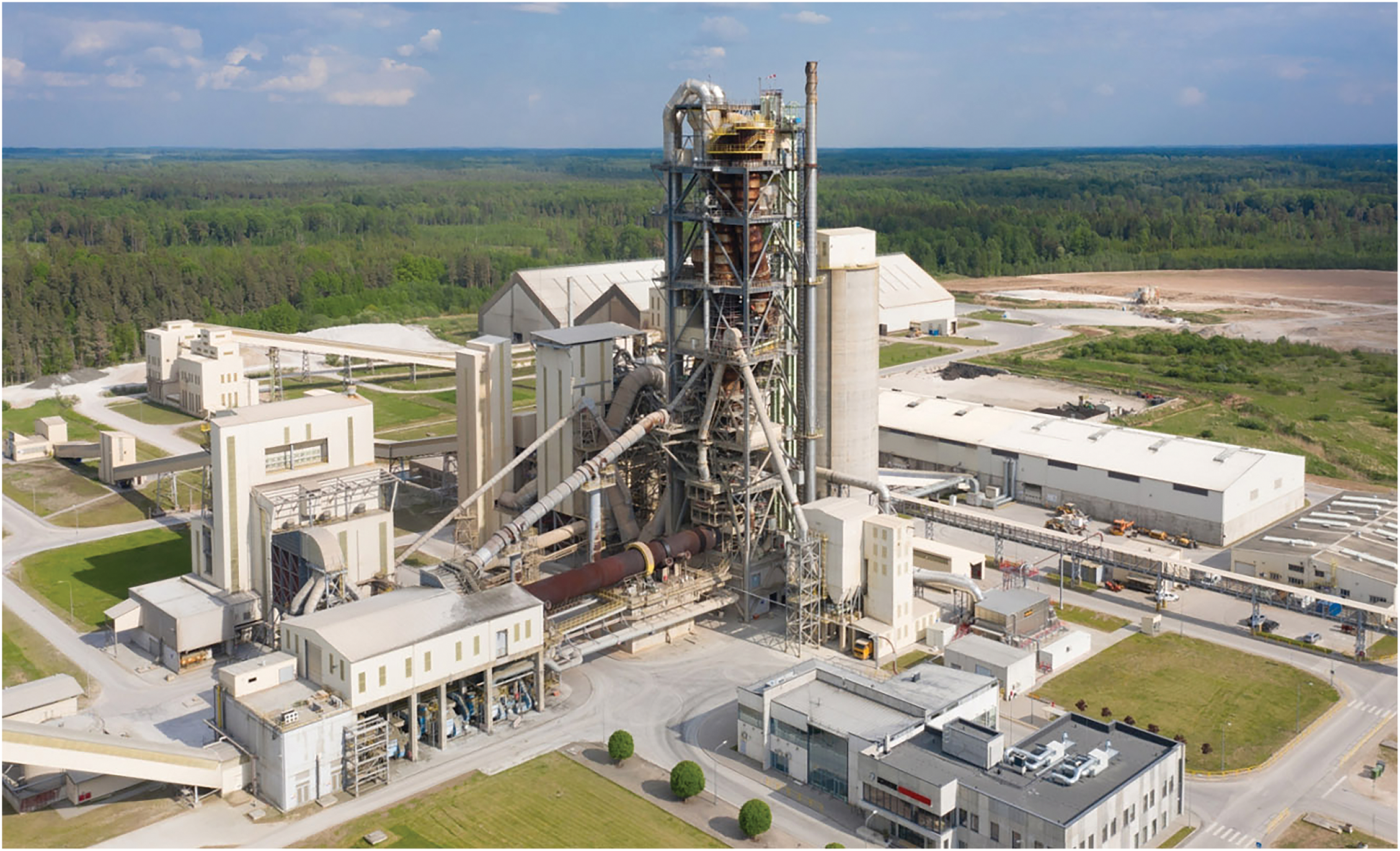
The Lime production process is emitting on average about 1.1 t of CO2 per ton of lime with global output of lime estimated at roughly 430 Mt in 2022, corresponding to nearly 470 Mt of direct “scope 1” emissions [1].
Lime production is CO2 intensive due to
...REFERENCES
1. Mineral Commodity Summaries 2023. Mineral commodity summaries report. Reston, VA, USA: U.S. Geological Survey; 2023. doi:10.3133/mcs2023.
2. Best Available Techniques (BAT) Reference Document to Produce Cement, Lime and Magnesium Oxide. JRC reference report. Brussels, Belgium: European Commission, Joint Research Centre; 2013. p. 199–217. doi:10.2788/12850.
Cite This Article
APA Style
Cnop, T., Cloarec, T., Toriška, M. (2026). Flue gas fluctuation management for carbon capture in lime industry. ZKG International, 79(4), 22–27. https://doi.org/10.32604/zkg.2026.083364
Vancouver Style
Cnop T, Cloarec T, Toriška M. Flue gas fluctuation management for carbon capture in lime industry. ZKG Int.. 2026;79(4):22–27. https://doi.org/10.32604/zkg.2026.083364
IEEE Style
T. Cnop, T. Cloarec, and M. Toriška, “Flue gas fluctuation management for carbon capture in lime industry,” ZKG Int., vol. 79, no. 4, pp. 22–27, 2026. https://doi.org/10.32604/zkg.2026.083364