CSI Report 2012 released

On 19.06.2012 the Cement Sustainability Initiative (CSI), which operates under the World Business Council for Sustainable Development (WBCSD), launched its 2012 Progress Report at the Business Action for Sustainable Development (BASD) Day in Rio de Janeiro during the Rio+20 Summit. From the publication of the CSI’s Agenda for Action in 2002, the cement industry has changed significantly, and this report shows how the CSI has been successful in adding value and making a contributions to sustainable solutions. The challenge now is to maintain this level on existing activities, and at the same time, address emerging issues such as water. This Progress Report also maps out how the CSI intends to achieve this across the next decade.
www.wbcsdcement.org

Related articles:

Issue 9/2017 CSI | ECRA

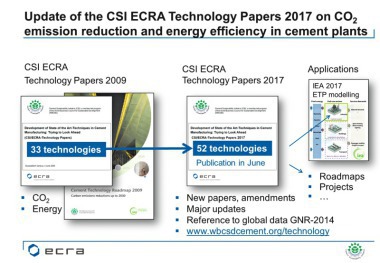
Technology Papers 2017 on available technologies for CO2 abatement

The Cement Sustainability Initiative (CSI) and the European Cement Research Academy (ECRA) have released their new “CSI/ECRA Technology Papers 2017” to update the perspective of available technologies ...

more
Issue 03/2013

Sustainable construction: building tomorrow’s world

The Cement Sustainability Initiative (CSI) of the World Business Council for Sustainability Development (WBCSD) will hold its 7th annual forum...

more
Issue 8/2022 CEMEX DEUTSCHLAND AG

Sustainability seal underlines “Future in Action” strategy: Cemex gravel plants receive CSC gold certification

Since August 2022, two Cemex raw material sites in Germany have been CSC-certified: the Parey gravel plant of Cemex Kies Rogätz GmbH in Saxony-Anhalt and the Immelborn gravel plant of Cemex Kies &...

more
Issue 10/2015 WORLD BUSINESS COUNCIL FOR SUSTAINABLE DEVELOPMENT’S (WBCSD) CEMENT ­SUSTAINABILITY INITIATIVE (CSI)

Doing more with less: the cement sector using waste as a resource

Co-processing of waste materials for the purpose of energy or resource recovery has been an important topic in the cement industry for a long time. Publications and articles have been published to explain the rationale for co-processing. ...

more