Environmental life cycle assessment of self-compacting concrete incorporating recycled rubber and plastic
The construction industry is under growing pressure to lower its environmental impact while meeting the rising demand for building materials [1]. Besides the environmental issues associated with cement production, the large-scale extraction of natural aggregates is a critical concern [2]. This practice leads to resource depletion, ecosystem degradation, and significant energy consumption. Given the extensive use of fine aggregates in concrete production, the identification of sustainable alternatives is a key strategy for enhancing the environmental performance of construction materials. In this context, the valorization of waste materials as alternative aggregates has emerged as a promising approach [3] because it offers the potential to reduce reliance on virgin resources, divert waste from landfills, and support circular economy practices within the concrete industry [4, 5]. However, the environmental benefits of such substitutions should be rigorously quantified.
Life Cycle Assessment (LCA) is a widely established methodology for evaluating the environmental impacts of products and processes across their entire life cycle. As a multi-criteria framework, LCA enables the assessment of a broad spectrum of environmental indicators [6, 7]. The approach encompasses all stages, from raw material extraction to end-of-life treatment [8, 9], thereby providing a comprehensive evaluation of environmental burdens. Impact categories typically considered include climate change, resource depletion, human and ecotoxicity, and acidification [10, 11]. The methodology has been standardized through ISO 14040 and ISO 14044, ensuring methodological consistency, transparency, and comparability between studies [12]. LCA can prevent burden shifting, whereby improvements in one stage of the life cycle or in one impact category may lead to adverse effects elsewhere [13, 14]. For instance, reduction in CO2 emissions during clinker production may be offset by increased resource consumption or ecotoxicity in downstream processes [15]. Overall, LCA supports informed decision-makers aimed at minimizing environmental impacts [16, 17].
Within this framework, there has been an upsurge in research focused on reducing the environmental impact of concrete through the partial replacement of raw materials [15, 18]. In particular, the substitution of natural aggregates with sustainable alternatives has received considerable attention. Studies have investigated the use of recycled construction and demolition waste, industrial by-products, and agricultural residues as replacements for natural sand and gravel [19]. A wide range of materials has been explored as fine aggregates, including brick [20] and ceramic waste [21], plastic particles [22], waste glass, foundry sand [23], and crumb rubber derived from end-of-life tyres [24]. These alternatives can reduce both the demand for virgin aggregates and the environmental impacts associated with quarrying activities [25]. Several options do not significantly impact the fresh or hardened properties of concrete when used at moderate replacement levels [26]. Mechanical performance is often comparable to conventional mixtures, depending on the type and proportion of substitution [27]. Furthermore, these strategies offer clear environmental benefits, including resource conservation, waste diversion, and reductions in energy consumption and emissions [28] associated with raw materials extraction and processing [29].
Despite these advantages, several challenges remain, particularly when high volumes of alternative constituents are used. For example, the incorporation of rubber aggregates (RA) in self-compacting concrete (SCC) has been associated with reduced density, increased air entrainment, and diminished workability [30, 31]. These effects are largely attributed to the hydrophobic properties of rubber particles [32, 33]. Rheological tests, including slump flow, L-box, and sieve segregation, consistently demonstrate a reduction in flowability and stability with increasing rubber content [34]. These changes are typically reflected in longer flow times and L-box ratios [35]. Additionally, the low density of rubber particles promotes segregation due to their tendency to float within the cementitious matrix [36, 37]. Consequently, mix design adjustments and the use of chemical admixtures are often required to achieve acceptable performance. Recycled Plastics (RP) have also attracted increasing attention and can be incorporated into concrete in various forms, including fibers [38], granular aggregates [39], or polymer-based admixtures [40]. Recycled polyethylene terephthalate (PET) fibers have been extensively studied because they can enhance tensile and flexural performance by bridging cracks and improving ductility [41]. However, the benefits tend to plateau or diminish beyond fiber contents of approximately 3–5% [42]. While the inclusion of plastic fibers may initially reduce compressive strength and increase porosity, improvements in energy absorption capacity and fracture toughness have also been reported [43]. In the fresh state, plastic fibers can influence rheological behaviour, although generally to a lesser extent than rubber aggregates. Achieving an optimal balance requires careful mix design. Previous studies have demonstrated that combining recycled aggregates, plastic fibers, and supplementary cementitious materials [44] can enhance mechanical performance while reducing workability [45].
While these findings highlight the technical feasibility of incorporating recycled materials into concrete, they do not provide a comprehensive assessment of sustainability. The integration of LCA is therefore essential for a holistic evaluation. Recent studies combined LCA with mix design optimization to assess environmental and mechanical performance. For example, the partial replacement of fine aggregates with tyre rubber (15%) reduced the global warming potential (GWP) of concrete by up to 40%, while maintaining acceptable strength and durability [46]. Similarly, the incorporation of waste plastics in SCC has been shown to contribute to reductions in energy consumption, greenhouse gas emissions, and material waste, thereby supporting broader sustainability objectives [47].
Despite the growing body of literature, several gaps remain. Most studies focus primarily on mechanical properties or isolated aspects of fresh-state behaviour, without systematically linking material substitution to quantified environmental performance. In addition, existing research typically investigates single-material replacements and rarely explores hybrid rubber–plastic systems within a unified analytical framework. More importantly, the application of advanced statistical techniques—such as Response Surface Methodology (RSM)—to model the effects of mixture parameters, including interaction effects and non-linear responses, remains limited. As a result, the combined influence of multiple waste-derived components is often assessed qualitatively rather than through predictive, multi-factor modelling. In this context, the present study integrates ISO-compliant LCA with RSM-based modelling to evaluate the main effects, interaction terms, and quadratic contributions of substitution parameters on rheological and environmental performance. By coupling experimental characterization of SCC with statistically validated environmental response surfaces, this work advances toward a comprehensive techno-environmental optimization framework. This approach enables the systematic analysis of parameter sensitivity, interaction mechanisms, and trade-offs among multiple performance criteria, thereby supporting the design of more sustainable SCC mixtures.
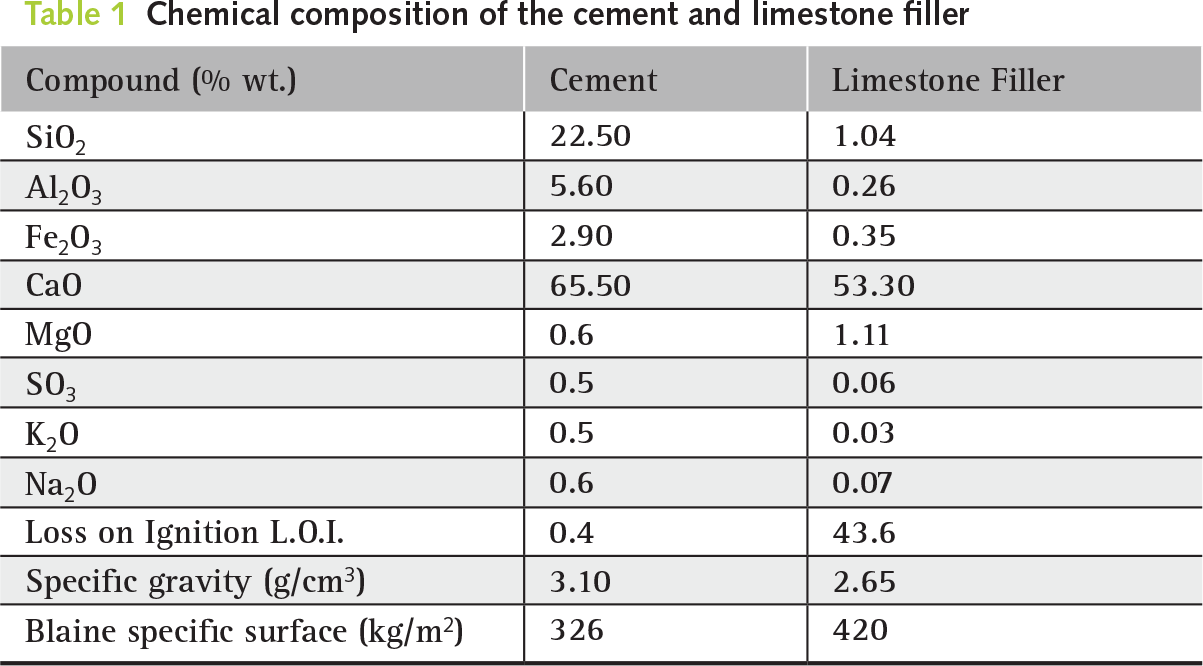
SCC mixtures were prepared using CEM I 42.5 R Portland cement according to EN 197-1 [48]. To improve cohesiveness and optimize particle size distribution, limestone filler was incorporated as a mineral addition. The filler, sourced from the El Khroub quarry in Constantine, Algeria, has a Blaine specific surface area of 420 m2/kg and a specific gravity of 3.10 g/cm3. Its inclusion contributes to viscosity modification, which is essential for ensuring the stability of SCC, and provides a pronounced filler effect. Table 1 lists the chemical compositions of the cement and limestone filler.
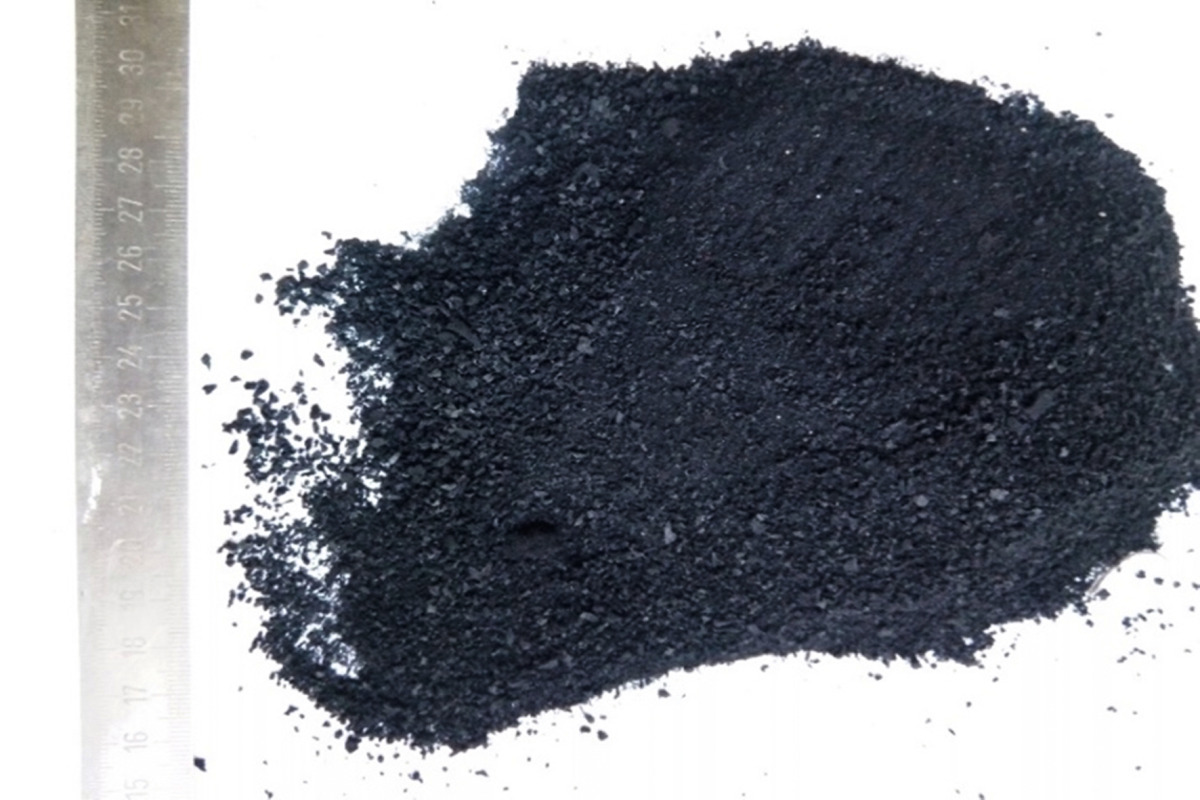
Natural limestone aggregates were sourced from the Adjell quarry in Aïn El Roua, northern Setif, Algeria. The fine aggregate (0/5 mm sand) exhibits a fineness modulus of 2.5 and a sand equivalent of 70%, indicating adequate grading and cleanliness for use in SCC. The coarse aggregates, in the 3/8 mm and 8/15 mm size fractions, show a Los Angeles abrasion value of 15% and a Micro-Deval coefficient of 20%, confirming their satisfactory mechanical resistance for structural concrete applications. Recycled rubber and RP materials were supplied by MICA-SALT Company (Setif, Algeria) and used as partial volumetric replacements for natural sand. These materials have bulk densities of 0.98 g/cm3 and 1.32 g/cm3, respectively, and were selected to promote resource circularity and reduce environmental impacts. Particle size distribution analyses of sand, rubber, and RP aggregates (Figure 1) were conducted according to NF EN ISO 17892-4. The results highlight distinct differences among the materials. Natural sand exhibits a well-graded distribution (Cu ≈ 4.56, Cc ≈ 1.27), ensuring good packing density and flow stability. In contrast, rubber particles have a lower uniformity coefficient (Cu ≈ 3.45), indicating a more uniform distribution. Combined with their lower density and elastic nature, this reduces interparticle friction and enhances particle mobility, thereby improving flowability and passing ability. RP aggregates exhibit a higher uniformity coefficient (Cu ≈ 5.25) and a finer particle size distribution with increased specific surface area. This leads to higher paste demand and greater internal resistance, which can adversely affect workability at high replacement levels.
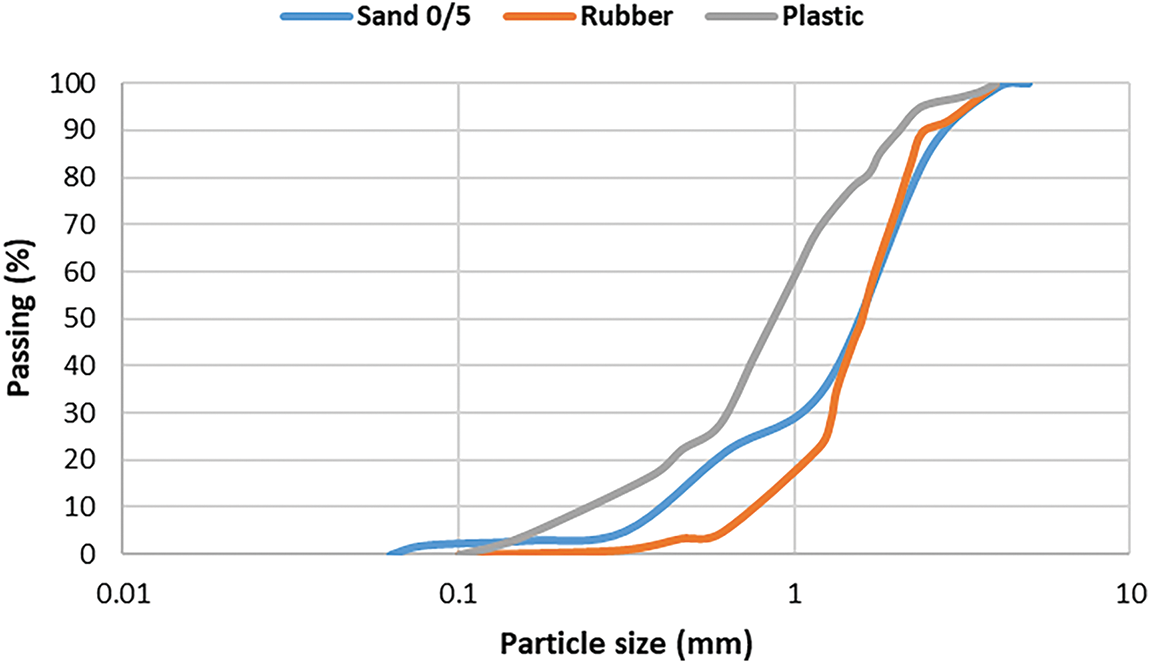
Figure 1 Particle size analysis of sand, rubber and plastic
A high-range water-reducing admixture (Superplasticizer (SP)) based on polycarboxylate ether, Viscocrete®-66, supplied by Sika El Djazair, was incorporated to achieve the high flowability required for SCC while maintaining adequate cohesion and resistance to segregation.
2.2 SCC mix design and testing protocols
The SCC mixtures were proportioned in accordance with the recommendations of the Association Française de Génie Civil (AFGC) for self-compacting concrete [48]. The objective was to achieve mixtures satisfying the essential SCC requirements in terms of flowability, passing ability, and segregation resistance, while maintaining a composition compatible with structural concrete applications. A target water-to-cement ratio close to 0.446 was adopted in order to provide sufficient deformability without excessively compromising strength development.
To optimize packing density and reduce intergranular voids, the gravel-to-sand ratio (G/S) was maintained close to 1.0, following AFGC guidance. Limestone powder was introduced at 20% of the cement mass as a filler rather than as a cement replacement. This addition was intended to improve matrix compactness and contribute to viscosity control. The HRWRA dosage was fixed at 1.8% of the cement mass, corresponding to the experimentally determined saturation dosage, in order to maximize fluidity while avoiding instability phenomena such as bleeding or segregation [49].
The same nominal water content was maintained for all mixtures in order to ensure a consistent basis for comparison between formulations. Since RR (Recycled Rubber) and RP were assumed to have low water absorption, no correction was applied to the effective water content. Nevertheless, this assumption may have influenced the fresh-state response and should be acknowledged as a limitation of the adopted experimental approach.
The experimental program included four categories of mixtures:
Reference mixture (M0): mixture containing only natural sand as the fine aggregate and used as the control formulation.
RR-modified mixtures: mixtures in which natural sand was partially replaced by RR at different replacement levels in order to evaluate its effect on SCC fresh-state behaviour.
RP-modified mixtures: mixtures incorporating RP as a partial sand substitute to assess the corresponding changes in workability and stability.
Hybrid mixtures: mixtures combining RR and RP as simultaneous partial replacements of natural sand in order to explore possible interaction effects between the two recycled materials.
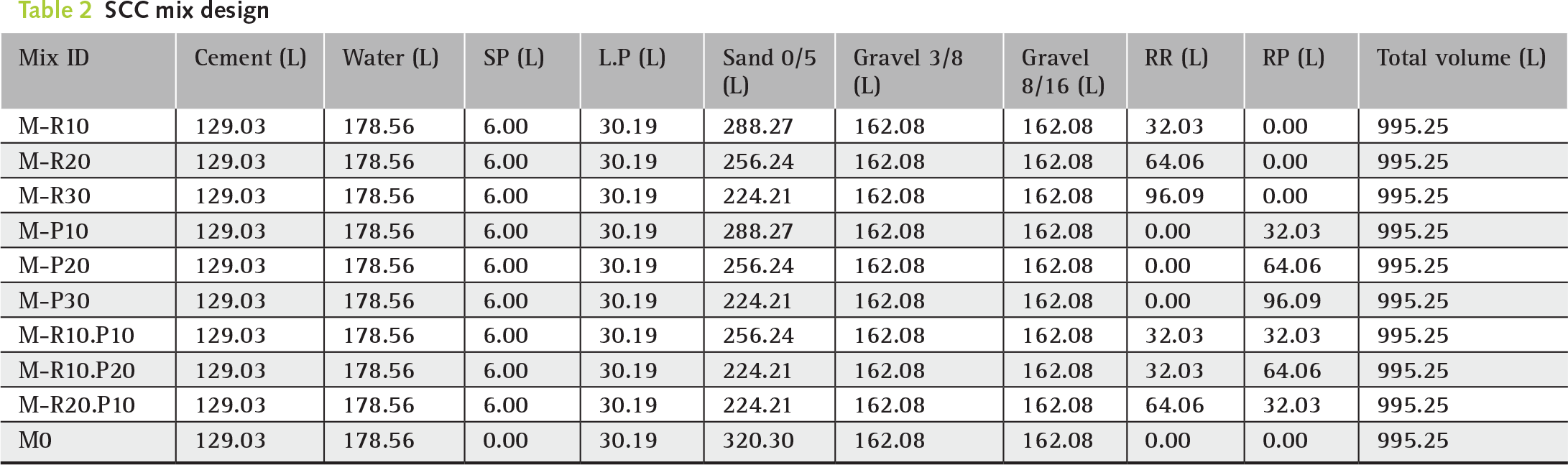
For consistency in presentation, the mixtures were identified using a notation based on the type and percentage of substitution. The label “M–Rx” was used for RR-modified mixtures, “M–Px” for RP-modified mixtures, and “M–Rx.Py” for hybrid mixtures, where x and y denote the corresponding replacement percentages. The control mixture was designated as “M0”. This notation was used throughout the tables and figures for easier comparison between formulations.
Fresh-state characterization was conducted using the slump-flow, L-box, and sieve segregation tests in accordance with EN 10 [50], EN 20 [51], and EN 30 [52], respectively. These tests were selected to evaluate the key properties governing SCC performance, namely unconfined flowability, passing ability through congested reinforcement, and resistance to segregation. All mixtures were prepared and tested under the same mixing sequence and environmental conditions so that the observed variations could be attributed primarily to the substitution of natural sand by RR and RP.
Because the functional unit adopted in the environmental analysis was 1 m3 of SCC, the substitutions resulted in different total mixture masses owing to the density differences between natural sand, RR, and RP. Accordingly, the replacement strategy must be interpreted in connection with both volumetric substitution and the resulting mass variation among mixtures. Each test was performed in triplicate for every formulation, and the reported results correspond to the mean of three independent measurements.
Table 2 presents each formulation together with the corresponding volumetric replacement levels adopted for the recycled aggregates.
2.3 Life cycle assessment (LCA) methodology
A cradle-to-gate LCA was carried out in order to quantify the environmental implications of replacing part of the natural sand in SCC with RR and RP. The functional unit (FU) was defined as 1 m3 of SCC, allowing direct comparison among mixtures despite their different bulk densities. The system boundary presented in Figure 2 covers the stages associated with raw material extraction, processing, and transport up to the production of concrete.
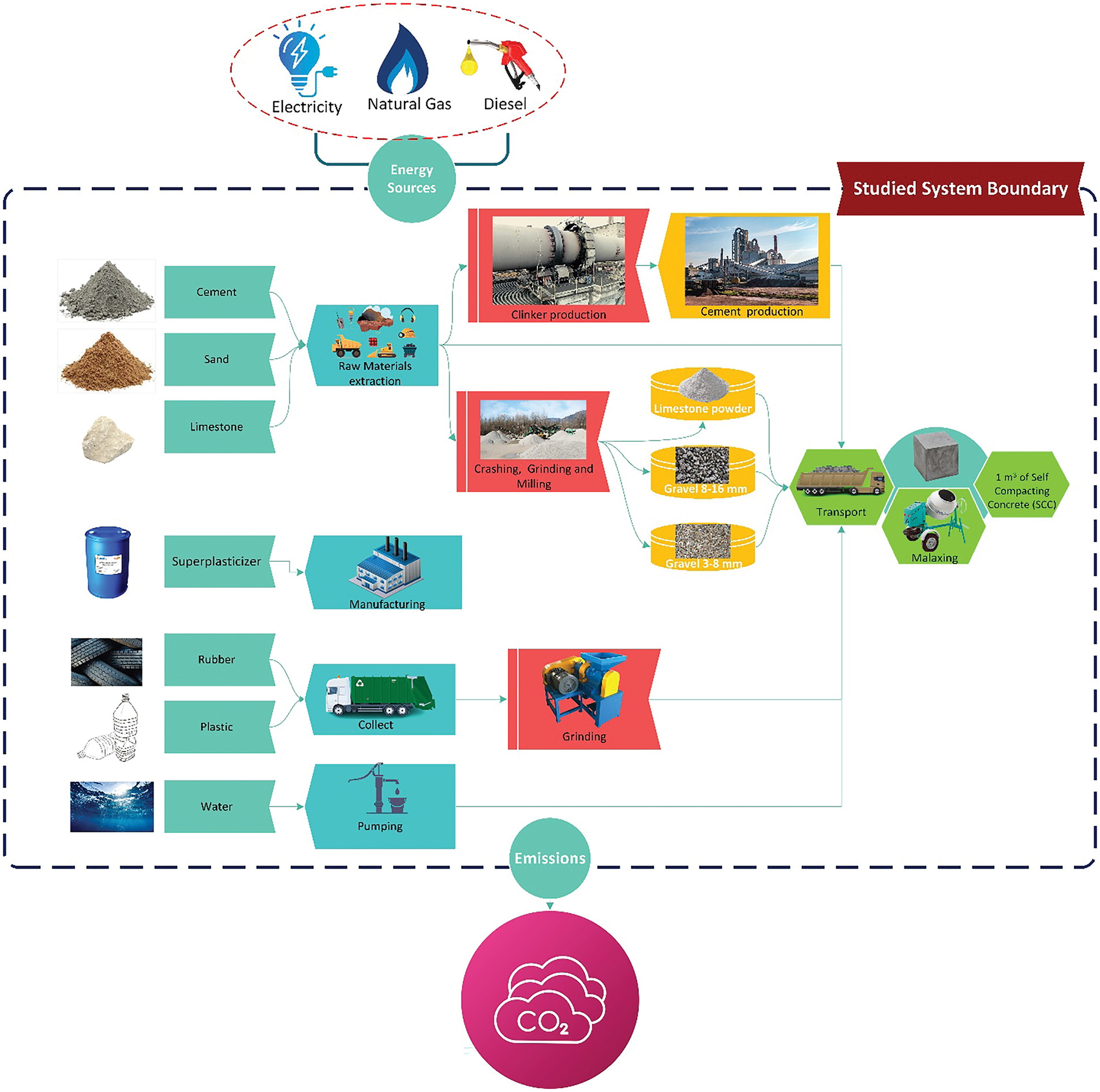
Figure 2 System boundary to produce 1 m3 RA and RP-based SCC
The Life Cycle Inventory (LCI) data were modeled using the Ecoinvent v3.10 database and adapted to the Algerian context by considering the national electricity mix, fuel profile, and relevant production conditions. The inventory for ordinary Portland cement was based on published local data [53], whereas the energy requirements associated with aggregate, RR, and RP processing were drawn from the literature [54–56], respectively. In order to reduce distortion related to transport assumptions, a uniform transportation distance of 50 km by diesel truck was adopted for all raw materials.
The impact assessment was conducted using a midpoint approach covering the principal environmental categories considered in the manuscript, including climate change, acidification, eutrophication, ecotoxicity-related indicators, human toxicity, ozone layer depletion, photochemical oxidant formation, and abiotic resource depletion. This framework was selected to ensure that the environmental comparison between mixtures reflected the effect of material substitution rather than unrelated external factors. The LCA procedure was established in line with the general principles of ISO 14040 and ISO 14044 [57].
The avoided burden approach (system expansion) was adopted, assuming that recycled RR and RP would otherwise be landfilled or incinerated. Therefore, environmental credits associated with avoided end-of-life treatment were included. It should be noted that this assumption is scenario-dependent and may vary according to regional waste management practices.
The life cycle impact assessment (LCIA) was performed using Activity Browser software based on the Brightway2 framework. Environmental impacts were evaluated using the CML v4.8 (2016) midpoint method, which enables robust and transparent multi-criteria assessment. The analyzed impact categories included climate change (CC), acidification (AC), eutrophication (EU), human toxicity (HT), freshwater ecotoxicity (FET), marine ecotoxicity (MET), terrestrial ecotoxicity (TET), photochemical oxidant formation (POF), ozone layer depletion (OLD), energy resource depletion (ER), and mineral resource depletion (MR).
The interpretation of results was conducted in direct relation to the SCC mix compositions. Since recycled aggregates were introduced on a volumetric basis, functional equivalence between mixtures was preserved. Consequently, variations in environmental performance were mainly attributed to differences in material composition rather than external parameters such as transport distance or infrastructure effects.
3.1 Effect of RPl and RR aggregates on rheological characteristics
The rheological performance of SCC was examined using slump flow, L-Box, and sieve stability tests, with M0 (without addition) serving as the reference point. RR and RP aggregate replacement were utilized to evaluate this performance, as seen in Figure 3. M0 measured 52 cm for flowability, which is also referred to as slump flow. It should be noted that this value is slightly below the typical SCC threshold of 600 mm recommended by EFNARC (European Federation of National Associations Representing for Concrete). Therefore, M0 is considered as a baseline mixture within the experimental framework rather than a fully compliant SCC formulation. Compared to the baseline, M-R10 reached 62.5 cm (+20.2%), M-R20 64 cm (+23.1%), and M-R30 62 cm (+19.2%), suggesting a substantial increase in flow because of RR substitution. This enhancement is due mainly to the fact that RR particles possess a hydrophobic surface and a lower density than natural sand. This leads to a reduction in internal friction and paste demand, which facilitates particle mobility [58].
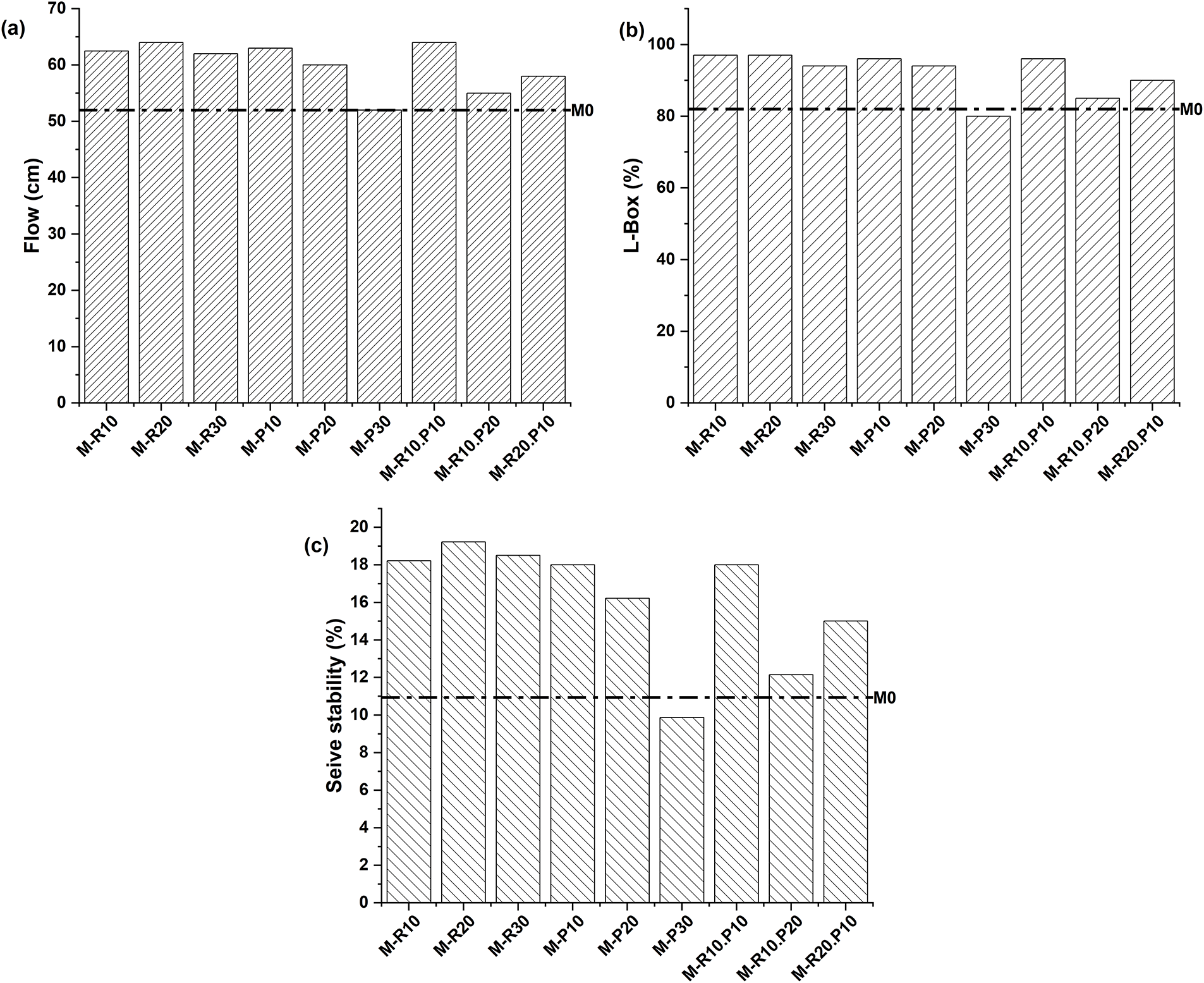
Figure 3 Measured rheological properties: (a) slump flow; (b) L-box passing ability; (c) sieve stability
The flow was enhanced at low levels of RP replacement (M-P10: 63 cm, +21.2%), declined at higher levels (M-P20: 60 cm, +15.4%), and recovered to the M0 value at 30% (M-P30: 52 cm). The angular form and hydrophobicity of RP particles, which increase internal resistance and break paste-aggregate cohesiveness, are associated with this reduction at high RP content [54]. Similarly, hybrid mixes exhibited decreased performance with increasing RP content (M-R10.P20: 55 cm, +5.8%; M-R20.P10: 58 cm, +11.5%) but maintained excellent flow with moderate substitution (M-R10.P10: 64 cm, +23.1%).
M0 accomplished a passing score of 82% on the L-Box test. M-R10 and M-R20 scored 97%, while M-R30 obtained 94%. The results were significantly improved using RR mixtures. By maintaining the concrete’s stability and enhancing its capacity to flow through tiny unobstructed gaps, the elastic deformability and particle shape of RR contribute to this enhancement [55, 56]. At low (M-P10: 96%) and medium (M-P20: 94%) levels of RP replacement, the passing ability was satisfactory; however, it saw a significant decline at 30% (M-P30: 80%), likely due to the obstruction of smooth passage by floating and particle building. Hybrid mixes proceeded in the same manner; M-R10.P10 attained 96%, M-R10.P20 decreased to 85%, and M-R20.P10 reached 90%. This indicates that the passing ability is affected by an excess of RP, even when RR is used.
Additionally, there were substantial fluctuations in the stability of the sieve, as assessed by its Segregation Resistance. M0 reached a rate of 10.94%. This indicates that the paste was more effectively held and coarse particles settled less, as the stability of RR mixes was significantly higher, with M-R20 at 19.22% (+75.6%) and M-R30 at 18.52% (+69.2%). This is due to the RR elastic and rough structure, which minimizes the probability of particle separation and improves paste adherence [59], in contrast to M0, M-P10 and M-P20, which exhibited superior stability in the RP substitution study. However, M-P30 experienced a decline to 9.87%, which may be attributed to the disparity in densities between RP and cement paste, resulting in a greater tendency to float and bleed. In hybrids with intermediate values, a high RPpercentage still has a harmful influence on stability, despite the inclusion of RR: M-R10. P10 (18%) had exceptional stability, as documented by M-R10. P20 had a fall of 12.15%, as did M-R20. P10 (15%) exhibited no change.
3.2 Effect of studied parameters on natural resource use and climate change
Figure 4 presents the effect of the studied parametersRR and RP—on ER, MR, and CC. Compared to the reference mix M0, RR substitution induced a progressive decrease in all three impact categories, with the 30% RR mix (M-R30) achieving reductions of −2.4% in ER, −18.4% in MR, and −6.5% in CC. This result can be explained by the fact that the recycled materials (RR and RP) used in the modelling are associated with an environmental credit, in accordance with the system expansion principle commonly applied in LCA [60]. In a reference scenario, end-of-life RR or RP would be incinerated or landfilled, which would require substantial amounts of fuel and generate a significant environmental burden. In contrast, in the present study, these wastes are valorized and incorporated into concrete, representing an avoided burden [61]. Therefore, the system considered includes the avoided impacts associated with conventional waste management. This mechanism assigns a negative impact value which translates into a net environmental benefit in specific categories (e.g., ecotoxicity, HT, and the depletion of nonrenewable resources).
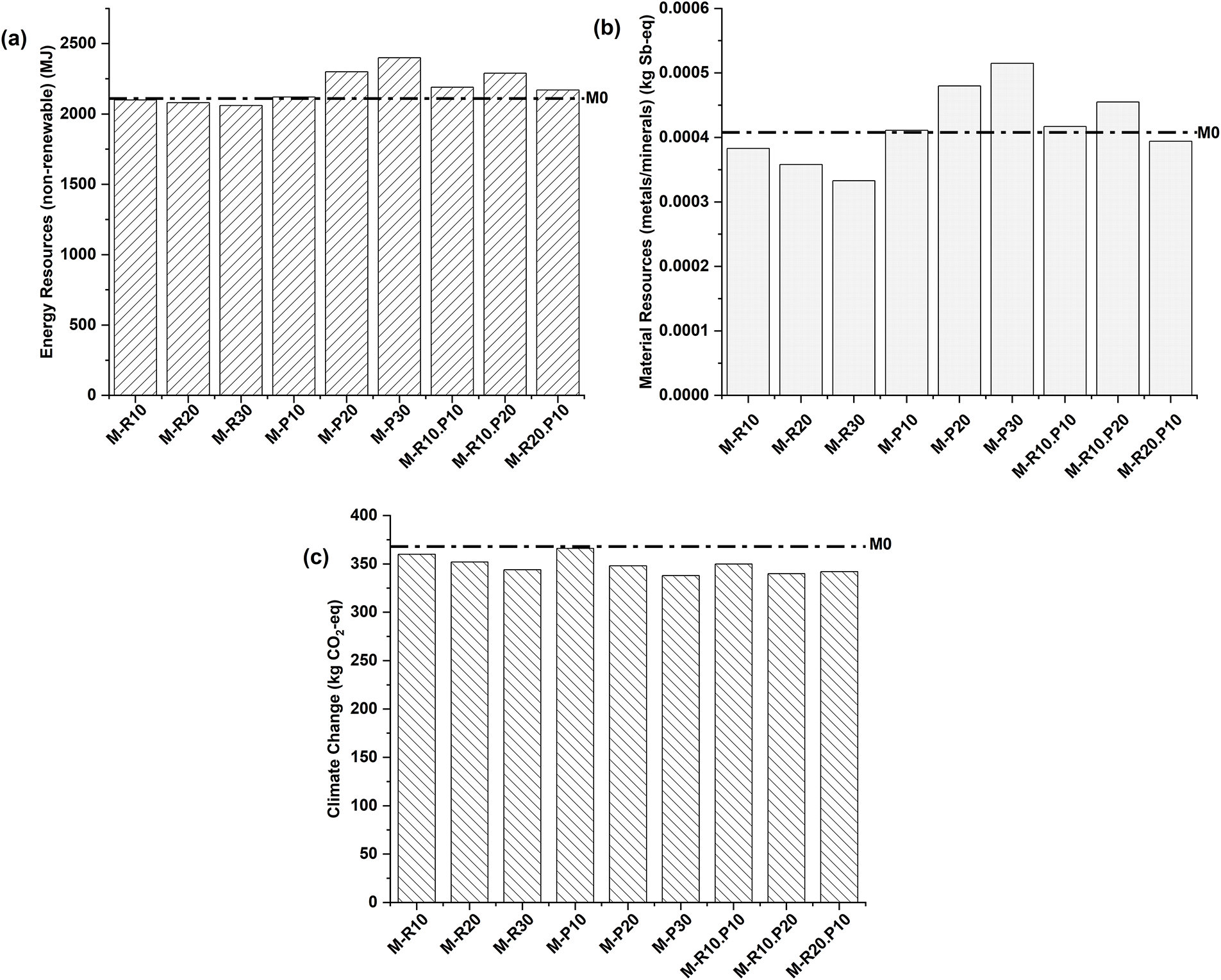
Figure 4 LCA results: (a) ER; (b) MR; (c) CC
RP substitution resulted in a rise in ER (+13.7% for M-P30) and MR (+26.2%), despite a substantial reduction in CC (−8.2% for M-P30). The avoided load has resulted in a decrease in CO2 emissions, although this trend has impeded resource conservation efforts owing to the use of recycled materials to replace natural sand. The energy and additive-intensive nature of RP recycling processes, on the other hand, is the most probable explanation. The increase in mineral resource depletion at high RP substitution levels is attributed not only to the higher mass required due to lower density, but also to the upstream use of mineral-based additives and catalysts in RP production and recycling processes, as represented in the life cycle inventory datasets.
The environmental profile of hybrid rubber-RP mixes was more comprehensive; for example, M-R10.P20 lowered CO2 emissions by 7.6% and somewhat mitigated the energy and resource penalties observed in pure RP blends. Overall, the results indicate that RR has several beneficial environmental consequences. RP is primarily concerned with the reduction of greenhouse gas emissions; nevertheless, this is achieved at the expense of higher energy and resource use. This is why multi-criteria optimization is essential to prevent the transfer of these expenses to future generations.
Brander and Wylie [62] reported that substitution, often called avoided burden or system expansion, can generate negative results because it credits impacts that do not physically occur within the foreground system. Overall, this supports our interpretation that the observed reductions arise from avoided burdens, and that conclusions must be tied to the chosen allocation and end of life modelling approach.
3.3 Effect of studied parameters on ecosystem quality
Figure 5 presents the influence of recycled RR and RP aggregate substitution on AC, FET, MET, and TET, as well as EU, compared to the reference self-compacting concrete mix M0. Across all categories, RR substitution shows a consistent reduction in impacts. For AC, replacing 10%, 20%, and 30% of sand with RR (M-R10, M-R20, M-R30) results in decreases of −2.9%, −5.8%, and −8.7%, respectively. The prevention of acidifying chemical emissions that would ordinarily be produced during the end-of-life disposal of recycled materials is the reason for this improvement. These emissions are prevented by integrating these elements into the concrete. Similar trends are observed in ecotoxicity indicators: M-R30 reduces FET by up to −230% and MET by −75.7%. This reduction is primarily attributable to the prevention of disruptions to leachate and sediments generated by the disposal of end-of-life RP and RR. TET also benefits moderately (−8.5% for M-R30), while EU potential drops sharply (−79.1%), reflecting the reduced nutrient-related discharges in the upstream supply chain.
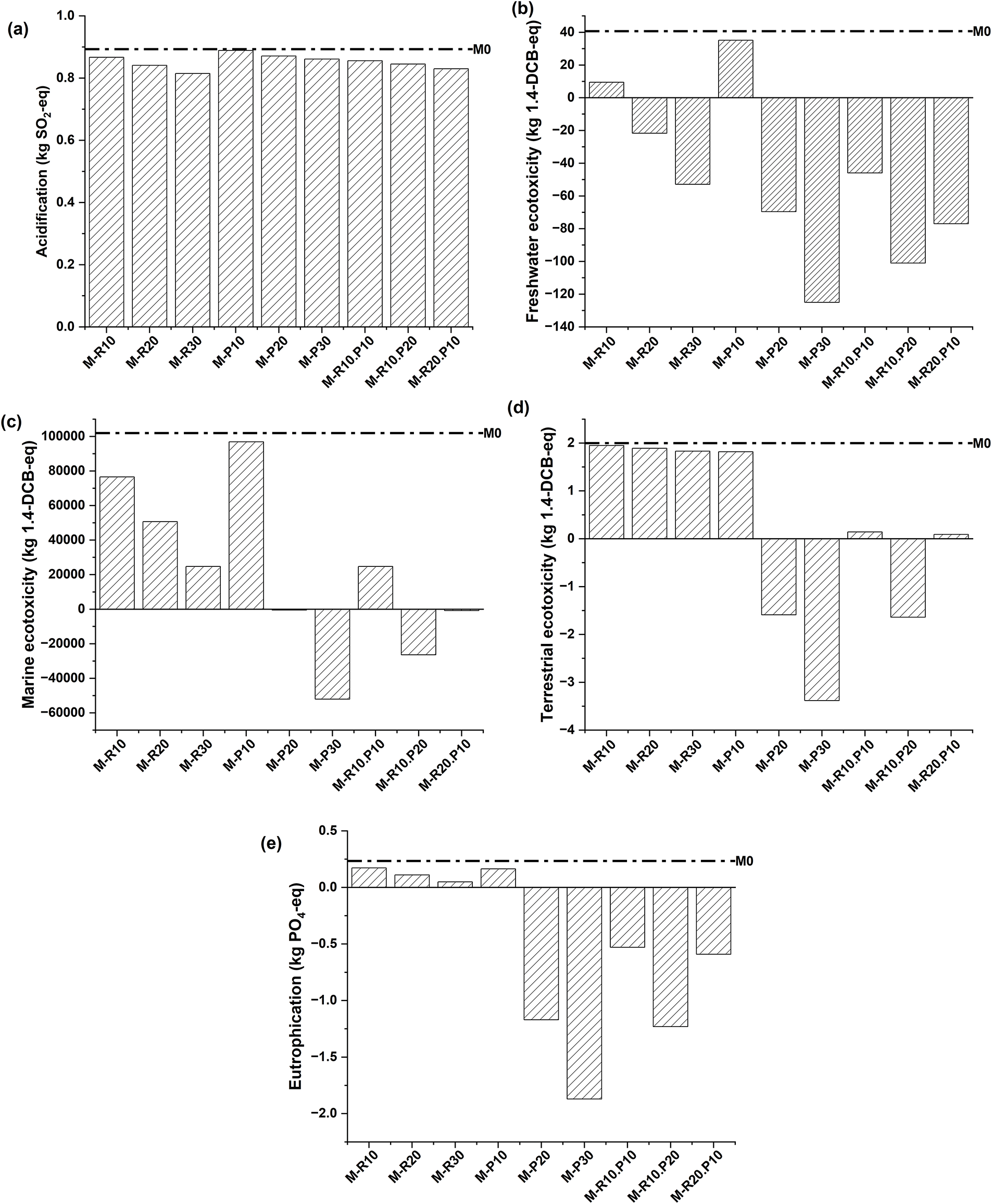
Figure 5 LCA results: (a) AC; (b) FET; (c) MET; (d) TET; (e) EU
RP substitution presents a more complex pattern. While low RP content (M-P10) provides limited or even adverse changes in some categories (e.g., FET is −13.8%), higher levels of RP substitution (M-P20, M-P30) produce substantial reductions in ecotoxicity indicators (e.g., M-P30: freshwater −271%, marine −100.5%, terrestrial −179.5%, EU −597.9%). At equal volume, recycled RP, due to its low density, requires a greater mass to occupy the same volume as RR. This characteristic leads to an increase in the quantity of material to be processed, which results in higher energy consumption for its preparation (crushing, shredding, sorting, etc.). However, it allows for the recovery of a greater quantity of RP waste, thus helping to reduce pressure on waste management systems and limit pollution risks. Though the acidification reductions with RP remain modest (only −2.5% at M-P20 and −3.6% at M-P30), likely because the recycling processes for RPs still emit acidifying gases during reprocessing.
Hybrid mixes (RR–RP) generally combine the benefits of both materials. For example, M-R10.P20 achieves a −1.6% reduction in TET and a −1.23 kg PO4-eq EU reduction compared to M0, while also significantly lowering FET (−248%) and MET (−26.4%). These effects stem from the combined advantages of avoiding both sand quarrying and reducing post-consumer RP pollution (RP’s strength), while distributing the environmental burdens of their respective recycling processes.
Overall, the results indicate that RR consistently reduces all environmental indicators, with the most pronounced effects on EU and ecotoxicity categories. RP, on the other hand, shows substantial reductions in ecotoxicity indicators at higher substitution levels but is less effective for acidification mitigation. The magnitude of these changes underlines the importance of considering multi-impact analysis when optimizing concrete formulations, as material that performs well in one category may show limited benefits, or even trade-offs, in another. Ghaleh et al. [63] proposed an LCA-based framework to evaluate waste tire RR concrete across scenarios, showing that incorporating waste RR can lower overall environmental impacts substantially compared with conventional concrete combined with RR landfilling, despite mechanical trade-offs. This aligns with our consistent reductions for RR substitution across ecosystem-quality indicators, and supports the interpretation that benefits depend on the modeled end-of-life scenario and system assumptions.
3.4 Effect of studied parameters on human health
Figure 6 illustrates the effect of recycled RR and RP aggregate substitutions on HT, OLD, and POF relative to the reference mix M0. In terms of HT, all RR-only mixes (M-R10, M-R20, M-R30) show progressive reductions of −6.9%, −13.7%, and −20.6%, respectively, compared to M0.
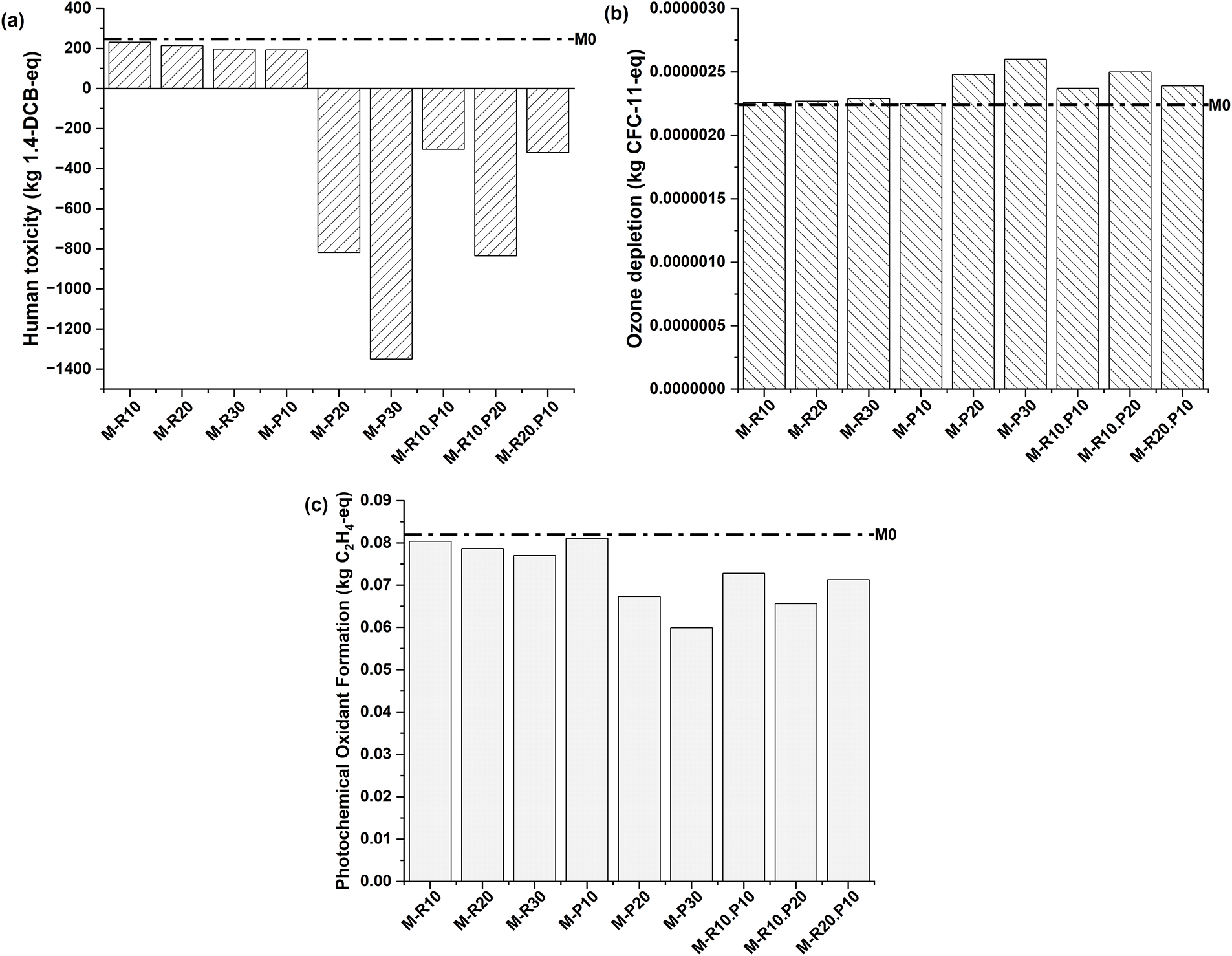
Figure 6 LCA results: (a) HT; (b) OLD; (c) POF
This enhancement is attributable to the decrease in hazardous emissions that result from the treatment and disposal of spent RR and RP after their valid lifetimes. Thanks to the utilization of avoided loads, the production of concrete from these recycled materials not only reduces emissions from mining for natural sand but also from the combustion of RPs and RR. This procedure significantly reduces the emission of hazardous substances, including heavy metals and particulate matter, which are typically the leading sources of human injury. The substitution of RP leads to substantial reductions in HT for most mixes. M-P20 and M-P30 exhibit the most dramatic effects, with a decrease of 429.7% and 644.4%, respectively. The hybrid RR-RP mixes exhibit improved performance in HT when compared to M0, particularly M-R10.P20 (−436%) and M-R20.P10 (−228%), which is indicative of the combined advantages of both replacement techniques. There are insignificant differences amongst combinations in terms of Ozone Layer Depletion, since they fluctuate within ±16% of M0. Although RR replacement enhances toxicity-related categories, upstream processes (such as transportation or recycling additives) may emit modest quantities of ozone-depleting chemicals, as evidenced by slightly higher values than M0 for RR blends. Refrigerants or chemicals with ozone-depleting potential may be included in the recycling procedures of specific polymers. This is because RP mixes, particularly those with higher substitution levels (M-P20 and M-P30), demonstrate modest increases in OLD (+10.7% and +16.1%, respectively). The utilization of RR as a replacement leads to moderate reductions in POF, with the most noticeable reduction being 6.1% attained by M-R30. RP replacement results in much more substantial improvements, particularly at higher levels (M-P30: −26.9%). M-R10.P20 exhibits a 20% drop compared to M0, suggesting that hybrid mixes are inclined to maintain this upward trajectory. Guo al. [47] investigated sustainable recycled aggregate self-compacting concrete incorporating waste RP fibers and performed a life-cycle assessment alongside mechanical and durability evaluation. They reported that the environmental profile is highly formulation-dependent, but improvements are achievable when recycled inputs reduce upstream burdens. Overall, this aligns with our observation that higher RP substitution can improve several human-health related indicators, although the magnitude remains sensitive to the LCIA method and recycling allocation assumptions.
Statistical Performance of RSM Predictive Models for LCA Parametres
To ensure consistency with the preceding LCA analysis, the optimization step was conducted using RSM, where the LCA indicators were considered as response variables and the mixture design variables—namely, the volumetric replacement levels of natural sand by recycled RR and RP—were used as factors.
A second-order polynomial model was initially considered within the RSM framework, including linear, interaction, and quadratic terms. However, based on the stepwise regression analysis, non-significant interaction and quadratic terms were eliminated. Consequently, the final model was reduced to a linear form, as only linear effects were found to be statistically significant. This suggests that the system behavior is predominantly linear within the studied experimental domain. Model adequacy was evaluated using standard statistical diagnostics, including the coefficient of determination (R2), adjusted R2, and the Root Mean Square Error (RMSE).
The statistical performance indicators presented in Table 3 confirm the strong predictive capability of the developed response surface models across all 11 LCA impact categories. Overall, the coefficients of determination (R2) are consistently high, ranging from 0.93 to 0.99, indicating that the models explain more than 93% of the variability in the responses. This is further supported by the adjusted R2 values (0.91–0.99), which remain close to the corresponding R2 values, confirming the robustness of the models without significant overfitting.
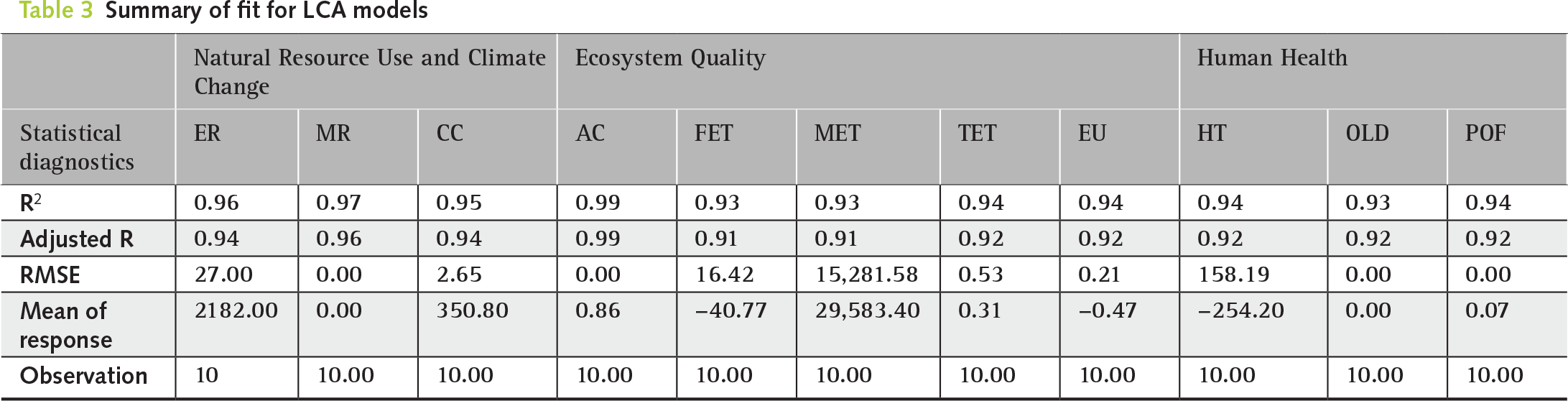
For the Natural Resource Use and Climate Change category, the models exhibit excellent performance, with R2 values between 0.95 (CC) and 0.99 (AC), and low RMSE values (e.g., 2.65 for CC and 27 for ER), indicating good predictive accuracy. Similarly, for the Ecosystem Quality category, the models show strong predictive ability, with R2 values ranging from 0.93 (FET and MET) to 0.94 (TET and EU). Although the RMSE for MET appears relatively high (15,281.58), this is consistent with the large magnitude of its response (mean = 29,583.4), and therefore does not indicate poor model performance. For the Human Health category, the models also demonstrate high reliability, with R2 values between 0.93 (OLD) and 0.94 (HT and POF), and adjusted R2 values of 0.92 for all responses. The higher RMSE observed for HT (158.19) can be explained by its larger response scale (mean = −254.2), while the near-zero RMSE values for OLD and POF indicate excellent agreement between predicted and observed values.
Overall, these results confirm that the developed models provide a reliable and accurate representation of the relationships between the mixture design variables and the selected LCA indicators within the studied experimental domain.
Based on these statistical results, the final predictive equations obtained from the RSM approach can be expressed for each response as functions of RR content (A) and RP content (B). Eqs. (1)–(11) allow for the estimation of environmental impact scores under different substitution scenarios.
Although all the developed models share a similar mathematical structure due to the use of second-order polynomial functions in RSM, their coefficients differ significantly, reflecting distinct sensitivities of each environmental impact category to RR and RP substitution. The apparent similarity between models is primarily due to the dominant influence of RP content across multiple impact categories.
4.2 ANOVA results for LCA results
The analysis of variance (ANOVA) results presented in Table 4 demonstrate that all developed models are highly statistically significant, with F-values of 77.497 (ER), 74.938 (MR), and 69.658 (CC), and associated p-values lower than 0.0001. This confirms that the selected factors provide a strong explanatory power for the variability observed in the responses.
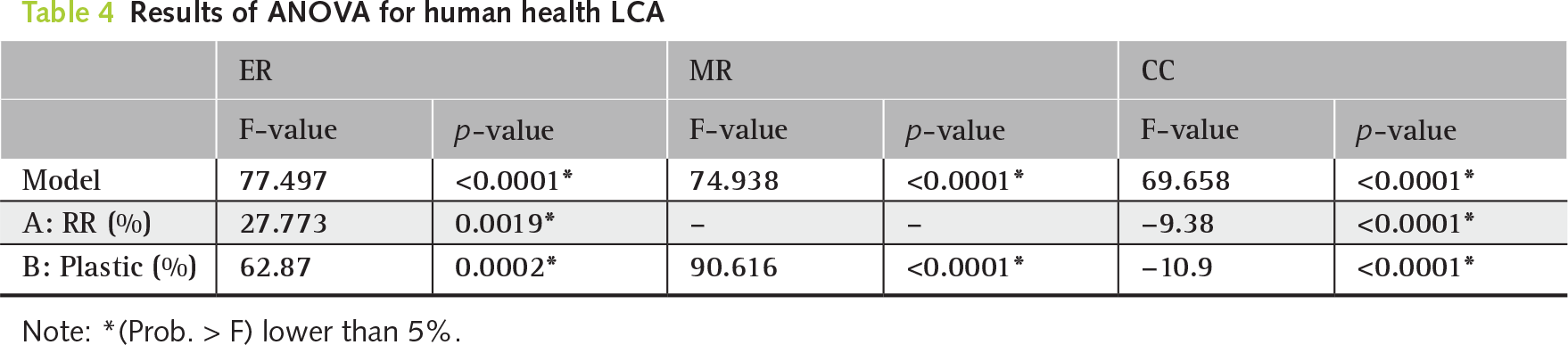
For the ER response, both RR content (A) and RP content (B) have a statistically significant influence (p = 0.0019 and p = 0.0002, respectively). The higher F-value associated with RP content (62.87) compared to RR content (27.773) indicates that RP plays a more dominant role in driving this impact category. From a scientific perspective, this is attributed to the intrinsic properties of RP materials, which are typically associated with higher environmental burdens during production and end-of-life stages, thus contributing more significantly to the ER indicator.
In the case of MR, only RP content (B) was found to be statistically significant (F = 90.616, p < 0.0001), while RR content (A) was not retained in the model. This suggests that variations in MR are primarily governed by the RP fraction. This behavior can be explained by the higher resource intensity and processing requirements associated with RP materials compared to RR, leading to a more pronounced effect on material resource-related impacts.
For the CC response, both factors A and B are statistically significant (p < 0.0001), with negative coefficients indicating that increasing the substitution rates of natural sand by recycled RR and RP leads to a reduction in CC impact. Scientifically, this can be linked to the partial replacement of virgin raw materials, which reduces energy consumption and greenhouse gas emissions associated with extraction and processing. The use of recycled materials therefore contributes to lowering the overall carbon footprint of the system.
The ANOVA results for the Ecosystem Quality impact category, presented in Table 5, indicate that all developed models are highly statistically significant, with F-values ranging from 48.137 (MET) to 523.943 (AC), and p-values lower than 0.0001. This confirms the strong explanatory power and reliability of the proposed models for all considered responses.

For the AC indicator, both RR content (A) and RP content (B) exhibit highly significant effects (p < 0.0001), with particularly high F-values of 1038.64 and 181.751, respectively. The much larger F-value for factor A suggests that RR content has a dominant influence on AC. This may be related to the chemical composition of RR and its potential contribution to acidifying emissions during processing or lifecycle stages.
In contrast, for the FET and MET indicators, both factors A and B are statistically significant. However, RP content (B) shows a stronger influence (F ≈ 95) compared to RR content (F = 39.786 for FET and 32.716 for MET). This behavior can be attributed to the presence of additives and potentially hazardous substances in RPs, which can lead to higher ecotoxicity impacts in aquatic environments.
For TET and EU, only RP content (B) was found to be statistically significant (p < 0.0001), while RR content (A) was not retained in the models. This indicates that these environmental impacts are primarily driven by the RP fraction. Scientifically, this can be explained by the release of microplastics and associated pollutants, which are known to significantly affect soil and water quality, thereby increasing ecotoxicity and EU potential.
Overall, the results highlight that while both materials influence ecosystem-related impacts, RP content plays a more consistent and dominant role across most indicators, whereas the effect of RR is more pronounced in specific cases such as AC.
The ANOVA results for the Human Health impact category, presented in Table 6, indicate that all developed models are statistically significant, with F-values of 55.9006 (HT), 74.9384 (OLD), and 51.9168 (POF), and corresponding p-values lower than 0.0001. This confirms the adequacy and reliability of the models in explaining the variability of the human health-related indicators.
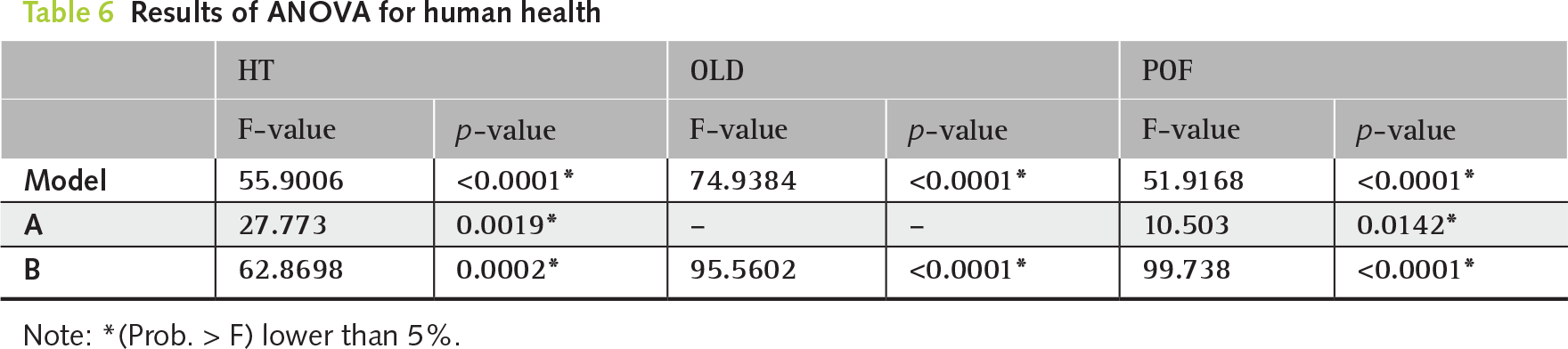
For the HT indicator, both RR content (A) and RP content (B) have a statistically significant effect (p = 0.0019 and p = 0.0002, respectively). The higher F-value associated with RP content (62.8698) compared to RR content (27.773) indicates that RP has a stronger influence on this response. From a scientific standpoint, this can be attributed to the potential release of harmful substances and emissions associated with RP materials throughout their life cycle, which may contribute more significantly to HT impacts.
In the case of OLD, only RP content (B) was found to be statistically significant (F = 95.5602, p < 0.0001), while RR content (A) was not retained in the model. This suggests that ozone layer depletion-related impacts are mainly influenced by the RP fraction. This behavior can be linked to the upstream processes of RP production, which may involve substances contributing to ozone depletion.
For the POF indicator, both factors A and B are statistically significant (p = 0.0142 and p < 0.0001, respectively), with RP content (B) again showing a dominant effect (F = 99.738). This indicates that increasing RP content has a stronger impact on photochemical oxidant formation. Scientifically, this can be explained by the emission of volatile organic compounds (VOCs) and other precursors during the production and degradation of RP materials, which contribute to the formation of photochemical smog.
Overall, these results highlight the predominant role of RP content in driving human health-related impacts, while the influence of RR remains secondary and dependent on the specific indicator. This emphasizes the importance of carefully optimizing RP substitution levels to mitigate potential human health risks.
4.3 Effect of investigation parameters on investigation responses
4.3.1 Analysis results for human-health-related impact categories
The main effect plots for OLD, HT, and POF reveal the independent influence of RR and RP contents on each human-health-related impact category (Figure 7). For OLD, both parameters exhibit an upward trend, indicating that increasing substitution levels lead to higher ozone depletion potential; however, the slope for RP is markedly steeper, confirming its stronger contribution due to life cycle emissions of halogenated compounds (e.g., CFCs, HCFCs) during production and disposal. For HT, RR shows a negligible change. At the same time, RP induces a pronounced decrease in toxicity scores, reflecting potential inventory trade-offs where RP substitution offsets more toxic upstream processes associated with conventional materials. For POF, the influence of both parameters is negative, but the effect of RP is stronger, suggesting a greater reduction in VOC and ozone precursor emissions with higher RP content. Overall, these main effects confirm the ANOVA findings that RP content is the dominant factor affecting human health impacts, with RR exerting only a marginal influence in the studied range.
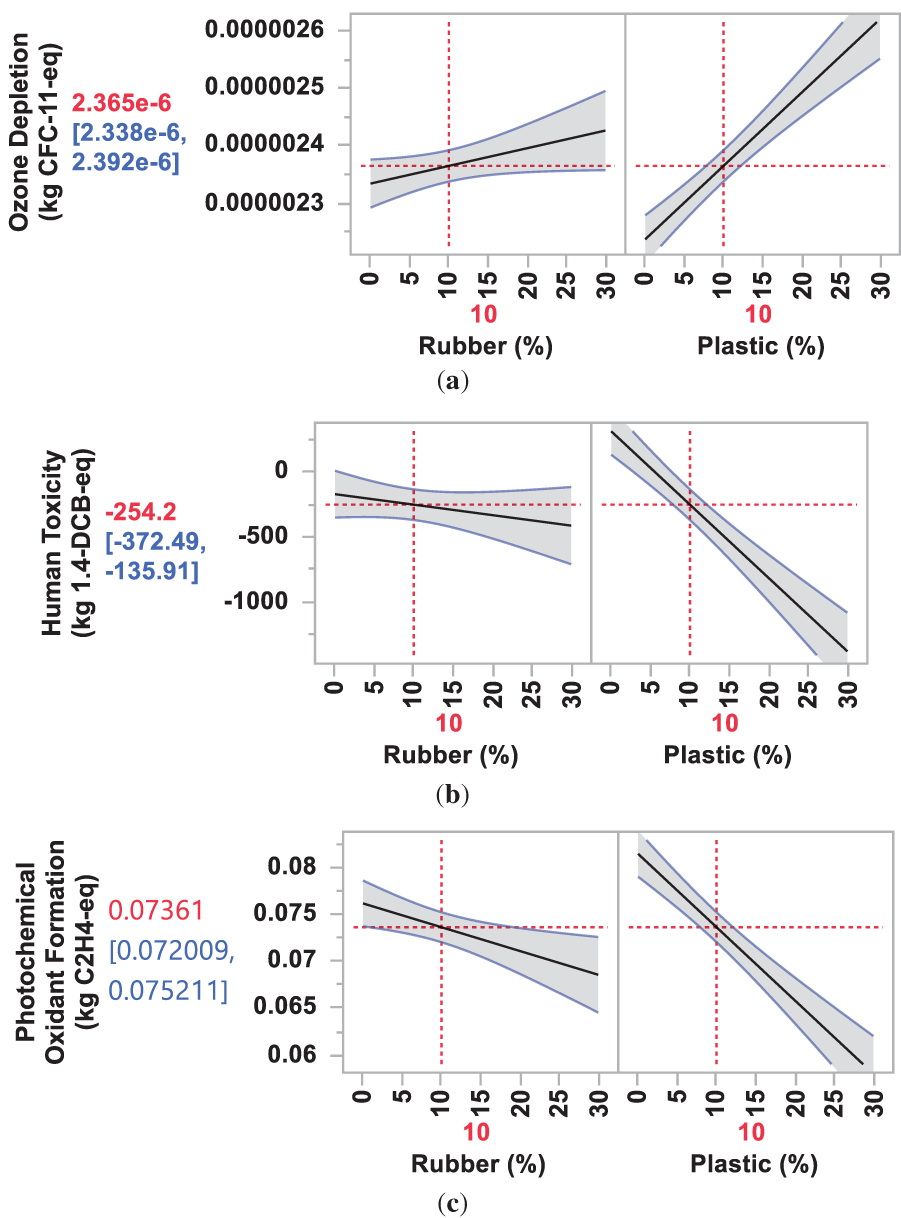
Figure 7 Influence of the main parameters investigated on Human health: (a) OLD; (b) HT; (c) POF
4.3.2 Analysis results for ecosystem quality-related impact categories
The main effect plots in Figure 8 illustrate the independent influence of RR (%) and RP (%) contents on the ecosystem quality impact categories (i.e., AC, FET, MET, TET, and EU. For AC, both RR and RP show clear negative slopes, indicating that higher substitution levels reduce AC potential; however, the effect of RR is more pronounced, consistent with ANOVA results showing its strong statistical significance in this category. This trend suggests that replacing quarry sand with either material reduces SOx and NOx emissions from upstream extraction and processing, with RR delivering greater savings due to its lower energy demand compared to virgin aggregates. For FET, MET, TET, and EU, RP exhibits steeper negative slopes than RR, reflecting its dominant role in lowering ecotoxic and nutrient enrichment impacts within the studied range. From an LCA mechanism standpoint, these reductions are likely linked to avoided burdens in the baseline system, where the substitution of conventional aggregates with recycled RP offsets pollutant releases such as persistent organic compounds, heavy metals, and nutrient-rich effluents from quarrying and raw material processing. The weaker effect of RR in these categories aligns with its comparatively inert chemical composition and lower pollutant release profile. Overall, the plots confirm that while both materials contribute to ecosystem quality improvement, RP substitution exerts the most decisive influence in ecotoxicity-related categories. In contrast, RR is particularly effective in reducing AC potential.
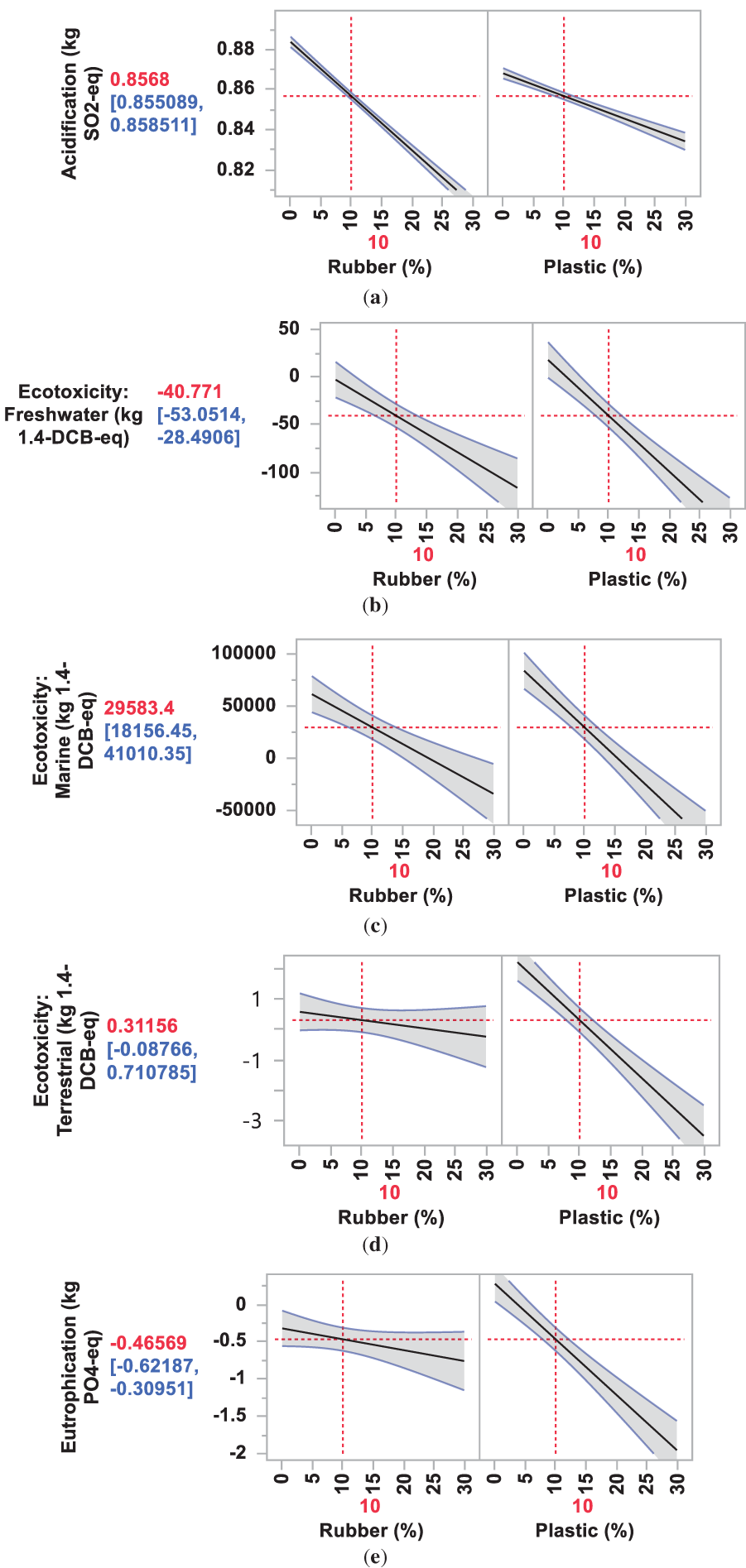
Figure 8 Influence of the main parameters investigated on Ecosystem quality: (a) AC; (b) FET; (c) TET; (d) MET; (e) EU
4.3.3 Analysis results on natural resource use and climate change impact categories
The main effect plots in Figure 9 show the independent influence of RR (%) and RP (%) contents on ER, MR, and CC. For ER, RR exhibits a slight, non-significant downward trend, suggesting a marginal reduction in fossil energy demand with increasing substitution. In contrast, RP shows a clear positive slope, indicating that higher RP content increases nonrenewable energy use due to the energy-intensive petrochemical processes underlying RP production and recycling. In MR, RR again shows a minimal effect. At the same time, RP demonstrates a distinct positive trend, reflecting its higher dependency on mined metals and minerals used as catalysts, pigments, and additives in polymer manufacturing. For CC, both parameters display negative slopes, with RP having a slightly steeper decrease, indicating that increased substitution reduces greenhouse gas emissions; this effect likely arises from avoided emissions associated with conventional quarry sand extraction and processing, combined with the recycling benefits of incorporating waste-derived materials. The trends confirm the ANOVA results, highlighting that RP content is the primary driver of resource depletion. In contrast, both RR and RP contribute to lowering CC impacts within the studied range.
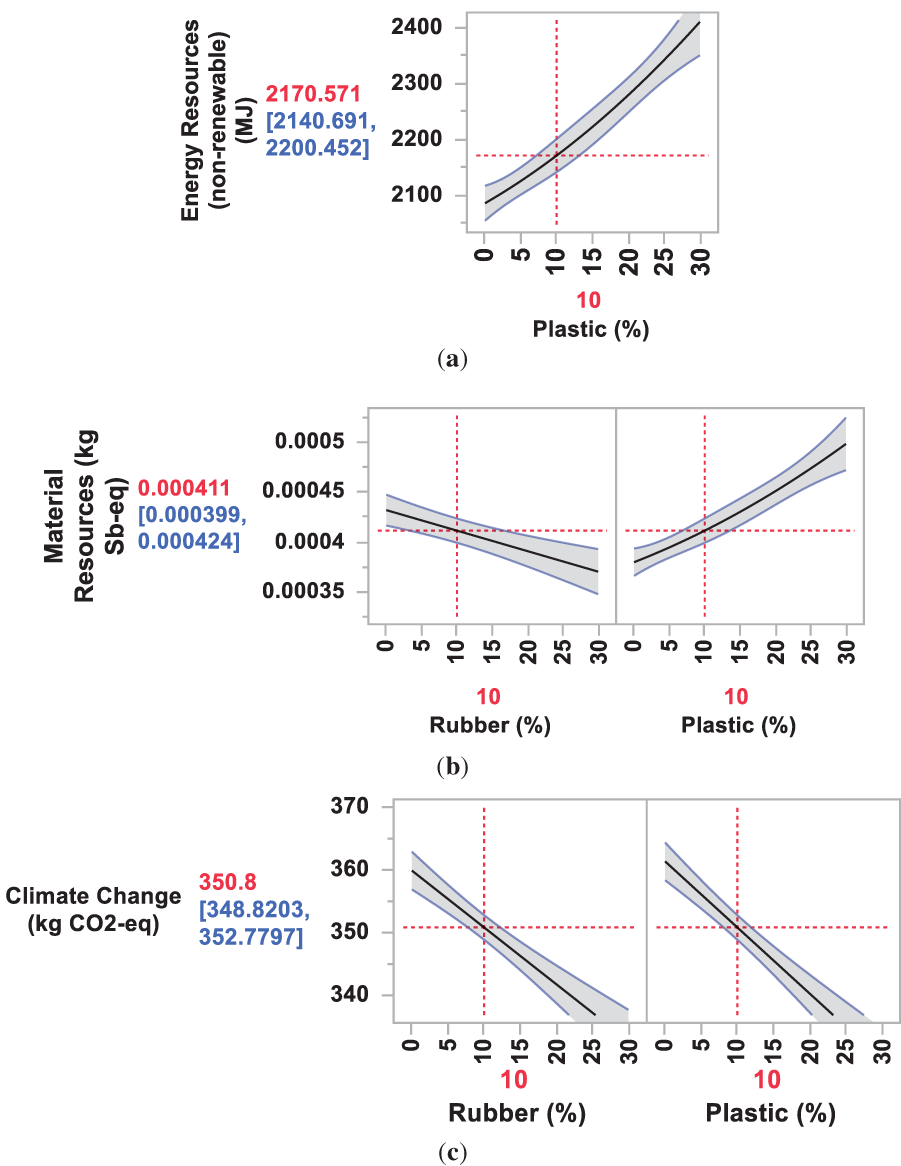
Figure 9 Influence of the main parameters investigated on Natural resources and climate changes: (a) ER; (b) MR; (c) CC
To conduct a techno–environmental analysis of SCC incorporating recycled aggregates, two distinct performance factors were defined: a Rheological Performance Factor (RPF) and an Environmental Performance Factor (EPF). The RPF integrates the three key parameters recommended by AFGC and the EFNARC guidelines for evaluating the fresh-state properties of SCC: slump flow, passing ability (L-box), and segregation resistance (sieve stability). Weights of 5, 4, and 3 were assigned to these parameters, respectively, reflecting their relative importance: slump flow, the primary determinant of workability and filling ability, received the highest weight; passing ability, critical for flow through congested reinforcement, was assigned an intermediate weight; and sieve stability, while necessary for preventing segregation, was given a slightly lower weight.
The EPF is based on eleven midpoint impact categories derived from LCA, each weighted on a 1–5 scale according to its relevance and contribution to the life cycle profile of SCC. CC (5), ER (4), and HT (4) were prioritized due to their substantial contribution and regulatory significance. AC, EU, ecotoxicity (FET, MET, TET), and MR were assigned intermediate weights (3). In contrast, ozone depletion and photochemical oxidant formation, typically less influential in concrete’s environmental profile, were given lower weights (2). This combined weighting framework ensures that both technical and environmental performances are considered concurrently, providing a robust tool for comparing and optimizing SCC formulations within an integrated assessment approach.
Figure 10 synthesizes the mixture-level tradeoff between fresh-state functionality and environmental outcomes by plotting the EPF (EPF, x-axis) against the Rheological Performance Factor (RPF, y-axis), both expressed relative to the reference SCC (M0). Because EPF is derived from weighted LCIA midpoint burdens, negative EPF values indicate a net reduction in life-cycle impacts (more ecological), whereas positive values indicate increased burdens (less ecological). RPF aggregates the SCC workability criteria into a single index, therefore positive RPF values denote improved fresh-state performance relative to M0.
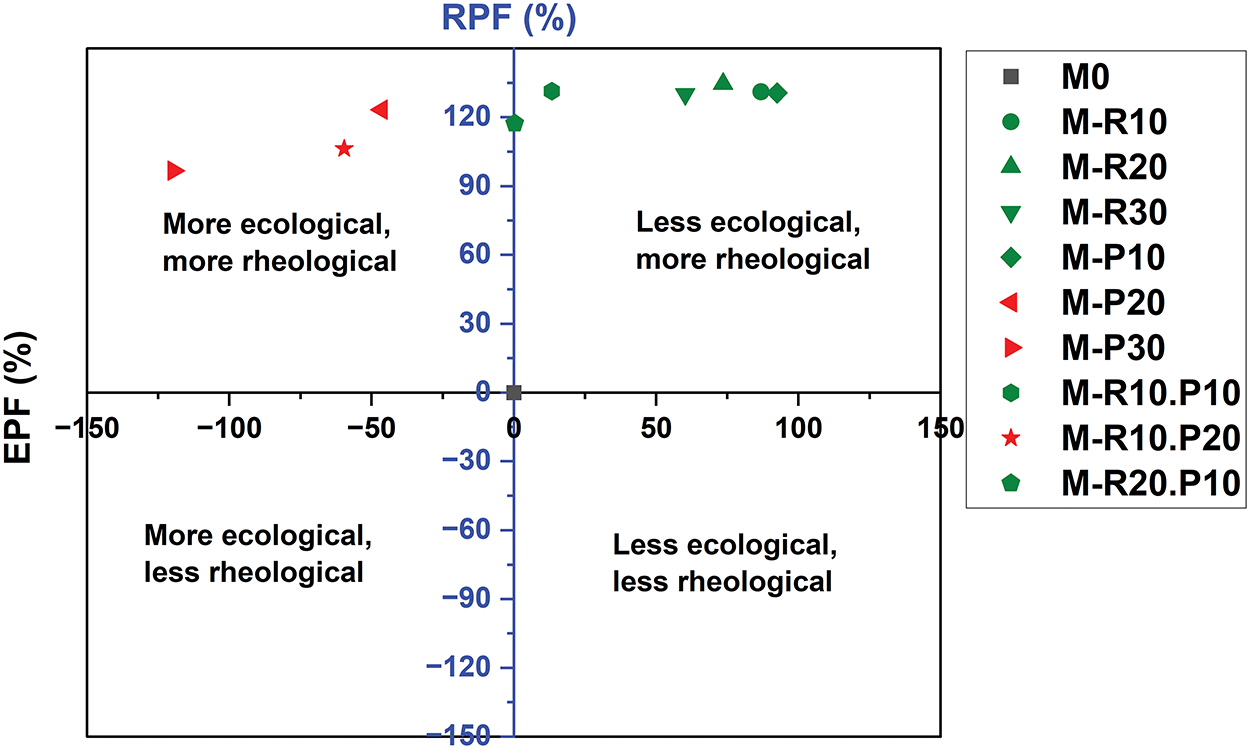
Figure 10 Combined evaluation of RPF and EPF of SCC
The distribution of the experimental points reveals two practically relevant mixture families. First, mixtures located in the upper-left quadrant (EPF < 0, RPF > 0) achieve the desired “win–win” behaviour, namely improved rheology accompanied by reduced environmental burdens. In this region, mixes such as M-P20, M-P30, and the hybrid M-R10.P20 show that, within the investigated design space, the benefit of natural sand substitution and waste valorization outweighs the additional burdens associated with processing and incorporating recycled constituents, while still enhancing SCC passing and flow-related performance. A second group of mixes is positioned in the upper-right quadrant (EPF > 0, RPF > 0), indicating that rheological gains are achieved at the expense of higher aggregated LCIA burdens. These formulations represent a less balanced design choice because they improve fresh-state behaviour but shift the overall sustainability performance in an unfavorable direction compared with M0.
RR-dominant and low-RP formulations (for example, M-R10, M-R20, M-R30, M-P10, M-R10.P10, and M-R20.P10) cluster within the high-RPF zone and, depending on their EPF sign, fall either in the preferred upper-left quadrant or in the trade-off upper-right quadrant. This clustering indicates that the mixture response is not governed by workability alone, but by the combined effect of RR and RP replacement levels on both the fresh-state indices and the LCIA aggregation. From an RSM viewpoint, Figure 10 can be interpreted as a graphical validation of multi-response optimization: the target region corresponds to maximizing RPF while maintaining EPF below zero (EPF < 0), which defines a formulation window that meets SCC rheological requirements without increasing the overall life-cycle burdens.
This representation can be interpreted as a practical multi-objective optimization approach, where optimal mixtures correspond to maximizing RPF while minimizing EPF within the investigated design space.
4.4 Practical implications, limitations, and future directions
The integration of recycled RR and RP aggregates into SCC demonstrates promising dual benefits: enhanced fresh-state rheology and reduced environmental impacts. These findings highlight the potential for real-world applications in areas where workability and sustainability are prioritized. Examples include non-structural or semi-structural components such as pavements, partition walls, precast blocks, and infill concrete for congested reinforcement zones. Beyond technical benefits, these formulations support circular economy goals by diverting waste streams from landfills and contributing to carbon neutrality strategies.
Despite these advantages, it is important to emphasize that the present study should be interpreted as a techno–environmental pre-screening and optimization approach, primarily focused on fresh-state performance and life cycle impacts. The absence of hardened-state data (compressive and tensile strength, modulus of elasticity, shrinkage, and durability) therefore limits the immediate application of these mixtures in structural contexts. Prior studies have shown that significant RR or RP substitution can affect strength and long-term performance, underscoring the need for cautious interpretation and further validation.
Additionally, some of the LCA benefits observed, particularly extreme reductions in toxicity categories, are contingent on avoided burden credits, which may vary across regional waste management practices. These considerations reinforce that the current findings represent an initial selection and optimization stage, rather than a ready-to-deploy structural solution.
Looking ahead, future research will extend this work by incorporating a comprehensive evaluation of hardened and durability properties, including compressive strength, tensile behaviour, elastic modulus, shrinkage, freeze–thaw resistance, chloride ion penetration, and microstructural characterization (e.g., SEM, MIP, and X-ray tomography). In parallel, advanced computational approaches should be explored. While RSM yielded accurate models (R2 > 0.95), more sophisticated techniques such as Artificial Neural Networks, Support Vector Machines, or Gradient Boosted Trees could capture non-linear interactions with higher fidelity. Coupled with multi-objective optimization frameworks, such tools could guide the design of SCC mixes that balance fresh-state performance, environmental sustainability, and cost efficiency.
Finally, region-specific LCA scenarios should be incorporated to improve generalizability by explicitly considering regional variations in transport distances, electricity mix, and waste management scenarios. This includes varying end-of-life assumptions (e.g., landfill vs. incineration vs. recycling) and testing alternative databases to assess sensitivity. By combining broader experimental evaluation with advanced modelling and contextualized sustainability analysis, future studies can deliver a more comprehensive foundation for the widespread adoption of RR–RP SCC in sustainable construction practice.
This study presents an integrated techno–environmental assessment of SCC incorporating recycled RR and RP aggregates, combining experimental rheological testing, LCA, and RSM. The results demonstrate that an optimized substitution strategy can significantly enhance fresh-state performance while influencing environmental impacts. The main findings and contributions of this study can be summarized as follows:
• The feasibility of incorporating recycled RR and RP aggregates as partial replacements for natural sand in SCC was demonstrated through a combined experimental and modelling approach.
• RR substitution significantly improved fresh-state properties (flowability, passing ability, and segregation resistance) due to reduced internal friction, lower density, and enhanced particle mobility.
• RP substitution contributed to a reduction in greenhouse gas emissions but led to increased energy and mineral resource consumption, especially at higher replacement levels, highlighting important environmental trade-offs.
• The RSM analysis revealed that RP content is the dominant factor influencing most environmental indicators, while RR plays a secondary but beneficial role in improving rheological performance.
• The combined use of RPF and EPF enabled the identification of optimal substitution ranges, with hybrid mixtures showing a balanced “win–win” performance between workability and environmental impact.
• A key contribution of this work is the development of an integrated techno–environmental framework combining rheology, LCA, and statistical modelling, providing a structured tool for sustainable SCC mix design.
These results highlight the existence of a trade-off between environmental benefits and resource consumption, emphasizing the need for multi-objective optimization in sustainable SCC design.
However, the study is limited to fresh-state behaviour and environmental indicators. The absence of hardened properties and durability data, as well as simplified LCA assumptions and limited statistical repetition, restricts the direct applicability of the results to structural design.
Future work should assess the durability of the optimized mixtures (e.g., freeze–thaw resistance, chloride ion penetration, sulphate attack) and perform porosity and microstructural analyses (e.g., MIP, SEM, and X-ray tomography) to establish links between material structure and performance. In parallel, the incorporation of formal multi-objective optimization techniques, such as desirability functions or Pareto-based approaches, is recommended to identify optimal substitution levels under multiple constraints. Additionally, comparative studies between RSM and advanced machine learning methods, including Artificial Neural Networks (ANN) and Support Vector Machines (SVM), should be conducted to evaluate predictive accuracy and explore the potential of AI-based tools for optimizing sustainable construction materials.
Acknowledgement
Not applicable.
Funding Statement
The authors received no specific funding for this study.
Author Contributions
The authors confirm contribution to the paper as follows: Conceptualization, Ali Makhlouf and Abdellah Douadi; methodology, Ali Makhlouf, Abdellah Douadi, Eyad Alsuhaibani, Hammoudi Abderazek and Yacine Benguerba; software, Abdellah Douadi and Hammoudi Abderazek; validation, Ali Makhlouf, Abdellah Douadi and Eyad Alsuhaibani; formal analysis, Ali Makhlouf and Abdellah Douadi; investigation, Ali Makhlouf and Abdellah Douadi; resources, Ali Makhlouf and Abdellah Douadi; data curation, Ali Makhlouf, Abdellah Douadi and Eyad Alsuhaibani; writing—original draft preparation, Eyad Alsuhaibani, Hammoudi Abderazek and Yacine Benguerba; writing—review and editing, Taher A. Tawfik, Jacqueline Saliba, Walid Deboucha and Laura Moretti; visualization, Jacqueline Saliba, Walid Deboucha and Laura Moretti; supervision, Taher A. Tawfik, Jacqueline Saliba, Walid Deboucha and Laura Moretti; project administration, Yacine Benguerba and Laura Moretti. All authors reviewed and approved the final version of the manuscript.
Availability of Data and Materials
The data that support the findings of this study are available from the Corresponding Author, Laura Moretti, upon reasonable request.
Ethics Approval
Not applicable.
Conflicts of Interest
The authors declare no conflicts of interest.
Abbreviations
| Acronyms | Signification |
| AC | Acidification |
| AFGC | Association Française de Génie Civil |
| CC | Climate Change |
| CFC | Chlorofluorocarbons |
| EFNARC | European Federation of National Associations Representing for Concrete |
| EPF | Environmental Performance Factor |
| ER | Energy Resources |
| EU | Eutrophication |
| FET | Freshwater Ecotoxicity |
| FU | Functional Unit |
| GWP | Global Warming Potential |
| HRWRA | High Range Water Reducing Admixtures |
| HT | Human Toxicity |
| LCA | Life Cycle Assessment |
| LCI | Life Cycle Inventory |
| LCIA | Life Cycle Impact Assessment |
| MET | Marine Ecotoxicity |
| MR | Mineral Resources |
| OLD | Ozone Layer Depletion |
| PET | Polyethylene Terephthalate |
| POF | Photochemical Oxidant Formation |
| RR | Recycle Rubber |
| RMSE | Root Mean Square Error |
| RP | Recycled Plastics |
| RPF | Rheological Performance Factor |
| RSM | Response Surface Methodology |
| SCC | Self-Compacting Concrete |
| SP | Superplasticizer |
| TET | Terrestrial ecotoxicity |
| VOC | Volatile Organic Compounds |