Enhanced in-situ copolymerization with sodium styrene sulfonate and its effects on the properties of portland cement pastes
The widespread use of Ordinary Portland cement-based materials is constrained by their intrinsic heterogeneity and multi-scale brittleness, which manifest as low fracture toughness and proneness to cracking [1]. These limitations conflict with increasing demands for high strength, superior toughness, and long-term durability in modern engineering [2–4]. Meanwhile, stringent environmental regulations and economic constraints necessitate cement-based materials with enhanced toughness and improved sustainability [5, 6]. Therefore, developing micro-scale toughening strategies to achieve strength-toughness synergy remains a key challenge in materials science [7].
The enhancement of toughness in cement-based composites is commonly pursued through the incorporation of reinforcing phases and optimization of their microstructure [7]. Conventional modification strategies, however, often encounter a critical performance trade-off: polymer modification tends to improve toughness at the expense of compressive strength, while fiber reinforcement, despite its mechanical benefits, can significantly impair the workability of fresh mixtures, leading to issues such as reduced flowability, fiber agglomeration, pumping difficulties, and accelerated equipment wear [8–10]. To address these limitations, this study proposes a novel synergistic modification approach based on in-situ polymerization. This method introduces flexible monomers into the cement matrix along with hydrophilic rigid monomers, triggering copolymerization directly within the cementitious environment to construct an integrated organic network that combines rigid and flexible segments at the molecular scale. This microstructure, inspired by multi-phase composite systems, is designed to simultaneously enhance toughness, strength, and fresh-state performance. The resulting composite exhibits a promising balance of properties, offering a viable pathway toward high-performance cement-based materials suitable for modern structural applications.
In recent years, in-situ polymerization has emerged as an effective strategy for modifying cement-based materials [11–15]. Monomers polymerize in the pore solution, forming a polymer network that enhances toughness through crack bridging [8, 9, 16]. AM is widely used due to its water solubility and controllable reactivity [17–20]. The resulting polyacrylamide (PAM) network forms flexible bridges between hydration products, enabling energy dissipation [21–24]. However, a single PAM system often struggles to balance stiffness and toughness, indicating a bottleneck in toughening performance. Leveraging molecular-level design, rigid monomers capable of in-situ polymerization exhibit multi-scale strengthening effects in cement-based composites [25–28]. At the interfacial level, strongly functional polar groups-such as sulfonic acid groups-carried by these monomers dissociate into anions under the alkaline cement environment, forming stable ionic or chelation bonds with calcium ions on the surface of hydration products [29, 30]. This process enhances organic-inorganic interfacial adhesion and reduces structural inhomogeneity in the transition zone. On the polymer-network scale, aromatic rings or sterically hindered structures in the monomers promote the formation of nanoscale rigid domains during polymerization [31]. These domains serve as physical cross-linking points and stress concentration sites, enabling efficient energy dissipation through microcrack deflection, branching, and interfacial debonding mechanisms.
Recent studies have demonstrated that in-situ polymerization technology effectively addresses limitations of conventional modification methods-such as non-uniform polymer dispersion and weak interfacial bonding-exhibiting promising application potential across multiple material systems [32]. Liang et al. [33] prepared polymer-modified cementitious composites via in-situ polymerization of AM in OPC, reporting a significant enhancement in flexural strength; however, the reliance on deionized water under experimental conditions constrains practical applicability. Hua et al. [17] constructed a three-dimensional composite network by combining AM monomers with polyvinyl alcohol (PVA) fibers, which improved bending resistance but encountered issues including fiber agglomeration and high process sensitivity. In a different approach, Xu et al. [34] adopted a hybrid modification strategy incorporating AM monomers and wollastonite whisker, achieving higher flexural strength, albeit with a decline in compressive performance. Previous studies have revealed that Ca2+ released during Portland cement hydration can form chelation bonds with terminal groups of PAM chains, providing a theoretical foundation for the co-design of rigid and flexible monomer systems [35–37]. Building on this mechanistic insight, the present study proposes an in-situ polymerization strategy of AM and SSS within the cement matrix to synergistically enhance material toughness. In the alkaline environment of cement paste, AM and SSS form a composite organic network characterized by a “rigid micro-domains-flexible chain segments” structure: the flexible PAM chains serve as energy-dissipating ligaments, the rigid aromatic rings in SSS promote the formation of nanoscale rigid zones, and the sulfonic acid groups establish strong ionic bonds with Ca2+ in cement hydration products [38, 39]. This multi-scale collaborative design optimizes stress transmission and suppresses crack propagation, offering a viable pathway to transcend the conventional strength-toughness trade-off and providing a novel strategy for high-performance cement-based material development.
PAM possesses an inherently flexible structure, which is further enhanced in the alkaline environment of cement hydration. This increased flexibility can render PAM a mechanically weak phase within cement-based composites formed via in-situ polymerization. To address this limitation, this study employs a polymer molecular design strategy by introducing SSS as a rigid functional monomer. The objective is to construct a synergistic “rigid-flexible” interpenetrating polymer network through the copolymerization of AM and SSS. In this network, the rigid benzene rings of SSS effectively reinforce the PAM matrix, while the sulfonate groups form strong ionic bonds with cement hydration products. Concurrently, the flexible AM chains impart enhanced deformability. Through systematic mechanical testing and microstructural characterization, the reinforcement mechanisms of the composite are elucidated. This work provides new insights and a solid theoretical basis for designing high-performance cement-based materials via in-situ copolymerization modification.
Ordinary Portland cement (52.5 grade) produced by Jiangsu Jurong Tai Cement Co., Ltd. was employed as the cementitious material. In this study, 52.5 grade ordinary Portland cement served as the base material, with a fixed water-cement ratio of 0.3. The basic properties of the cement are as follows: a specific gravity of 3.100, a median particle size (D50) of 5.21 μm, and a chemical composition (Table 1, XRF), a phase composition (Figure 1, XRD), and a particle morphology (Figure 2, SEM). The chemical reagents utilized included AM, SSS, sodium persulfate (SPS), and N,N’-Methylenebisacrylamide (MBA), all analytical grade and supplied by Aladdin Reagent Co., Ltd. A polycarboxylate-based high-range water reducer (WR) of the PCA®®-I series, supplied by Jiangsu Sobota New Materials Co., Ltd., was employed.

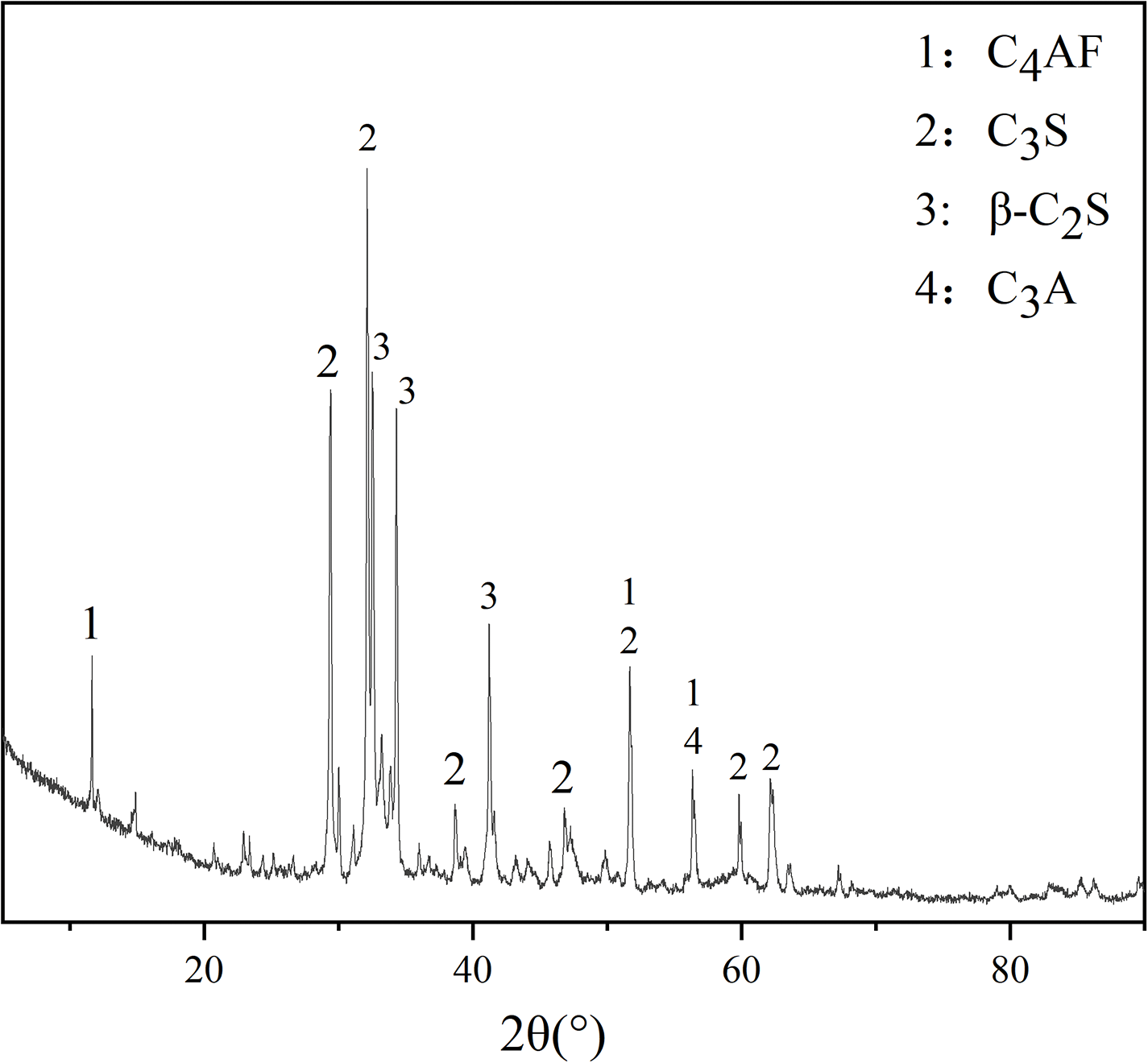
Figure 1 XRD Pattern of the raw cement
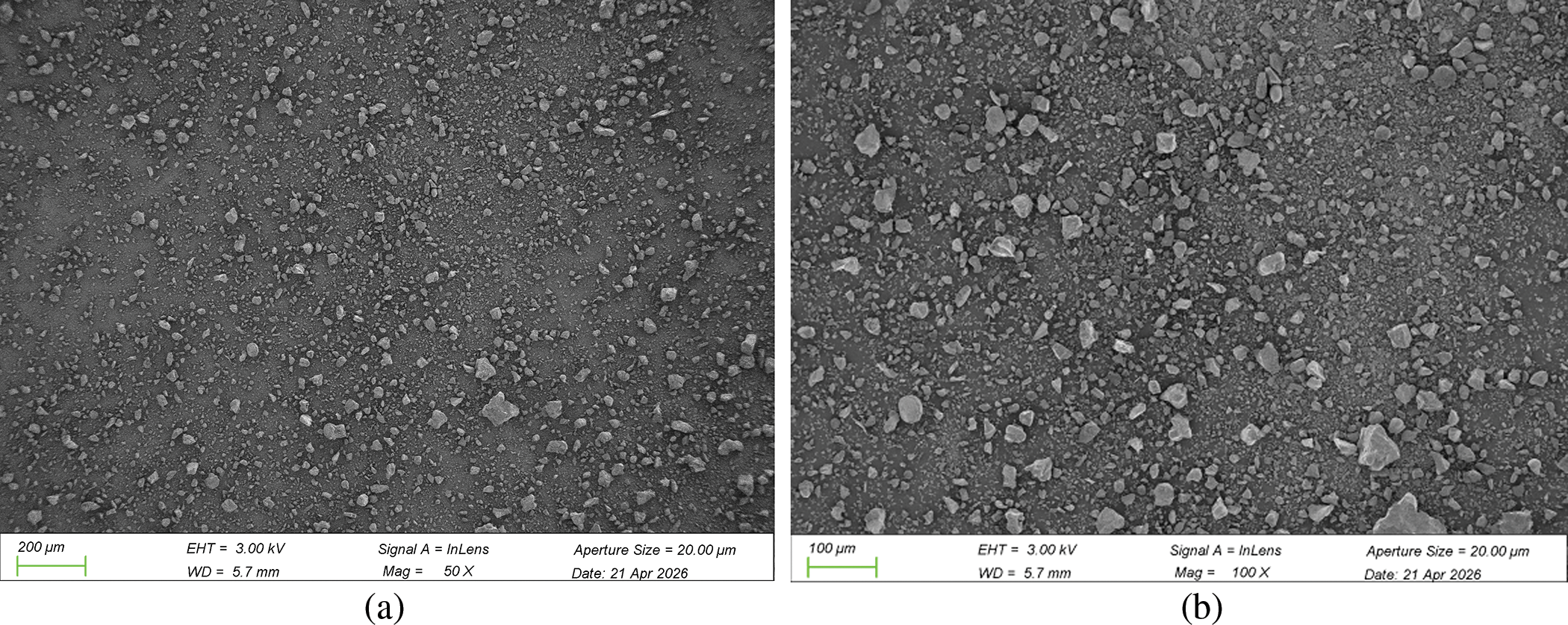
Figure 2 SEM images of the raw cement powder: (a) 50×, (b) 100×
2.2 Mix proportion and sample preparation
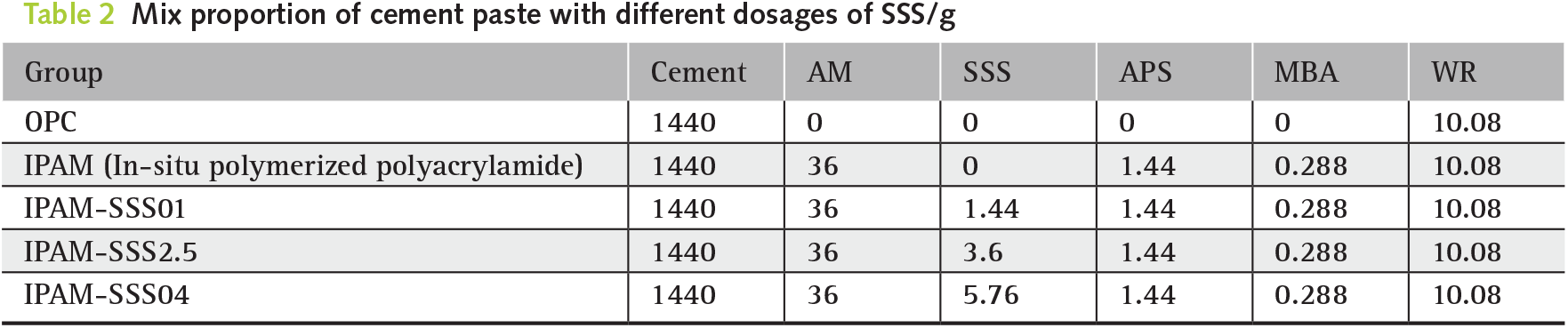
In this study, 52.5 grade ordinary Portland cement served as the base material, with a fixed water-cement ratio of 0.3. Through in-situ polymerization modification, AM (2.5% of cement mass) and sodium styrene sulfonate (SSS, 0% to 0.4% of cement mass) were employed as monomers, APS (4% of AM mass) as the initiator, and MBA (0.8% of AM mass) as the crosslinking agent. The polymerization and subsequent sample curing were conducted at a controlled ambient temperature of 20°C–25°C. The AM SSS, APS, and MBA were first pre-mixed with dry cement powder at a stirring speed of 62 ± 5 rpm to ensure uniform dispersion. Separately, the water reducer (WR) was dissolved in the mixing water before being combined with the solid mixture. The polymerization was conducted under laboratory conditions at 20°C–25°C. AM, SSS, APS, and MBA were pre-mixed with dry cement powder under low speed stirring to achieve uniform dispersion, while WR was dissolved in mixing water prior to addition. After mixing, the slurry was immediately cast into steel molds, demolded after 24 h, and subsequently cured under standard conditions (20 ± 2°C, RH ≥ 95%) until the specified ages. The specific formulations are provided in Table 2.
The hydration heat release was monitored using an eight-channel microcalorimeter (TAM Air). For each test, 5 g of cement was thoroughly mixed with the corresponding aqueous solution. The heat flow was recorded at 20-s intervals over a total duration of 72 h.
The flowability of cement slurry is determined in accordance with GB/T 8077-2023. Quickly pour the well-mixed clean slurry into the conical circular mold and level it. Lift it vertically in the direction of the mold and let the cement slurry flow on the glass plate. Use a ruler to measure the maximum diameters in two mutually perpendicular directions of the flowing part. The time from adding water to the completion of the measurement should not exceed 6 min, and the flow time of the clean slurry should be 30 s. Take the average value.
2.3.3 Mechanical properties test
The flexural and compressive strengths were determined according to GB/T 17671-2021 (ISO method) on specimens after 7 and 28 days of standard curing. Flexural strength (Rf) was measured via three-point bending of 40 mm × 40 mm × 160 mm prismatic specimens, loaded at 50 N/s until failure. The failure load was recorded to calculate Rf in MPa. Any result deviating by more than ±10% from the group mean was discarded as an outlier. The reported flexural strength is the arithmetic means of the valid results. Compressive strength (Rc) was then tested on the prism halves, loaded on the side face at 2.4 kN/s. The maximum load was used to calculate Rc (in MPa). The same ±10% criterion was applied for outlier rejection, and the compressive strength was taken as the mean of the valid results.
2.3.4 Composition analysis of hydration product
After curing to the specified age, the sample was crushed, soaked in anhydrous ethanol for 7 days to terminate the hydration reaction, and then dried in a vacuum drying oven at 45°C for 48 h. After drying, the sample is ground into powder, passed through a 200-mesh square sieve, and vacuum-sealed for storage for determination.
X-ray diffraction (XRD) analysis was conducted using a Rigaku Smart Lab X-ray diffractometer equipped with Cu-Kα radiation (λ = 1.5406 Å) operated at 40 kV and 40 mA. The scanning was performed in the 2θ range from 5° to 70° with a step size of 0.02° and a scanning rate of 10°/min. Each sample was measured in triplicate to ensure data reproducibility.
Fourier Transform Infrared (FT-IR) spectroscopy was conducted using a Thermo Scientific Nicolet iS10 spectrometer. Approximately (2.0 ± 0.1) mg of the sample was homogeneously blended with pre-dried potassium bromide (previously dehydrated at 120°C for 4 h) at a mass ratio of 1:50 and pressed under 10 MPa into transparent pellets with a diameter of 13 mm. Spectra were acquired over the wavenumber range of 400 cm−1–4000 cm−1 at a resolution of 4 cm−1. Baseline correction and peak identification were performed using the OMNIC 9.2 software package.
Thermogravimetric (TG) analysis was conducted using a Netsch STA409C simultaneous thermal analyzer. A sample weighing (15.0 ± 0.5) mg was placed in an Al2O3 crucible and heated from 25°C to 950°C at a heating rate of 10°C/min under a nitrogen atmosphere, followed by an isothermal hold at 950°C for 10 min. The differential thermogravimetric (DTG) curve was derived from the TG data to assess the thermal decomposition behavior of the sample.
2.3.5 Micromorphology analysis
After 28 days of curing, the cement-based composite specimens were crushed and immersed in anhydrous ethanol for 7 days to terminate hydration, followed by drying in a 45°C vacuum oven for 48 h. To expose the polymer morphology, sample surfaces were etched with 1% hydrochloric acid solution to remove surface hydration products, rinsed thrice with deionized water to eliminate residual acid, and subjected to secondary immersion in anhydrous ethanol prior to drying. The microstructural morphology of the acrylamide-sodium styrene sulfonate (AM-SSS) copolymer was characterized using secondary electron mode in a Zeiss Gemini 300 field-emission scanning electron microscope (SEM) at an accelerating voltage of 5 kV, with samples pre-coated with gold to enhance conductivity.
The pore structure and its evolution were characterized by Mercury Intrusion Porosimetry (MIP) using a Micromeritics Auto Pore IV 9500 porosimeter. Samples were prepared to fit the test cell. The measurements were performed at 20°C, with applied pressures ranging from 0.50 psi to 33,000 psi, which corresponds to a pore diameter range of 358.58 μm to 5.48 nm.
The pore size distribution of the samples was characterized by 1H Nuclear Magnetic Resonance (NMR) relaxometry. The T2 spectra was recorded under water-saturated conditions, achieved through vacuum saturation for 12 h. The experiment was conducted using a MacroMR12-60 Nuclear Magnetic Resonance analyzer. The acquisition parameters were as follows: sampling frequency, 333.333 kHz; number of scans, 16; echo time, 0.12 ms; and number of echoes, 15,000.
Figure 3 shows the hydration exothermic behavior of OPC, IPAM, and IPAM-SSS2.5 systems. Based on the experimental data from Figure 3a, during the initial hydration stage (0–0.6 h), the heat release rate of the OPC system was markedly higher than those of both modified systems. This phenomenon is attributed to the adsorption of AM monomers onto cement particle surfaces, which establishes a physical barrier that impedes the transport of water and ions. Consequently, the nucleation and growth of early-stage hydration products are suppressed. During this initial period, polymerization has not yet been initiated. Water-soluble polymers generally inhibit hydration by adsorbing onto and encapsulating cement particles, thereby retarding ionic diffusion and limiting access of water to the unhydrated phases, which hinders the crystallization of hydration products [40–42]. This retarding effect is notably more evident in polymer emulsions containing carboxylate (R-COO−) functional groups [19, 43]. In the 0.6 h–2 h interval, the exothermic rate of IPAM exceeded that of OPC and IPAM-SSS2.5, indicating that AM underwent in-situ polymerization and released heat; while the exothermic of IPAM-SSS2.5 remained relatively flat, demonstrating that the introduction of SSS further delayed the monomer polymerization and cement hydration. This retarding effect persisted until approximately 5 h, consistent with the test results of setting time. The cumulative exothermic curves (Figure 3b) show that the cumulative exothermic of IPAM and IPAM-SSS2.5 was higher than that of OPC before 21 h, and IPAM was slightly higher than IPAM-SSS2.5. OPC entered the accelerated hydration period after 10 h, with a significant increase in exothermic. Notably, after 30 h, the total cumulative exothermic of IPAM-SSS2.5 gradually surpassed that of IPAM, and the gap continued to widen, indicating that its later hydration degree was higher, providing key kinetic evidence for understanding the continuous growth of its macroscopic strength.
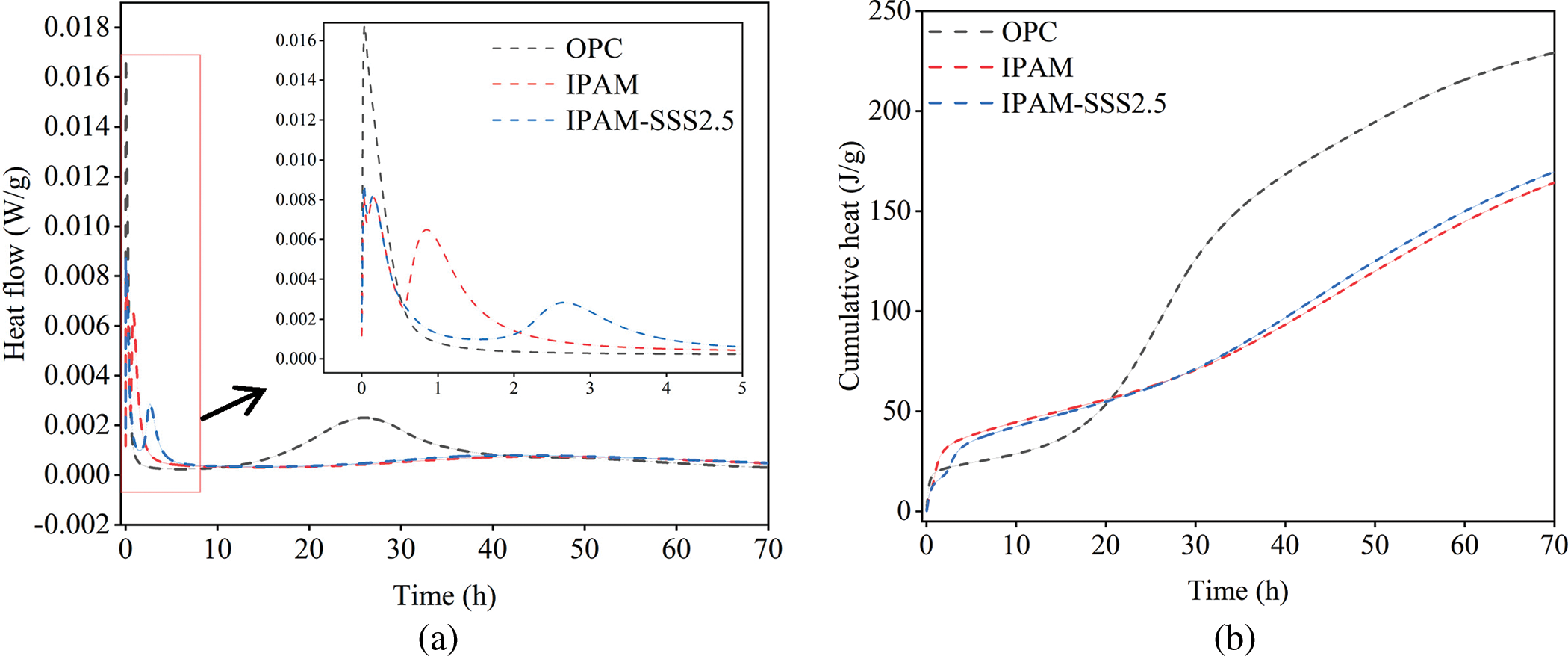
Figure 3 Hydration heat of different cement samples: (a) Heat flow. (b) Cumulative heat
3.2 Effects of in-situ copolymerization on hydrated products
Figure 4 shows the XRD patterns of the 28-day hydration products for OPC, IPAM, and IPAM-SSS2.5. While the introduction of SSS does not alter the phase assemblage of the hydration products, it significantly modulates their relative abundance. Compared with the OPC and IPAM groups, the IPAM-SSS2.5 group exhibited a lower content of unhydrated clinker phases, indicating a higher degree of silicate mineral hydration at 28 days. This suggests a dual role of SSS in hydration kinetics: its sulfonate groups (-SO3−) strongly chelate Ca2+ in the pore solution at early ages, temporarily retarding the nucleation and growth of C–S–H gel. Over the long term, however, this chelation likely modifies the hydration pathway, promoting further clinker dissolution and resulting in a higher ultimate hydration degree. Concurrently, the 28d CH diffraction peak intensity of IPAM-SSS2.5 is significantly lower than that of both OPC and IPAM, which strongly corroborates that the sulfonate groups suppress the crystallization of the brittle CH phase by chelating Ca2+ ions from the pore solution.
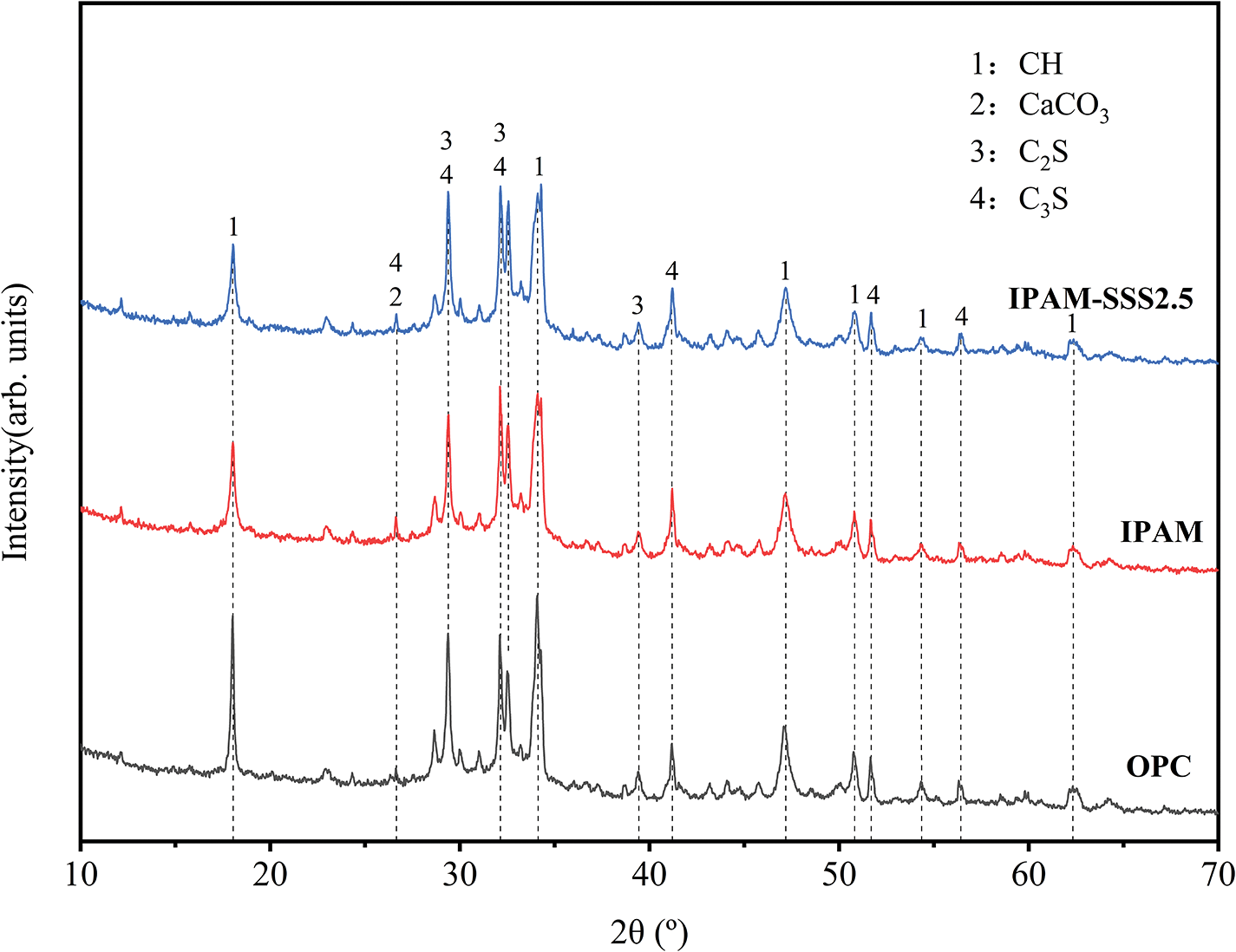
Figure 4 XRD patterns of cement pastes at 28d
Figure 5 shows the FTIR spectra of the composite materials, elucidating the molecular structure of the AM-SSS copolymer and its interfacial interactions within the cementitious matrix. Compared with the OPC baseline, the IPAM-SSS2.5 spectrum exhibits new absorption peaks at 1580 cm−1 and 1450 cm−1, attributed to the C=C skeletal vibration of the aromatic ring and the CH2 bending vibration, respectively. This confirms the successful incorporation of the rigid SSS monomer. The strong peaks at 1030 cm−1 (symmetric stretching) and 1180 cm−1 (asymmetric stretching) provide direct evidence for the presence of the -SO3− groups. The absence of the peak at 1609 cm−1, characteristic of the vinyl C=C bond in the monomer, indicates the effective completion of the polymerization reaction. Furthermore, the absorption at 972 cm−1 is assigned to the Si-O stretching vibration of the cementitious matrix.
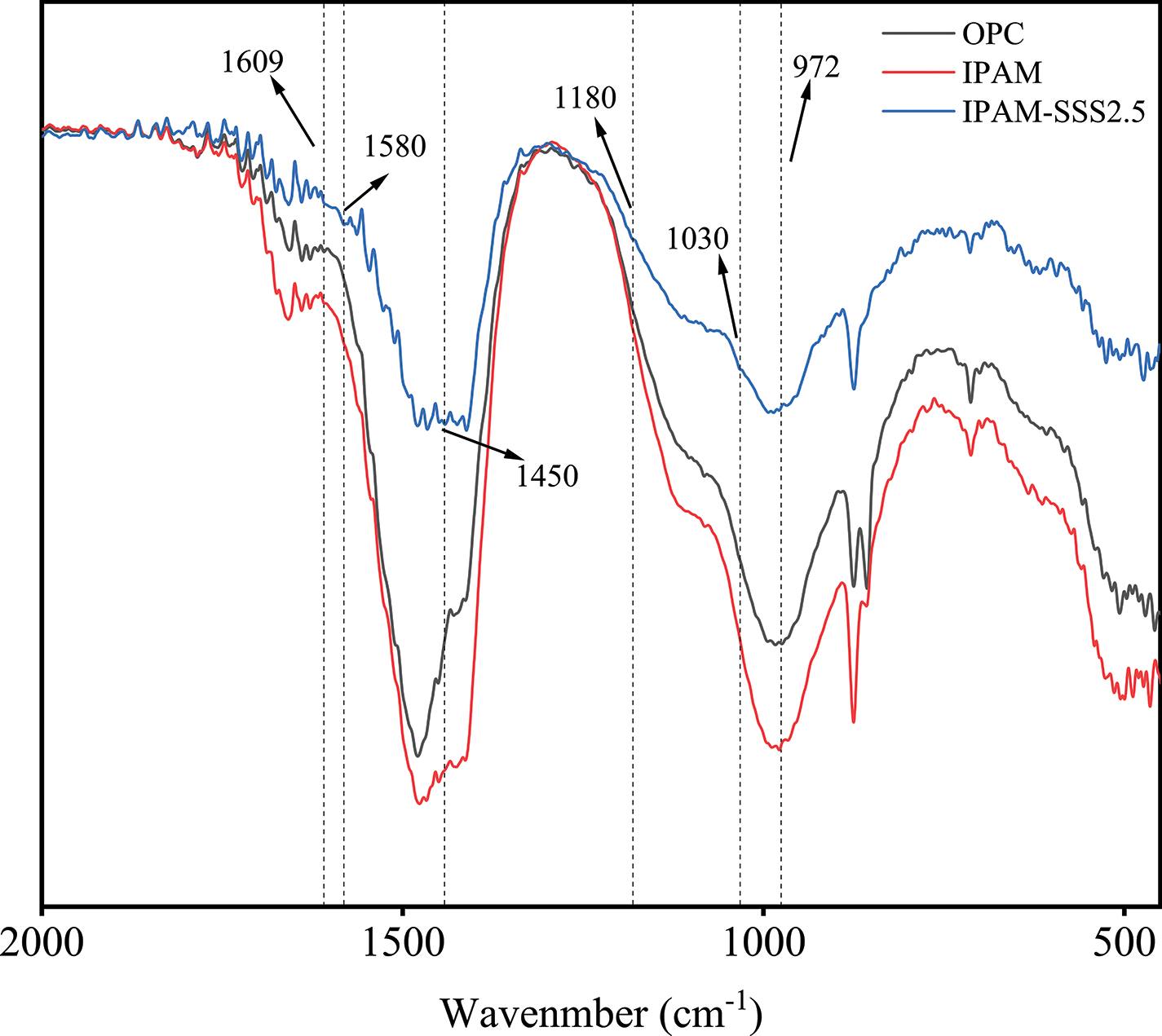
Figure 5 FTIR of cement pastes at 28d
The hydration products of OPC, IPAM, and IPAM-SSS2.5 were further examined using TG/DTG analysis, as shown in Figure 6. Unlike XRD and FTIR, thermogravimetry can effectively quantify amorphous phases such as C-S-H. All samples displayed three principal mass-loss intervals: 30°C–200°C, 350°C–500°C, and 600°C–750°C. The mass loss in the 30°C–200°C range is attributed to the dehydration of the detachment of free water and the dehydration of hydration products. The loss between 350°C–500°C corresponds to the dihydroxylation of portlandite (CH), while the loss from 600°C–750°C arises from the decarbonation of CaCO3. As illustrated in the TG/DTG curves, the IPAM-SSS2.5 sample exhibits a markedly higher mass loss within the 30°C–200°C interval compared to both OPC and IPAM, indicating a greater formation of C-S-H and other hydrated phases, which contributes to its enhanced mechanical strength. In the temperature range of 350°C–500°C, the mass loss attributable to CH was 13.11% for IPAM-SSS2.5, lower than the values for OPC (15.17%) and IPAM (14.18%), indicating a reduction in CH content. This suppression of CH crystallization is ascribed to the chelation of Ca2+ by sulfonate groups from SSS and by carboxylate groups generated from the hydrolysis of PAM chains in the alkaline environment (forming [Ca(COO)2]2− complexes), which collectively limit the availability of free Ca2+ for CH precipitation. Between 600°C and 750°C, the mass loss corresponding to CaCO3 was 6.31% for IPAM-SSS2.5, slightly higher than that of OPC (5.24%) and IPAM (6.14%). This suggests that the incorporation of SSS moderately promotes carbonation. This trend is largely consistent with the relative intensity of the CaCO3 diffraction peak shown in the figure. In summary, the IPAM-SSS2.5 system enhances the macroscopic properties of the cementitious matrix through three synergistic mechanisms: promoting the formation of C-S-H gel, inhibiting the crystallization of CH, and regulating the precipitation of carbonate phases.
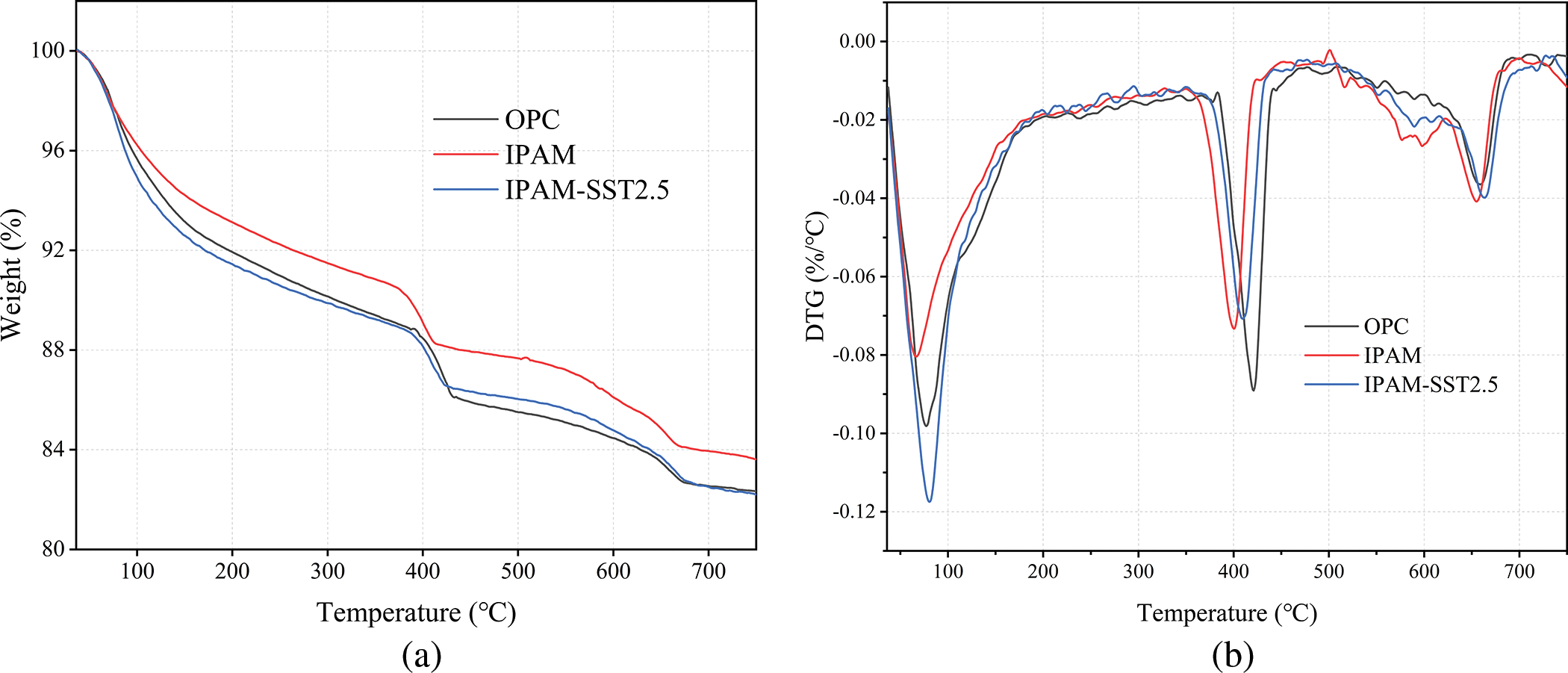
Figure 6 TG and DTG curves of cement pastes at 28d: (a) TG and (b) DTG
3.3 Effects of in-situ copolymerization on the properties of cement pastes
3.3.1 Flowability of cement pastes
Figure 7 shows the flowability variations of OPC, IPAM, IPAM-SSS01, IPAM-SSS2.5, and IPAM-SSS04 cementitious systems. The flowability of the IPAM-SSS2.5 paste was enhanced by 103% (from 63.5 mm to 129 mm) relative to the OPC paste, and by a further 7.9% relative to the IPAM paste (119.5 mm). Although SSS contains hydrophilic sulfonate groups, its rigid benzene ring structure limits steric stabilization capacity, causing inhomogeneous dispersion during cement mixing. This constrained dispersibility results in only a transient enhancement in flowability with increasing SSS dosage, followed by a subsequent reduction due to agglomeration effects. This dosage-dependent behavior indicates that sustained rheological control in polymer-modified cementitious composites critically depends on optimizing the modifying polymer’s molecular architecture.
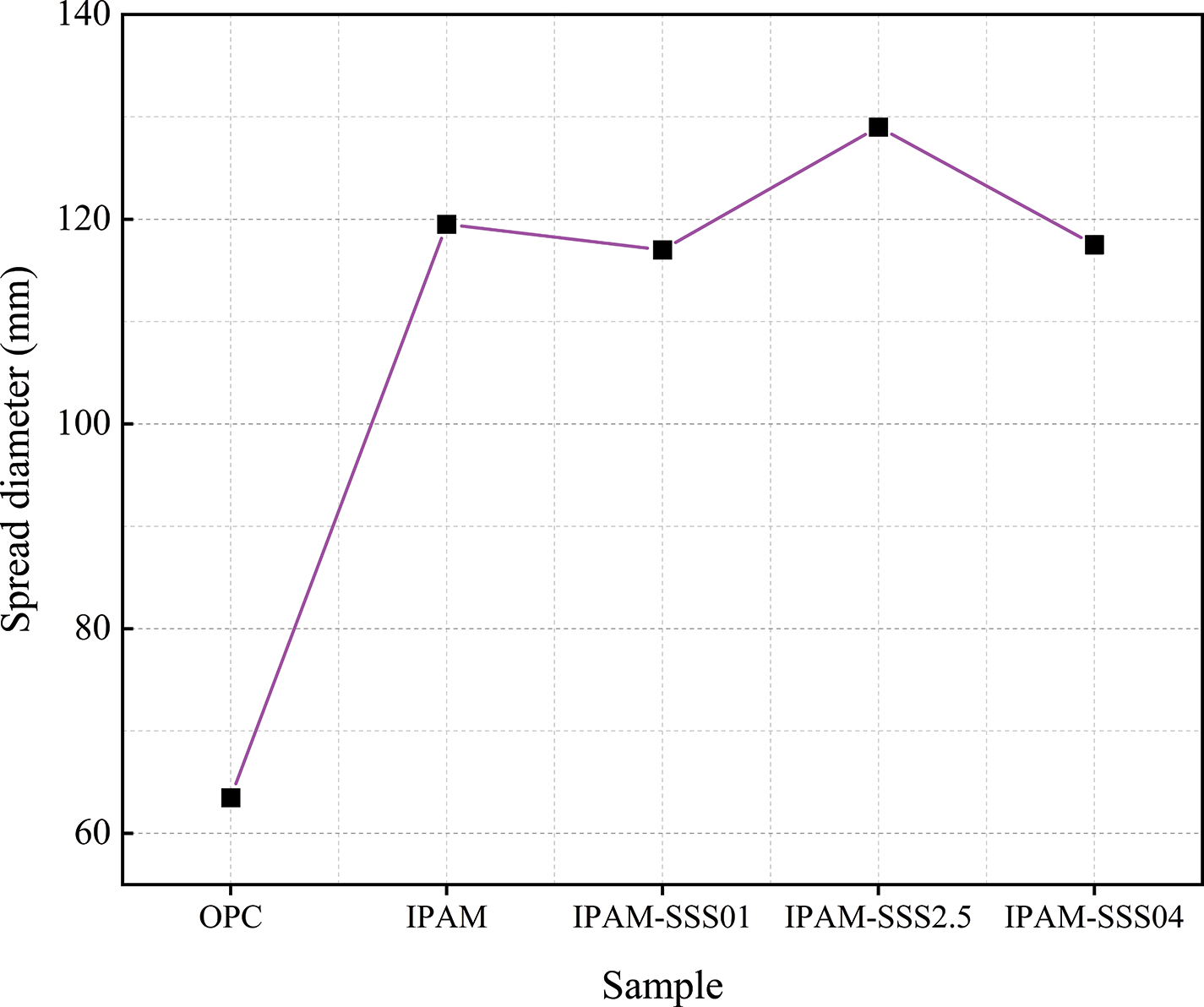
Figure 7 Flowability of cement pastes
Figure 8 shows that in-situ copolymerization of AM and SSS significantly enhances the mechanical performance of cement paste. As shown in Figure 8a, the 28-day flexural strength increases with SSS content, peaking at an optimal dosage of 0.25%. At this optimum, the flexural strength reaches 20.50 MPa, a 57.7% enhancement over the 12.77 MPa of the OPC control. The enhancement in flexural strength is primarily attributed to the “rigid-microregion-flexible-chain-segments” composite organic network formed by the AM-SSS copolymerization. As the SSS dosage increases, the organic network progressively transitions from a flexible to a rigid-flexible composite structure. This structural evolution, in conjunction with the chemical interactions between the sulfonic acid groups of SSS and cement hydration products, enhances interfacial adhesion and synergistically improves the material’s toughness. However, beyond this optimal dosage, further increases in SSS content led to a decline in flexural strength. This decline is attributed to an “over-stiffening” effect, where an excessive concentration of rigid monomers induces network embrittlement. The consequent high density of rigid micro-domains severely constrains molecular chain mobility, impairing the material’s deformation capacity and promoting brittle failure.
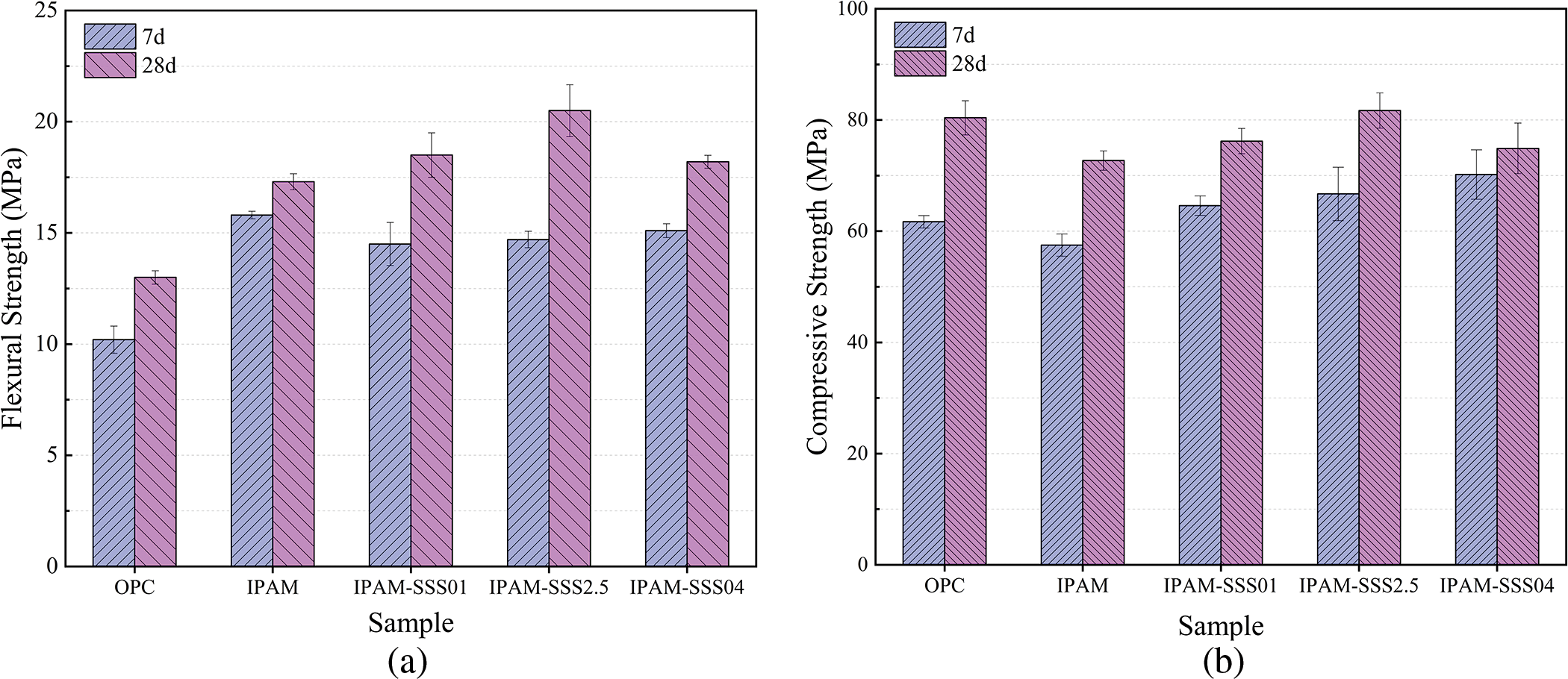
Figure 8 Mechanical properties of cement pastes: (a) Flexural strength (b) Compressive strength
The compressive strength development is shown in Figure 8b. A notable improvement in early-age mechanical properties is observed; the 7-day compressive strength, for instance, exhibits a positive correlation with SSS dosage. At 28 days, the compressive strength follows a parabolic trend, increasing with SSS content before peaking at the 0.25% dosage. Despite a lower rate of strength gain between 7 and 28 days for the modified samples compared to the control, the optimal formulation (0.25% SSS) still slightly outperforms the unmodified samples in 28-day compressive strength. This enhancement in compressive strength is primarily attributed to the “rigid-microregion-flexible-chain-segments” network formed by the AM-SSS copolymerization. Specifically, the rigid benzene rings of SSS form nanoscale reinforcing domains that enhance the intrinsic stiffness of the polymer network. Simultaneously, this composite structure promotes superior interfacial adhesion between organic nano-reinforcement and the surrounding inorganic hydration products.
The microstructural morphologies of OPC and IPAM-SSS2.5 samples are shown in Figure 9, revealing the significant influence of the modification strategy on the microstructure. The unmodified OPC sample exhibits a characteristic brittle fracture surface with large, continuous cracks and clearly defined pores. In contrast, IPAM-SSS2.5 samples show a uniformly distributed polymer network integrated within the cement matrix. Post-mechanical testing observations reveal a critical difference: the IPAM sample shows evidence of interfacial debonding, whereas IPAM-SSS2.5 displays a more cohesive fracture path with significantly fewer polymer-matrix fractures. This strongly suggests that the incorporation of rigid SSS monomers enhances the interfacial adhesion between the polymer network and the cement matrix. This enhanced adhesion is primarily attributed to strong ionic interactions between the sulfonate groups in the AM-SSS copolymer and Ca2+ ions on the surface of hydration products like C-S-H gel. This chemical bridging connects adjacent hydration products into a more integrated and cohesive structure, effectively inhibiting the initiation and propagation of microcracks. Simultaneously, the nanoscale rigid domains formed by the aromatic rings of SSS serve as physical crosslinking sites, collectively constructing the hypothesized “rigid-microregion-flexible-chain-segments” with the flexible PAM chains. The refined pore structure, resulting from the polymer network filling capillary pores, further reduces defective density. This molecularly designed, rigid-flexible organic-inorganic composite thus leads to a simultaneous enhancement in macroscopic flexural strength (by approximately 57.7%).
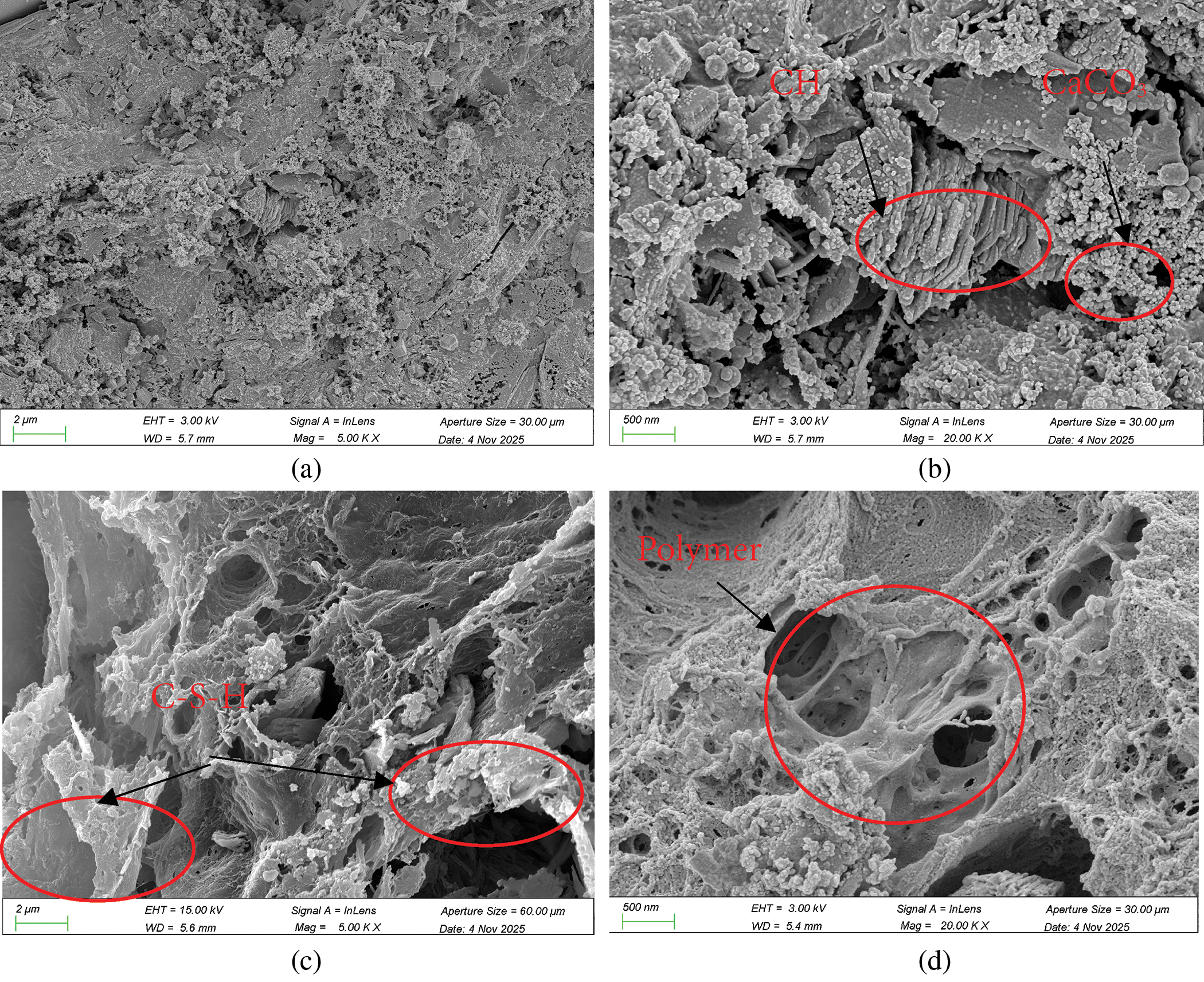
Figure 9 SEM images showing the microstructure at 28d: (a) OPC paste at 5.00 k×, (b) OPC paste at 20.00 k×, (c) IPAM-SSS2.5 paste at 5.00 k×, and (d) IPAM-SSS2.5 paste at 20.00 k×
The pore structure was characterized using MIP and 1H NMR. MIP results (Figure 10a) indicate that, compared to OPC, both IPAM and IPAM-SSS2.5 exhibit increased gel porosity. The capillary pore profile of IPAM-SSS2.5 shows a distinct leftward shift of its main peak, signifying pore refinement. This is corroborated by 1H NMR (Figure 10b,c). The T2 distribution reveals that the incorporation of SSS in IPAM-SSS2.5 alters the pore structure: Porosity data indicates a clear refinement in pore structure. The gel pore (<10 nm) volume in IPAM-SSS2.5 (10.88%) is comparable to the OPC reference (10.85%) but significantly reduced relative to the IPAM group (11.67%), indicating that SSS effectively mitigates the gel porosity increase associated with pure AM modification. Furthermore, IPAM-SSS2.5 exhibits the minimum porosity (0.58%) in the critical 10 nm–50 nm transition range, lower than both OPC (0.62%) and IPAM (0.72%). This superior performance is a direct result of the AM-SSS copolymerization synergistically promoting a denser packing of hydration products. The synergistic modification of IPAM and SSS thus refines the overall porosity, leading to a denser matrix and providing the microstructural basis for the enhanced mechanical properties of the IPAM-SSS2.5 composite.
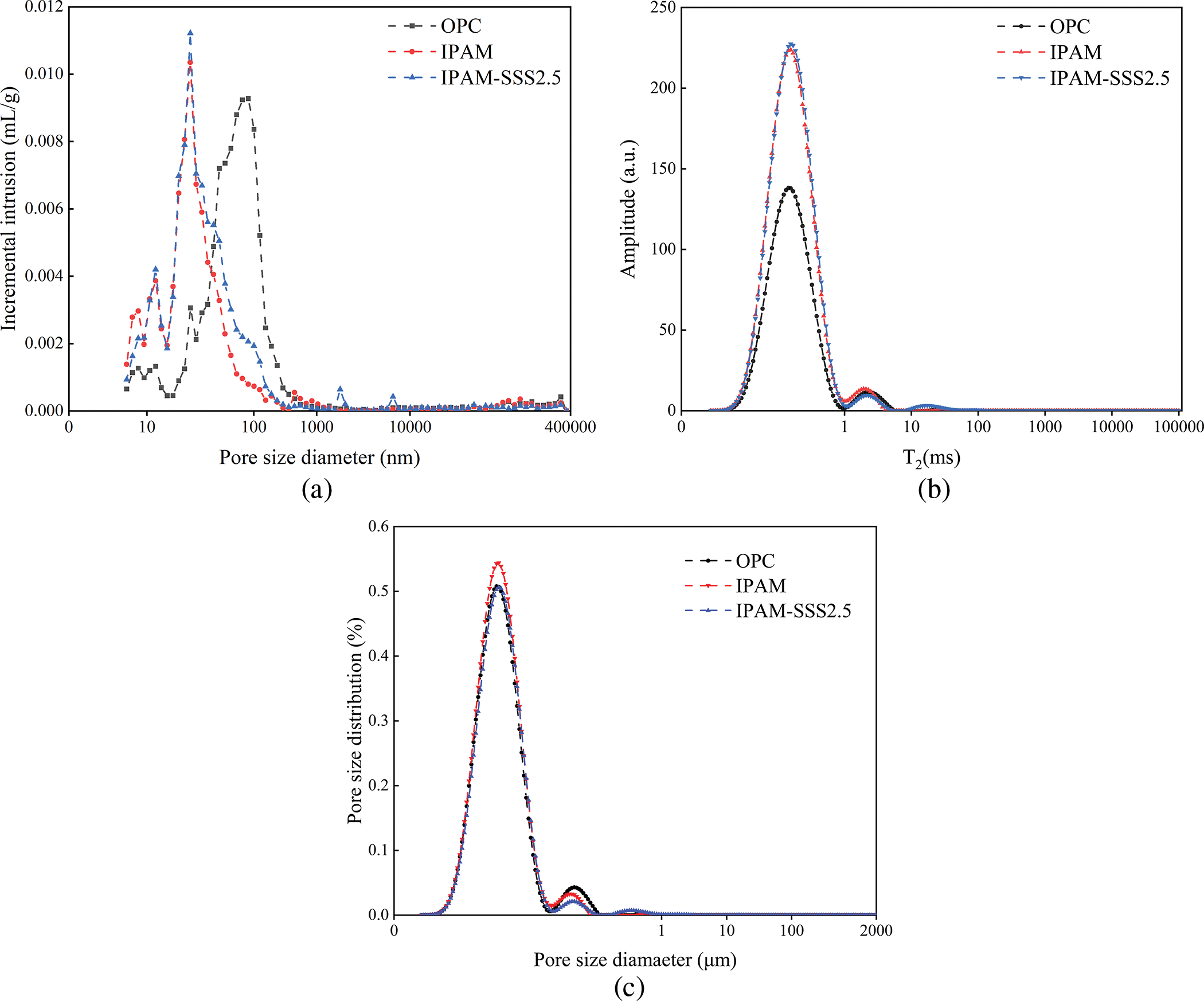
Figure 10 Pore size distribution of cement pastes tested by MIP (a) and NMR (b,c)
This study successfully constructed a “rigid-flexible” interpenetrating network within the cement paste through the in-situ copolymerization of AM and SSS, leading to a synergistic optimization of the material’s properties and microstructure. The introduction of SSS modulated hydration kinetics, delaying the early heat release while accelerating the later hydration, as evidenced by its higher cumulative heat after 30 h compared to the control. This was corroborated by XRD and TG/DTG analyses, which confirmed that SSS incorporation suppressed the crystallization of CH and promoted the formation of additional C-S-H gel, thereby establishing a stronger matrix. This chemical modulation mechanism differs from the approach of Xu et al. [34] relied solely on the physical incorporation of silica fume whiskers—a method that improved flexural strength but often at the expense of compressive strength. FTIR spectroscopy confirmed the successful copolymerization, evidenced by the appearance of characteristic peaks for the aromatic ring (1580 cm−1, 1450 cm−1) and sulfonate groups (1030 cm−1, 1180 cm−1) of SSS and the concurrent disappearance of the monomer’s vinyl C=C peak (1609 cm−1). SEM revealed that the copolymer formed a continuous, uniform three-dimensional network throughout the cementitious matrix. The flowability initially increased but then decreased with higher SSS dosage, attributable to the competing effects of the hydrophilic sulfonate groups (improving lubrication). MIP and 1H NMR analyses indicated that the IPAM-SSS2.5 mixture exhibited the lowest porosity within the detrimental 10 nm–50 nm pore range. This refined pore structure resulted from the combined effect of the denser hydration product assemblage and the physical pore-filling by the polymer network, which collectively reduced stress concentration and inhibited microcrack propagation. In summary, by constructing a molecularly designed “rigid-flexible” interpenetrating network, this work achieved a significant enhancement in flexural strength while maintaining high compressive performance. This outcome challenges the conventional trend observed in polymer-modified cementitious systems, where compressive strength is often compromised, and underscores the effectiveness of the present copolymerization strategy [22].
This study investigates the impact of in-situ copolymerization of AM and SSS on the flowability, hydration, mechanical properties, and microstructure of cement paste. The main conclusions are as follows:
(1) Successful copolymer network construction and hydration modulation: The appearance of characteristic FTIR peaks for the aromatic ring (1580 cm−1, 1450 cm−1) and sulfonate groups (1030 cm−1, 1180 cm−1) of SSS, alongside the disappearance of the monomer’s vinyl C=C peak (1609 cm−1), confirms the successful formation of the AM-SSS copolymer. Isothermal calorimetry reveals that SSS incorporation delays the early-age heat release but promotes a higher cumulative heat after 30 h, indicating modulated hydration kinetics. This is corroborated by XRD and TG/DTG analyses, which show that copolymerization suppresses the crystallization of CH while promoting the formation of additional C-S-H gel, leading to a denser matrix.
(2) Structure refinement: MIP and 1H NMR analyses demonstrate a significant refinement of the pore structure. The incorporation of SSS effectively counteracts the increase in gel pore (<10 nm) volume induced by the AM polymer alone. More critically, the IPAM-SSS2.5 paste exhibits the lowest porosity (0.58%) in the detrimental 10 nm–50 nm transition pore range, compared to both the reference paste (0.62%) and the AM-modified paste (0.72%). This pore refinement is a direct result of the synergistic optimization of hydration product packing by the AM-SSS copolymer network and its physical filling effect.
(3) Synergistic enhancement in flowability and mechanical properties: The flowability of the IPAM-SSS2.5 paste was enhanced by 103% (from 63.5 mm to 129 mm) relative to the OPC paste, and by a further 7.9% relative to the IPAM paste (119.5 mm). This enhancement effect stems from the hydrophilic sulfonic acid groups in SSS improving particle dispersion through electrostatic repulsion. The AM-SSS binary copolymer modification enhanced the 28-day flexural strength by 57.7% compared to the OPC control, while maintaining comparable compressive strength. Relative to the system modified with AM alone, it achieved further increases of 18.5% in flexural strength and 12.4% in compressive strength. This enhancement effect stems from the introduction of SSS, which optimizes the flexible network of PAM, forming a polymer network that combines rigidity and flexibility, while also improving the hydration products and pore structure.
Acknowledgement
We are grateful to the financial support from the Key Research and Development Program of Gansu Province (25YFFA084), Major Special Project of China Railway Construction Corporation Limited (2024-Z01), and a Project Funded by the Priority Academic Program Development (PAPD) of Jiangsu Higher Education Institutions.
Funding Statement
The authors received no specific funding for this study.
Author Contributions
The authors confirm contribution to the paper as follows: Gangjun Zhang: Writing—original draft, Review & editing, Software, Investigation; Peng Jiang: Writing—original draft, Review & editing, Investigation; Shougang Li: Writing—review, Resources, Funding acquisition, Project administration, Formal analysis; Jianhong Liu: Writing—review, Resources, Funding acquisition, Formal analysis, Data curation; Xiaogang Liu: Writing—review, Resources, Funding acquisition, Formal analysis, Data curation; Hao Xu: Writing—review, Resources, Funding acquisition, Project administration; Liwu Mo: Conceptualization, Writing—review & editing, Supervision, Methodology, Project administration. All authors reviewed and approved the final version of the manuscript.
Availability of Data and Materials
Use when data can be shared with researchers on request.
Ethics Approval
Not applicable.
Conflicts of Interest
The authors declare no conflicts of interest.